Saturday, May 11, 2013

A "Condominium" Worth Its Market Value


By 1980, the disaster genre that had started a decade earlier with "Airport" (1970) and "The Poseidon Adventure" (1972) had pretty much run its course.  Irwin Allen foisted the bargain basement "When Time Ran Out..." (1980) on disinterested moviegoers earlier that year and flopped.  Universal's "Airport" series ended the year before with the excreable "The Concorde: Airport '79" (1979).  However, later in 1980 the Operation Prime Time consortium of independent television stations quietly aired the thoroughly entertaining two-part TV movie "Condominium" (1980), a disaster-type melodrama based on John D. MacDonald's best selling novel of 1977.  For once, the characters and storylines of the movie were actually engaging and interesting so that the audience wasn't impatiently waiting for the action and special effects to take place.  In fact, the ultimate destruction of the titular condominium became the natural culmination of all the storylines, rather than standing as the sole raison d'etre for the whole production.


"Condominium" was the story of the denizens of the stylish Silver Sands Condominium in the fictional Fiddler Key in Florida.  As they deal with rising condo association fees and the interpersonal relationships and conflicts taking place within the building, a contingency of residents in the building become aware that Silver Sands has been constructed using substandard materials.  Barbara Eden had one of her most underrated roles as the attractive Barbara Messenger, the much younger wife of wealthy retired industrialist Lee Messenger (Ralph Bellamy) who is dying of cancer.  Barbara is attracted to hydraulics engineer Sam Harrison (Dan Haggerty), who is visiting his friend Gus Garver (Steve Forrest) while his wife Carolyn (Virginia Leith) is recovering from a stroke in the hospital.  Sam is the one who first spots the cracks in the foundation of the building, and notices the poor materials and workmanship characterizing the construction of the building.


Sam works closely with his friend Gus, the Messengers, and retired government intelligence officer Henry Churchbridge (Richard Anderson) and his wealthy aristocratic Italian wife Carlotta (Linda Cristal) to try and make shady construction magnate Marty Liss (Stuart Whitman) pay for a seawall and other repairs that might help provide reinforcement for the building.  The residents of Silver Sands do not realize that Marty Liss and his construction operation are a front to launder syndicate money and that construction of the condominium was the result of these endeavors.  Liss cut corners on the construction of the building in order to pocket some of the budget for the construction costs for himself.  Concerned at what the residents might dig up about him, Liss sends in his attractive associate Drusilla Byrne (Pamela Hensley) to live in the building and gather intel.  Dru and Gus slowly become good friends and Gus finds himself attracted to her despite his loyalty to his ailing wife.  Meanwhile, Sam and Barbara become close with the encouragement of the ailing Lee, who doesn't want Barbara left alone after he is gone.  As they try to raise the consciousness of the other residents in the building regarding the potential safety issues concerning the building, they must eventually deal with the impending arrival of the deadly Hurricane Ella, which threatens to make the potential safety issues in the building a tangible reality.


"Condominium" works because director Sidney Hayers and screenwriter Steve Hayes create a vivid atmosphere in the movie, thanks to lively performances and characters, that makes Silver Sands feel like a real community.  The location shooting at the Pinnacle Port condominium and resort in Panama City Beach, Florida, also contributes greatly to this atmosphere and helps create in the viewer a genuine feeling of how beautiful and idyllic living at Fiddler Key is for the condominium residents.  When I saw "Condominium" on its first airing as a kid, I wanted to live at Silver Sands someday, especially if my neighbors were anywhere as interesting as the characters in this movie.  In contrast to, say, "When Time Ran Out...," the characters in "Condominium" are not mere plot devices to help move the disaster storyline along, but vibrant and interesting people who would've held our attention even if there was no impending hurricane threatening the residents of Silver Sands.  In addition to the characters I've already mentioned, there's also Don Galloway and Ana Alicia as an unhappily married couple Jack and Thelma Messenkott.  Jack's a middle-aged man who married Thelma, a much younger woman who he thought would bring excitement into his life.  Jack is frustrated that all Thelma wants to do is explore the nature and greenery surrounding the condominium rather than go play tennis with him.  Little does Jack realize Thelma's emotionally fragile nature, which comes to fore when she has a nervous breakdown at witnessing the jungle next to Silver Sands being torn down by Marty Liss to build an identical structure.  A very young Ana Alicia gets a chance to test run the sort of disarming vulnerability and passionate emotionalism that she later specialized in while playing Melissa Agretti on "Falcon Crest." 


Larry Bishop plays the building's smarmy and sleazy manager, Julian Higbee, married to beautiful Lorrie (Mimi Maynard), but having an affair with smart sassy nurse Bobbie Fish (Carlene Watkins).  Lorrie and Bobbie both become fed up with Julian, and become good friends.  They turn to each other for emotional comfort and support in a relationship that eventually turns into a surprisingly sympathetic and non-exploitative lesbian storyline that totally went over my 8 year old head when I saw this on its initial airing.  Looking at it again decades later, I'm impressed at how "Condominium" treated Lorrie and Bobbie's relationship as nothing novel or unusual.  The result is probably one of the most pure and sincere romantic storylines in the movie.  There's a very sensitive scene later in the movie, as the residents are evacuating at the threat of the impending Hurricane Ella, where Lorrie and Bobbie discuss Lorrie leaving Julian once and for all and making a life for themselves just before Julian walks in on them.  The previously meek Lorrie stands up to him and walks out on Julian for good.  What makes it work is that both Lorrie and Bobbie are honest with each other about their fears and their uncertainty of being together, and Maynard and Watkins make it a believable moment that helps "Condominium" still look current and relevant in 2013.


Nedra Volz plays kind-hearted elderly resident Mrs. Conlaw, who is always telling Steve Forrest's Gus Garver, the head of the condominium association, of every little problem in the building.  Despite her pickiness she is a very endearing character, not at all a nuisance, particularly in the scene when Gus is leaving to go visit his wife in the hospital.  Mrs. Conlaw stops him at the elevator and he thinks she's going to ask him to take care of another issue in the building, when all she intended to do was to ask him to give his wife her best wishes and that they all miss her at the building.  In one of the most delightful twists to "Condominium," we later learn that the kindly Mrs. Conlaw is actually the mother of Conlaw (Nehemiah Persoff), the ruthless Miami mobster that Marty Liss works for who financed the construction of Silver Sands to help launder his dirty money.  (Throughout the movie, we see Mrs. Conlaw call her son from the payphone in the condominium parking lot.  We assume that her son is probably as kind and mild-mannered as she is and are startled when we realize how sinister and powerful he really is.)  When Conlaw learns that Marty Liss skimmed money from the construction budget for his personal gain, he is outraged particularly because his mother had been living in that building.  Stuart Whitman does a great job at creating such a sleazy, unscrupulous character in Liss that even mobsters like Conlaw appear to have more common decency than he does.

 
Richard Anderson and Linda Cristal also do good work as a loving married couple Henry and Carlotta Churchbridge--he's a former CIA agent, she's a wealthy European aristocrat he married while working overseas--who still have much passion and affection for each other in their marriage.  The stability of their characters help provide a sense of balance compared to that of their neighbors.  As the Churchbridges are evacuating from Silver Sands, I like how Richard Anderson plays the scene where Henry takes one last look around his home and says "I was just thinking, in spite of everything, we've had a pretty good life here" with an air of both realism and romanticism that shows how his character has the ability to take in all that is around him.  Richard Anderson also has several good scenes with Ana Alicia's fragile Thelma, as Henry is the one resident at Silver Sands who also understands and appreciates Thelma's love of the natural environment surrounding the condominium.  When the neighboring jungle is torn down to make way for Marty Liss's new Harbor Pointe condominium project, Henry is also the one character who recognizes how this will emotionally shatter the unstable Thelma.  Thanks to the good work of all involved, you never get bored with any of the characters and storylines in "Condominium" the way you do with other late-period disaster movies.


Probably the most interesting storylines involve a pair of love triangles featuring the movie's most important characters.  The first one involves Barbara Eden's character Barbara Messenger, who is married to Ralph Bellamy's wealthy Lee Messenger (an older man dying of cancer), but is attracted to Dan Haggerty's hydraulics engineer Sam Harrison.  I like the fact that Barbara and Lee have a loving and honest marriage despite the age differences between them, and that Lee loves Barbara so much that he encourages her to work with Sam to investigate the structural issues with the condominium in the hopes that it will allow them to become close with one another.  Lee wants to ensure that there will be someone who will be there for Barbara once he has passed away.  This was the first thing I ever saw Ralph Bellamy in as a kid, and he was very likeable and appealing in ways that he was rarely allowed to be later in his career, where he often played villains in such things as "Rosemary's Baby" (1968) and "Nightmare in Badham County" (1976).  I took to how kind and generous Lee's love for Barbara was that he wasn't the least bit possessive or jealous of Sam's presence--Lee has enough confidence to know that Barbara sincerely loves him that he is secure in encouraging his wife's blossoming friendship with Sam.


The underrated Barbara Eden has a better-than-average role for herself as Barbara Messenger, one that allowed her to go beyond playing what one assumes to be the stereotypical "Barbara Eden" type of character in a light and cheery mode.  Instead, the role of Barbara Messenger allows Eden to play a serious individual with sincere concerns and hopes for herself who has already endured some genuine tragedies in her life.  Eden has always been a fine, subtle actress who made the most of every opportunity presented to her.  However, I sometimes think she is taken for granted by people who assume real acting involves changing ones attitude and appearance for every role they play as opposed to just being real.  Eden's strength is that she convincingly plays believable human beings, not archetypal "characters."  However, "Condominium" stands out because it allows Eden more interesting material to work with.  At one point Barbara reveals to Sam that she was once married with a daughter, but that her family was killed in a house fire.  She took a job working for Lee and, when he learned of her tragedy, he put her to work and kept her busy so that she didn't have time to feel sorry for herself.  In the process, Barbara and Lee sincerely fell in love with each other and she is genuinely concerned with his comfort and well-being.  Eden has a grown up role that allows her to go beyond just being cute and charming and the result is one of her better post "I Dream of Jeannie" TV movies.  Eden brings a lot of compassion and intelligence to the role that allows the viewer to understand the sort of hurt and grief that Barbara Messenger has experienced in her past.  Because of the sensitivity and depth she brings to the role, Eden makes Barbara Messenger a very human and realistic individual.  Eden and Ralph Bellamy are excellent in their scenes together, giving Barbara and Lee Messenger a quick-witted chemistry that makes their marriage completely believable despite their age difference.  Meanwhile, Eden and Dan Haggerty don't exactly have exciting or believable chemistry together, but they seem comfortable and at-ease around each other that you are able to sense, at the very least, a sincere platonic friendship developing between them that is touching and appealing.


The other love triangle involves Steve Forrest's Gus Garver, his ailing wife Carolyn, and Pamela Hensley's sexy Dru Byrne.  Dru is sent by Marty Liss on a reconnaissance mission to live in the building, befriend Gus Garver, and spy on the condo residents so that she can report back to Liss what the association of owners might be planning against him in terms of their dissatisfaction with the rising maintenance fees and unsatisfactory management of the building.  In the process, Dru and Gus become genuine friends and eventually become attracted to each other.  When Dru learns about Gus and Sam's report that Silver Sands is a potential death-trap, she humbly tells the condo owners, when they kick her out of their owner's association meeting, "I would just like to say one thing, if I may.  Silver Sands may or may not be safe.  I really don't know.  But, had I known it was unsafe, I would never have sold one single solitary unit.  And that's the God's honest truth."  Later, Dru urges Marty Liss to bring in Sam Harrison or another engineer to devise sea walls or implement repairs to the building to fortify it against a hurricane.  When he refuses, she quits her job, but not before informing him that "Look, I've done my share of the dirty work, too, if that's what you mean...True, I won't deny that money is very high on my list.  But there are limits, Marty."


In the best scene of the movie, Dru comes clean to Gus, while they are having drinks at a bar, about Marty Liss's connection to the mob and how Silver Sands was constructed in order to launder Syndicate money in legitimate business operations.  When Gus asks Dru whether she was aware of all of this she humbly responds, "Did I work for the mob, you mean?  Well, I worked for Marty.  And I certainly knew where my salary was coming from.  Sorry about that, Darlin'.  I wish it weren't true.  But today isn't my day for lying.  Anyway, I'm through with all that now.  That's why I'm telling you all this to rinse out my conscience so to speak."  As Gus tells Dru that he is happy she is no longer associated with him, Dru says "I was hoping you'd say that...Don't you know why?  You can mean a lot to me.  A whole lot.  And I guess what I'm hoping for more than anything right now is if there's a possibility we could..."  Gus cuts her off before Dru is able to finish her statement and she realizes that he does not intend to become romantically involved with her even though he cares for her very much.  Hensley does an excellent job in this scene projecting Dru's hurt, embarrassment and disappointment at being rejected by Gus.


As an awkward silence sets in between them, she slowly lifts her glass of wine, sips from it, sets it down and stares at her glass, trying to keep busy in order to save face and cover up her feelings for Gus.  When Dru says that she plans to move out of the building and stay with a friend in Fort Lauderdale, Gus comments "It's a nice place."  Dru bravely and defiantly says "They're all nice places, Gus darlin', when you're with the right person.  You take care.  You know, your wife is a lucky lady" before she kisses Gus on the cheek and walks out of his life forever.  I always remember feeling sad for both Dru and Gus in this scene as they realize that their friendship, which meant a lot to them, has now come to an end.  Dru turns out to be the most interesting character in "Condominium," a woman with a level of corruptibility and shadiness attached to her, but who is attracted to the purity and decency of Gus' soul and ultimately proves to be a decent person herself when she quits working for Marty after learning of the dangerous structural issues with Silver Sands.

 
Later on, "Condominium" strongly suggests that Dru perished in the Hurricane, as she allows herself to be seduced by building contractor Cole Kimber (Jack Jones) in his motor home while he is helping her move out of the building.  Dru and Cole ignore the warning signs of the storm raging around them as she gives in to the advances of Kimber, an associate of Liss's that she always found repulsive.  You don't actually see them perish, but since the movie never gives you a scene which shows Dru has safely evacuated to the mainland, you ultimately have to conclude that her character did not survive.  I always felt that Dru intentionally did this on purpose because of her guilt over helping Marty construct the building, as well as her sadness at losing Gus.  She was in-essence punishing herself, to further "rinse out her conscience," by ignoring the hurricane warnings and allowing herself to drown at the end.  However, "Condominium" spares us an undignified death scene for the ultimately sympathetic Dru.  She might be punishing herself, but the movie doesn't punish her any further by exploiting her death on-screen as other disaster movies might have done for their morally complex characters.


I was so wrapped up in the storylines of "Condominium" that I patiently awaited the arrival of the deadly Hurricane Ella, which threatens to topple the building.  As the storm approaches, most of the residents vacate to the mainland for safety, while some residents stay behind and throw a hurricane party.  For once, the foolishness of some characters in a disaster movie to stay behind as the danger approaches makes sense, instead of standing as a phony and lazy plot contrivance.  The residents of Silver Sands are mostly retirees on fixed incomes.  It would be difficult for them to pack and move without a financial safety net to allow them to land elsewhere.  Even though we know they are making the wrong decisions for themselves, it is not without reason.  Unlike most TV shows or movies these days, "Condominium" acknowledges and explores the financial concerns of middle-aged and elderly retirees.  When Gus tries to convince the residents at a community meeting, who are skeptical of the results of Sam's survey, that their lives are at stake and that life is more important than money, resident Audrey Ames (Elinor Donahue) reminds Gus from the audience, "When people are living on a fixed income, Mr. Garver, life is money."  In so doing, the movie has a depth and subtext that allows it to rise above disaster movie cliches.


What I like about "Condominium" is the fact that we care about the people in the story and that the action and special effects of the final act have been carefully integrated into the story rather than standing alone as the main centerpiece for the film.  "Condominium" does such a good job balancing all these characters and stories it even has time to provide a wrap up to a minor storyline involving obnoxious loudmouth condominium resident Frank Branhammer (Bill Zuckert), an overbearing bully who usually intimidates his meek wife Doris (Lyndel Stuart).  As the Branhammers attend the foolish hurricane party, Frank yells at Doris and tells her to shut up when she expresses fears about the hurricane.  The sympathetic Doris finally has the strength and resolve to stand up to her husband and tells him "Goodbye, Frank...I mean, I'm leaving.  Right now.  You I can take.  You plus the hurricane is just too much...See you around, Frank, if you can swim that is" as she walks out on her husband and presumably evacuates safely to the mainland while her husband is left to perish due to his own arrogance and folly.  It's a completely satisfying ending to a minor storyline in the movie.  (However, as obnoxious as Branhammer is, he seems genuinely surprised and hurt when Doris walks out on him.  Moreover, even someone as gentle as Thelma Messenkott finds redeeming qualities in Branhammer when she defends him to her disdainful husband Jack during a condo association meeting.  Thelma tells Jack "It's only because he feels out of place here" that Branhammer is as loud and belligerent as he is.  In so doing, "Condominium" demonstrates how fair-minded it is about all of its characters.)


At the end of "Condominium," when Hurricane Ella becomes powerful enough to generate a tidal wave that hits Fiddler Key and Silver Sands, and causes the building to crumble into the ocean, there is a bit of sadness because the building that linked together such interesting characters and stories has now been destroyed.  A few critics at the time, who called "Condominium" a piece of "trash TV" (decades before reality shows taught us the true definition of that phrase), criticized the special effects at the end of "Condominium" as being substandard in its depiction of the destruction of Silver Sands, but I completely disagree.  Unlike Irwin Allen's "When Time Ran Out..." (which botched the ultimate destruction of the resort complex in that movie by having a cheesy bit of animation, purportedly depicting a volcanic fireball, envelope a wide shot of that building), the miniatures used at the end of "Condominium" to depict the destruction of Silver Sands are actually quite detailed and impressive, especially by 1980 television standards.  As the building collapses, you realize that these lively and engaging characters, who once lived here together and made Silver Sands an interesting place to live, will now be scattered to the winds as they begin to forge new lives for themselves elsewhere.  Unlike the characters in other disaster movies, who you forget about once the credits roll, you actually wonder what will happen next to the characters of "Condominium" as the surviving, former residents of Silver Sands continue to live with the after-effects of Hurricane Ella in their lives.

Tuesday, May 7, 2013

An Appraisal of Neil Sedaka's "Wheeling West Virginia"


Neil Sedaka is a recording artist I used to take for granted, but whom I have grown to deeply appreciate in recent years as I began to realize the full extent of his talents and accomplishments.  He is a great singer and entertainer but is also an amazing composer and pianist.  Sedaka has a level-headed maturity that allowed him to survive the ups and downs of his long show business career, but also possesses a refreshing child-like innocence and sense of awe about the world that allows him to continue composing and performing songs that have great depth and resonance to them.  I am in awe of the longevity and diversity of his music career.  Of the songs he recorded, I think "Laughter in the Rain" is probably his masterpiece, but there are many, many songs he either wrote or recorded that also deserve praise.  For instance, I really like the songs that he and Howard Greenfield wrote for the 1960 movie "Where the Boys Are," both the title song and the lesser known "Turn on the Sunshine" that Connie Francis sings in the nightclub.  The lyrics to both songs are not only fun and catchy, but they also have genuine feeling and emotion attached to them as well.  Sedaka himself comes across as a level-headed, accessible human being in his interviews, and I am happy to see that he is still recording, still performing, and doesn't seem anywhere close to retiring.


A Neil Sedaka song that I became familiar with just recently was his 1970 recording "Wheeling West Virginia" that he co-wrote with his frequent and longtime collaborator Howard Greenfield.  As I listened to the song, its lyrics resonated with me on many levels.  Even though the song was a hit in Australia at the time of its release, it doesn't appear to be as famous of some of Sedaka's other hits.  However, I think the song's central story of a successful Hollywood movie star originally from Wheeling, West Virginia who complains about the pressures and demands and hectic work schedule that his career entails, and how it evokes introspective self-reflection as to whether he is still in-touch with the person he once was back in his hometown, is one that is relevant and applicable to any and all individuals who are working in demanding, high-profile, and stressful careers.  The themes and concerns associated with the song are as relevant to, say, Washington, DC attorneys and politicos as much as it does with Hollywood actors and entertainers.  As with the works of all great artists, Sedaka's song resonates deeply beyond just the surface level.


For the uninitiated, the lyrics for "Wheeling, West Virginia" go like this:

Laurel to Sunset, freeway to Culver,
Racin' my MG down to MGM.
Sittin' in make-up tryin' to wake up
Gotta be on the set at eight a.m.
For one more day of make believin',
One more day of playin' the star,
One more day of endless pretendin',
Do ya know who you are?

Where is the guy from Wheelin' West Virginia
Why did he have to roam
So far away from Wheelin' West Virginia,
Thousands of miles from home.

Lawyers' fees and agents' commission,
Everybody's waitin' to be fed.
Uncle Sam is right there beside you,
Come on boy, ya got to make the bread.
For one more day of make believin',
One more day of playin' the star,
One more day of endless pretendin',
Do ya know who you are?

Where is the guy from Wheelin' West Virginia
Why did he have to roam
So far away from Wheelin' West Virginia,
Thousands of miles from home.

Culver to freeway, Sunset to Laurel,
Racin' my MG back from MGM.
Early to bed to be up at dawnin',
Gotta be on the set at eight a.m.
For one more day of make believin',
One more day of playin' the star,
one more day of endless pretendin',
But that's all you are.
Gone is the guy from Wheelin' West Virginia,
Gone is the world he used to know.
There's no such place as Wheelin' West Virginia,
It faded long ago. 


Years ago, before I moved to DC for law school, I was working on a book interviewing actresses who worked in movies and television during the 1960s.  They often described to me what it was like to work in the last decade of the traditional Hollywood studio system, and how they sometimes had doubts as to whether this life that they had suddenly found themselves living was the life they were destined to lead.  I was reminded of them as I listened to Neil Sedaka's song "Wheeling West Virginia."  The energy, excitement, hustle and bustle of Los Angeles and Hollywood of the late 1960s/early 1970s comes vividly to life with the thrilling imagery of Sedaka and Greenfield's lyrics.  With a satirical sense of humor, they peel back the glamorous facade of show business to reveal the mundane realities of successful actors who still have to drive themselves to work everyday, film all day at the studio from morning till night, and then drive home and go to bed early to prepare for the next day of shooting without any kind of personal life, and still have to earn enough money to employ agents and managers and to pay their taxes, all the while wondering if they have lost touch with who they used to be before they achieved this level of success.

 
The song reminded me of an anecdote that Jacqueline Bisset, who was one of the actresses I interviewed, shared with me when I spoke with her.  With self-effacing candor and humor, Bisset recalled how she moved to Hollywood in 1967 after she signed a picture deal with 20th Century-Fox and that she worried for many years that she might end up "going Hollywood" and losing all the values that her parents, who she deeply respected, had raised her with.  She said she used to wonder how it would happen with other actors that they changed drastically and negatively once they arrived in Hollywood.  She used to ask herself whether she had the strength of character to be able to live and work in Hollywood, and not pick up any bad traits from the environment, and have enough perspective to go back home to England if her career did not work out and earn a living at a regular job back there.  For years, she used to ask herself if she had "gone Hollywood" yet.  She often concluded that didn't believe that she had, but sensed that it could still happen, so she was always on guard about it in order to ensure that she held onto her sense of identity.  She acknowledged that she finally allowed herself to relax about it around the time she turned 50 years old because she figured she had been in Hollywood nearly 30 years by then, and that if she was going to "go Hollywood" it would have already happened by that point. 


It's too bad that the central character in Sedaka's song "Wheeling West Virginia" never met Jacqueline Bisset and got pointers from her on how to maintain a strong sense of identity about oneself, because it sounds like he went through the same kind of introspection as did Bisset in real life but without going about it in a constructive and proactive way like she did.  Instead of setting standards and goals for himself in terms of what sort of individual he wanted to be in Hollywood, like Bisset did, the protagonist in "Wheeling West Virginia" comes across as an individual who got swept up in success so quickly that he never asked himself what it was he truly wanted out of being a movie star.  Was it the fame and prestige?  Was it financial success?  Was it artistic accomplishment?  We don't know because it's clear that he doesn't know either.  At one point, the lyrics say "For one more day of make believin'/One more day of playin' the star/One more day of endless pretendin'/Do ya know who you are?" which suggests that the central character in the song doesn't really enjoy acting as a craft in terms of exploring the different sides and nuances of a character, which is why he seems unable to find any sort of satisfaction or fulfillment in his work.  It's apparent from the song that being an actor is only helping to create a sense of self-doubt as to his real identity.


"Wheeling West Virginia" has a deceptively whimsical and joyous beat to it thanks to the exuberance of Sedaka's performance.  But underneath it all, Sedaka also projects a wistful and melancholy mood as the central character in the song begins to idealize, and become nostalgic, about his hometown of Wheeling, West Virginia and how much simpler his life seemed back then.  When I listen to the song, I sense a character who regrets taking his hometown roots for granted, and how that lack of grounding and of being out-of-touch with his origins has led to him become someone who is rootless and dissatisfied with his success in Hollywood.  Clearly this fictional character was not reflective of Neil Sedaka himself as he has often discussed his childhood growing up in Brooklyn and how his parents worked hard to buy a piano and pay for music lessons so he could refine his talents.  One reason I've always liked Sedaka is that he knows who he is and how his family and background played an incredibly important role in helping to shape his success.  It's this sense of grounding and of understanding the importance of his origins that allowed Sedaka to have the perspective and initiative that helped him to forge the career and accomplishments that he has richly earned.


I imagine that "Wheeling West Virginia" was probably Sedaka's bemused, yet compassionate, observation of what other successful actors and entertainers he encountered during his career up to that point was experiencing in their lives (similar to what Jacqueline Bisset observed about her peers and environment once she arrived in Hollywood in 1967).  I'm sure Neil Sedaka never thought in his life that he would ever be compared with Jacqueline Bisset but I think the comparison has validity because, in my dealings with her, I found Bisset to be a realist and I sense that Sedaka is one as well.  At the end of the song "Wheeling West Virginia," the lyrics of the song say "Gone is the guy from Wheelin' West Virginia/Gone is the world he used to know/There's no place as Wheelin' West Virginia/It Faded Long Ago."  In the finale verse, "There's no such place as Wheelin' West Virginia/It Faded Long Ago," Sedaka slows the tempo of the song and brings it to an abrupt halt, almost as if the main character of the song has come to a sudden, painful epiphany that this idealized romanticization of his home town is just an illusion and that Wheeling West Virginia itself probably had its share of responsibilities, pressures and stress just like Hollywood does.  It's because of subtle and insightful nuances such as these, which is characteristic of all of Neil Sedaka's work as a singer and composer throughout his incredible 55-plus year career, that his music continues to resonate with us. 

Sunday, May 5, 2013

What Actually Drives "The Car"?


I am not normally frightened by most horror movies though I am thoroughly entertained by them.  I have always been able to remind myself that what is being seen on-screen is not real and, as such, can separate myself from it so I can enjoy them objectively.  I find true-crime documentaries on cable--or the stories on CBS's "48 Hours Mystery" program--much more disturbing because the villains in those stories actually existed in real life.  However, there is one horror movie that I must admit has always creeped me out and when I tell you what it is, you'll probably laugh because most people think it's a camp classic and don't find it to be scary at all.  It's the automotive "Jaws" (1975) ripoff that Universal released two years later called "The Car" (1977).


I think the reason I find "The Car" creepy has to do with the fact that one night many years ago when the movie was airing on TV, my father asked me to go across the street to our neighbor's house to ask my mother, who was over there chatting with her friend, a question about an issue that had arisen because he didn't have their phone number to be able to call over there and ask my mother his question over the phone.  As I was crossing the street, I started getting nervous that "The Car" was going to leap out from the shadows out of nowhere because I had just watched a scene from the movie where that very event had occurred.  When one car suddenly started up, its headlights flashed on, and it started driving down the street towards me, I ran all the way to the neighbors house and kept ringing the doorbell until they answered it.  I was only about 10 years old, I think, but it was one of those moments where you suddenly put yourself in the subjective position of the characters in a horror movie and understood the fear they were experiencing at the very instance, which is probably why I still find the movie creepy.


From an objective perspective, I do think "The Car" is a rather creepy movie even though it is PG-rated and has no explicit violence or gore.  The premise of a car possessed by the Devil that goes on a killing spree is disturbing in that no one is really safe.  Unlike "Jaws," where all you had to do was stay out of the water, "The Car" can get you anywhere, as exemplified by the "Did I Just See That?" moment in the movie where the film's ostensible leading lady Lauren (Kathleen Lloyd), the school teacher who cursed at the car when it chased the school children, parents and teachers into the cemetery, is mowed down in her her own living room by The Car when it jumps several feet off the ground and crashes through her house in order to kill her.  (For a period of time as a kid, the movie made me convinced that it was better to live in a two-story house, so that you could always hide on the second floor in case The Car decides to crash through it.)  At that moment, you realize that the narration in the trailer "There's nowhere to turn...nowhere to hide...no way to stop 'The Car'" was not mere hyperbole because we are more likely to deal with automobiles in our daily lives than with a great white shark.


I completely acknowledge that "The Car" isn't a particularly deep or sophisticated movie in that its characters aren't very interesting individuals and only serve as plot devices in terms of how they relate to The Car.  But that's OK because not every movie has to be a nuanced character-driven piece for it be also be ridiculously entertaining.  "The Car" works on a primal and visceral level because it taps into our continuing love/hate relationship with the automobile.  We sincerely love cars because of the convenience, status, freedom, and mobility it brings to our lives, but I believe to some degree we also hate cars because of the expense, responsibility, stress, and physical danger that automobiles can also represent due to the maintenance costs, traffic congestion, and potential mishaps (when they are mishandled by careless and irresponsible individuals) that are associated with owning or driving them.  "The Car" taps into the sense of awe and wariness that we, as a society, feel towards automobiles.


Some people have complained that "The Car" never adequately explains the origins or motives of its titular vehicle, but I think this actually gives it an air of mystery that works in its favor.  It would be much less frightening to learn that The Car actually had a human driver in it who had a personal vendetta against the small desert town of Santa Ynez, Utah.  If there was a tangible, human element to The Car, then the scope of individuals that it was targeting could conceivably be narrowed.  However, by giving it an unexplainable, supernatural element, then anything could happen and anyone could easily fall victim to it.  What I like about "The Car" as a movie is that The Car is treated in the story as one of the principal characters.  It's never treated as an impersonal, mechanical object, but as an individual with knowledge, instincts and emotions.  The actual human characters in the movie, such as James Brolin as the hero of the story Captain Wade Parent, never refer to The Car as "it" but always with masculine personal pronouns such as "He," "Him," or "His."


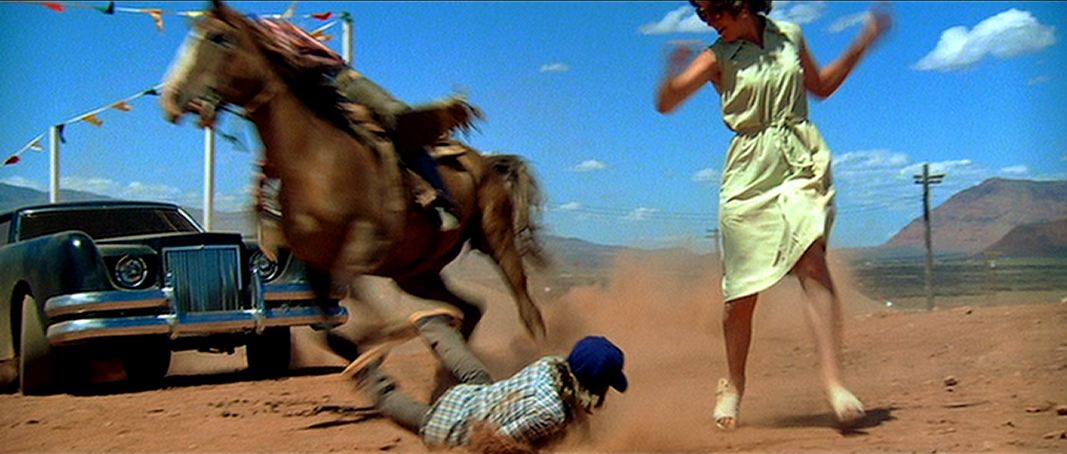
And The Car is a fascinating character both from a visceral and emotional perspective.  It is a large, imposing, black vehicle, with two doors (which give it an air of sportiness and simplicity) and a combined front end grill, bumper and headlight design that gives the impression of a fierce, frightening face.  Its black color allows it to stand out from its surroundings during the daylight, and concurrently also allows it to blend into the scenery at night so that it can leap out of nowhere and kill and frighten with a maximum degree of efficiency.  Its dark, smoked/tinted windows prevent one from not only seeing who might be driving it, but also make it impossible to know what the interior of The Car looks like, thus heightening the mystery surrounding it.  The Car is characterized with a low and smooth-sounding engine that is off-set by its frightening and taunting staccato-sounding horn, which is as piercing as one from a semi-truck.  The Car can supernaturally change wind patterns within its vicinity and turn a peaceful day into one characterized by fierce gusts as unsettling as the Santa Anas.  Once seen, heard, and experienced, The Car can never be forgotten.


Even more importantly than the visual impression it makes is the personality and moods The Car demonstrates as it terrorizes the community.  For a vehicle that is such an effective killing machine, The Car also demonstrates a surprisingly degree of patience, ingenuity and decisiveness in terms of who and how it kills.  It never simply shows up in the middle of the town square out of nowhere and indiscriminately mows everyone down.  It slowly and decisively makes its presence known by first terrorizing and killing the bicycling couple who are cycling in the canyon, as well as the young musician who is hitchhiking on the side of the rode.  In so doing, The Car has has sent a foreboding warning to the town that this is only the beginning and that more death and destruction is on its way.


I think it's the scene where The Car runs down Sheriff Everett Peck (John Marley) in the middle of the town at night right in front of the Sheriff's station that we begin to truly understand its modus operandi.  As you may recall, Sheriff Peck is crossing the street to join his colleagues for drinks at the local bar when he notices town drunk and physically abusive husband Amos Clemens (R.G. Armstrong) arguing with his wife down the street.  He notices a darkened vehicle parked several yards away as an elderly Navajo woman (Margaret Willey) is minding her business and walking past it alone on the sidewalk.  Out of nowhere, the darkened vehicle comes to life, drives past the Indian woman, completely disregarding her as a potential victim, swerves past Amos Clemens, who leaps out of its way, and makes its way straight at Sheriff Peck, who it mows down ruthlessly, as it drives away triumphantly blaring its horn.


This scene demonstrates the degree to which The Car has carefully chosen its victims.  The Navajo woman was probably disregarded because she was too easy a target for The Car to have any pleasure running down.  Amos Clemens was spared because he was an amoral, arrogant drunk and bully--someone whose continuing presence in the town The Car might likely approve of given his destructive and anti-social attitude.  Only Sheriff Peck was not spared, as he was a pure-hearted figure of authority in the town--a Methodist--who would likely be the one to mount an effective resistance to The Car.  Moments earlier, Sheriff Peck confides in Wade Parent that Amos Clemens' abused wife Bertha (Doris Dowling) was his high-school sweetheart.  It's clear that seeing her married to such an abusive brute tugs at the Sheriff's heartstrings as he is still in love with her.  Distracted thinking of her as he watches her fight with her husband from afar while crossing the street, the Sheriff's sense of situational awareness fails him as he is unable to realize The Car is dangerously close-by.  As with the bicycling couple and the young hitchhiker, The Car waits for opportunities where its victims are isolated, alone, and at their most vulnerable before it chooses to strike.


The Car's similarity with Amos Clemens is demonstrated when The Car terrorizes the women and children, including his wife and son, practicing for a school parade out by the local race track.  The Car proves to be just as much of a bully as Amos, by taunting its potential victims by stirring up the wind, blaring its horns from a distance, and then circling the track at least once before finally bursting through the barricades and showing itself clearly for the first time.  The Car is briefly distracted from mowing down the women and children, by the horse wranglers who are trying to buy them more time, and then chases everyone into an old cemetery.  It's at the cemetery that Lauren curses at The Car, in order to distract it long enough for her colleague Margie (Elizabeth Thompson) to run for help, and sets up her own death later that evening when it crashes into her house.  In singling out Lauren, The Car proves to be an oppressively patriarchal figure, indignant at being confronted by an assertive woman who had enough courage to stand up to it, and decides to retaliate against her at a time when she was as isolated and vulnerable as the other victims.  The irony is that Lauren and the other women and children were actually the safest they would ever be while hiding in the cemetery, as it was "hallowed ground" that the Satanic Car would never cross into.


In the end, The Car's refusal to mow down Amos Clemens as well as Wade Parent (when it knocked Wade to the ground unconscious with its door after it confronted Wade in the middle of the road) leads to its apparent destruction by Wade, Amos, and the other Sheriff's deputies.  Just as The Car refused to kill Amos Clemens in the middle of the street, The Car also refused to run Wade over after it knocked him unconscious.  I think it's because The Car probably felt it was unsporting to run down a worthy opponent like Wade when he was unable to defend himself.  The Car took more pleasure from battling Wade and chasing him while he is on his motorcycle when they were both on equal footing and he was ready for the challenge.  This hubris on the part of The Car allowed the men in town an opportunity to drive the evil out of the Community.  Wade finally comes to the realization that The Car cannot be destroyed by conventional means and turns to Amos, a munitions expert, to rig a nearby canyon with explosives so that The Car can be blown to bits after Wade lures it there.


The Car may have been defeated in Santa Ynez, but the end credits of the movie strongly suggest that The Car was reborn to terrorize Los Angeles, the City of Angels, a town filled with good people like Wade, Lauren, and Sheriff Peck, but also proportionately filled with more impure souls like Amos Clemens.  I always wondered what a sequel to "The Car" set in L.A. would have been like had it been successful enough to warrant it.  It would have been interesting to see what sort of tactics The Car would have resorted to in order to terrorize a larger metropolitan community--with more traffic, citizens, and police presence to contend with--and how the more sophisticated inhabitants of the city would have reacted to it.  However, we'll never know because "The Car" was not a box office hit at the time.  It's only been in the decades since then that a cult following for it developed that applauded the absurdity and sense of excitement that the movie had to offer.  That's a shame because, despite its gaps in logic, "The Car" remains an action-packed, suspenseful, and off-beat movie that still has the ability to give me the creeps decades after I first saw it. 

Saturday, May 4, 2013

A Proper Perspective on Deanna Durbin


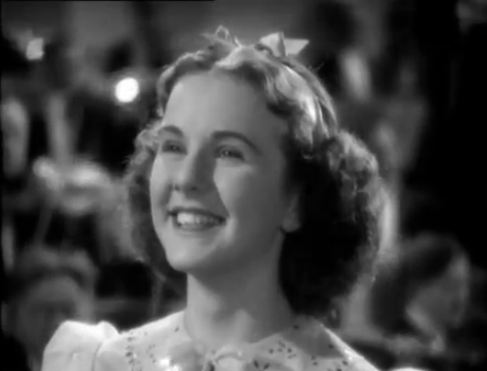
I've been reading all the obituaries and tributes paid to Deanna Durbin after her passing at age 91 was announced earlier this week.  I couldn't help but feel that almost all of them have described her inaccurately and that the know-nothing writers who penned them used the IMDB and Wikipedia as their primary source.  I was getting annoyed with reading people who clearly had never seen her work comment ignorantly about her, that I figured I would offer my two cents worth of knowledge about Durbin.  She wasn't just a "child star" of the 1930s, because she matured into a lovely and popular leading lady of the 1940s.  And I thought it was wrong of people to describe her as someone whose star was sliding by the time she retired in 1948.  She was still a major leading lady, even if her last few films weren't critical successes.  I became a Deanna Durbin fan when I was in elementary school and, from that point on, I have read almost everything I could get my hands on about the woman.  Even though her last few films were not the greatest, she was still considered a popular film star whose mere presence in a movie could guarantee success.  If Durbin walked away from her career in 1948, it wasn't so much because her popularity was sliding as it was that she had gotten fed up with working in films with inferior material that was being offered to her by her studio, Universal.  I have a feeling that, if she was given better material and, consequently, was happier with the direction of her career, she might have stayed with it and continued working for decades.


I was also annoyed reading some articles that seemed to imply Durbin was somehow inferior to Judy Garland.  Durbin became a big star before Garland did but happened to be under contract at Universal, a studio that did not pay as much attention to developing her career and her films in the way that MGM did for Garland.  It's been documented that Garland felt a degree of competitiveness with Durbin because she achieved stardom earlier and had a more stable life.  (It must have also bothered the insecure and narcissistic Garland to know that, when Louis B. Mayer watched the short 1936 film "Every Sunday" which MGM made as a "tryout" to decide whether to keep Durbin and Garland under contract, Mayer said "Get rid of the fat one" and a dumb executive thought he meant Durbin and dropped her, when in-fact Mayer actually meant that Garland should be dropped in favor of Durbin.  This mistake led to her being signed by Universal, and led to Garland constantly comparing herself to Durbin.)  If the general public does not know who Deanna Durbin is to the degree they do Judy Garland, it's because Durbin chose it that way when she retired from show business and moved to France.  It's been documented that she lived in a village outside of Paris, and that she was known for doing her own shopping and chores and jealously guarded her privacy.  The only time in the 65 years since she retired that she ever granted an interview was in 1983 to film historian David Shipman.  In the few quotes we have of Durbin since she left the business, she appears to sound severe, harsh, almost unappreciative of the career opportunities presented to her at Universal.


However, I know that when I wrote her a fan letter some time in the mid-1990s, after her movies came out on VHS and was reminded of how much I enjoyed her work, she responded with a personalized autographed picture and a note thanking me for writing to her.  She apologized that she couldn't make the note more personalized and address some of the comments I made about her movies, but indicated that the amount of letters she received had increased since her movies started being released on VHS and she needed to pace herself to ensure being able to respond to her letters in a timely manner.  When I told my High School History teacher, who loved her as a child, that I had gotten the autographed photo, he asked if I would ask her to send him one.  So I wrote her again and she responded by sending a personalized autographed picture and a short note thanking him for remembering her all these years later.  It must be noted that, each time she wrote back to me, she paid for the postage and handling herself.  (I was young and self-centered at the time and didn't think to enclosed a SASE to pay for the postage myself.)  The fact that a woman who had long turned her back on her career was spending her own money to print photos for her fans, and pay for the postage herself all the way from France to the United States, indicates the degree to which she was still appreciative of the public's interest in her, even if she had no further interest in dealing with the media or Hollywood.  This is further underscored by the fact that her family purportedly chose to announce her death by having a fan website disseminate the information, rather than contacting one of the major news agencies.


The thing that was great about Deanna Durbin is that it is hard to describe her movies to a modern-day audience because they don't fit into any easily categorized genre.  Almost like Elvis Presley, Deanna Durbin movies were a genre unto themselves.  Her movies were usually light, happy comedies with musical numbers interspersed throughout to allow Durbin to show off her incredibly mature, for her age, soprano singing voice.  She had such a larger-than-life personality that, in some movies, she played characters that everyone in town knew about before she had even met them.  She had a direct, forthright intelligence and honesty about herself as an actress that I greatly admired.  Her energetic characters had an assertiveness that belied stereotypes of the dreamy, romantic, submissive teenage girl.  Somehow she avoided being arch and annoying because her characters still had qualities of warmth, compassion, and vulnerability that justified her pushiness.  It's been said that her early films from 1936 to 1941, produced mostly by Joe Pasternak, were her better films, and that assessment is mostly correct.  With Pasternak, Durbin made many fine films including "One Hundred Men and a Girl" (1937), "Mad About Music" (1938), and "Three Smart Girls Grow Up" (1939), which were probably my personal favorites of the films she made.  With these three, the right elements of a good script, sharp direction, and sparkling performances came together to make them delightful entertainments.


"One Hundred Men and a Girl" was probably the best film Durbin ever made.  She played a young woman whose musician father (Adolph Menjou) is out of work, along with dozens of other musicians during the Great Depression.  She thinks up a scheme to have the acclaimed Leopold Stokowski conduct a benefit concert comprised of these musicians in order to help establish themselves as a new, acclaimed orchestra so that they can be put back to work.  In "Mad About Music," Durbin played a lonely young girl whose mother is a movie star in Hollywood.  Her mother's manager believes that if the public ever learns her mother has a teenage daughter, it will ruin her career.  As a result, Durbin is sent to a board school in Switzerland where she pretends that her father is a great explorer who writes lengthy letters of his adventures and sends her gifts and artifacts from his world travels.  When Durbin suddenly has to produce a father in order not to lose face in front of the other girls, she picks unsuspecting Herbert Marshall, a bachelor composer living in Paris who is on holiday at the nearby village, to assume the role.  Marshall, upon realizing what is happening, objects at first, but then relents when he realizes the humiliation Durbin will face with the girls.  Over time, Durbin and Marshall become close and he becomes a genuine father-figure to her.  The plot becomes even more complicated when Durbin learns her mother will be in Paris on a press junket, and she tags along with Herbert Marshall when he returns there on business.  In "Three Smart Girls Grow Up," Durbin plays matchmaker for her two older sisters, who each are in love with the other's fiance.  By the end of the film, she helps each of her sister's boyfriend's realize that they are in love with the other sister and helps bring about a touching ending for all involved.


In each of these movies, Durbin's screen image reached its zenith, as a wise, perceptive young woman who lies, schemes and manipulates in order to help her family, and the people she loves, find security and happiness.  In the hands of other actors, such qualities would not have worked, but Durbin played these roles with a selfless quality that reminded audiences that these machinations were not for her own good or happiness, but for others.  In "One Hundred Men and a Girl," she manipulates half of New York City to help her father and his friends find jobs.  In "Mad About Music," she creates an illusionary heroic father figure in order to protect her movie star mother's public image so that her classmates will only ask about her father and not her mother.  In "Three Smart Girls Grow Up," she risks the ire of her family, who think she's being a lovestruck, immature and spoiled brat, in order to help her sisters find true love.  In the process, she helps her father and his colleagues in "One Hundred Men and a Girl" retain their dignity and self-respect, she helps Herbert Marshall in "Mad About Music" find happiness with a family life he never expected to have, and she saves her sisters in "Three Smart Girls Grow Up" from a future of unhappiness being married to the wrong man.  In Deanna Durbin's world, the ends more than justify the means.  She never becomes as hateful, spiteful, or annoying as the presumptuous and evil Mona Freeman character in the "Dear Ruth" series of movies from Paramount in the late 1940s/early 1950s, where Freeman played a snotty brat whose fanciful lies and manipulation turn her family's life upside down.  This is because Durbin is always shown to have a conscience and humility about herself in her films that Freeman didn't have in her movies.  Durbin is shown in her films as someone who doesn't want to lie, and is clearly uncomfortable doing it, and at times her lies come back to haunt her when she can't keep track of them.  (Whereas, in Freeman's movies, she doesn't seem concerned about the problems she's caused, and is never punished enough or held accountable for being so thoughtless.)


What also helps these characters remain sympathetic is Durbin's ability to stand up for herself and others she cares about when people condescend to them.  In "One Hundred Men and a Girl," in the scene where her character tries to convince Stokowski to conduct an orchestra of unemployed musicians for one night, Stokowski's own orchestra laughs at her when she asks Stokowski to come to a garage where the band is rehearsing to hear them perform.  Durbin scolds them for being cruel and thoughtless to laugh at the plight of unemployed musicians, who have nowhere to rehearse but a garage, from the safety and comfort of their own jobs (especially since she wasn't asking Stokowski to replace his own orchestra permanently, just to lend his endorsement for one night to another one so that they might develop a professional reputation of their own).  Durbin was so assertive that I never liked watching her in "First Love" (1939) a big hit where she played a modern-day Cinderella sent to live with her rich aunt and uncle and treated badly by her relatives.  In that movie, Durbin becomes an atypical (for her) victim, the sort of role that Judy Garland excelled at, and it seems odd to see her abused and insulted throughout that movie.  In contrast, in her best roles, Durbin set a good example for young women to stand up for themselves and not take guff from others.


As Durbin grew older, her characters took on more responsible roles as well.  In "The Amazing Mrs. Holliday" (1943), she was an American missionary based in China who attempts to help a group of orphans enter the United States.  In "Hers to Hold," a sequel to the "Three Smart Girls" movies, Durbin's character falls in love with an Army Air Corps aviator (Joseph Cotten) who is about to be deployed overseas.  She gets a job at an aircraft plant in order to be close to him, but becomes alarmed when the husband of her friend and co-worker Hannah (Fay Helm) is killed overseas.  Durbin tries to get her industrialist father Charles Winninger to use his influence to prevent Cotten from being deployed and he refuses to help Durbin, reminding her that she needs to be supportive of Cotten's deployment, and not assume she is entitled to preferential treatment, because all American women must be ready to accept the sacrifice of the men they love in order to win the war.  For once, Durbin doesn't get what she wants in the movie but has matured enough to accept it.  At the end of the film, as Joseph Cotten is about to deploy, he warns her that it may be difficult to be in love with a man who is away fighting the war.  Durbin paraphrases her co-worker Hannah when she reassures Cotten, "I've got it all figured out.  I'll build 'em.  You fly 'em."


The specter of danger and death also loomed over Deanna Durbin's two forays into film noir territory, "Christmas Holiday" (1944), which I blogged about last month, and the comparatively light-hearted "Lady on a Train" (1945).  In "Christmas Holiday," Durbin played a naive young woman who marries a charming no-account, played by Gene Kelly, who is convicted of murdering a bookmaker.  Out of guilt over not steering him clear of his worst impulses, Durbin becomes a bluesy nightclub singer in a brothel that she presumably also works at as a prostitute.  When Kelly breaks out of prison at Christmastime, believing she had betrayed him, he shows up at the brothel intending to murder Durbin.  For once, Durbin is not surrounded by a circle of family and friends who provide a protective shield from the dangerous outside world, and her character lacks the confidence and assertiveness that we normally associate with her.  If Durbin's earlier, light-hearted characters had any flaw to them, it's that they did have an air of entitlement to them despite the caring and compassion they had for everyone around them.  In "Christmas Holiday," Durbin's character not only expects nothing from life, she even feels she is deserving of nothing.  When a handsome young Army lieutenant (Dean Harens) who she has confided with on Christmas Eve offers her the bed in his hotel suite while he plans to sleep on the couch in the other room, Durbin refuses to put him out.  She tells him, "You use the bedroom, it's your suite...as long as I have a pillow or some kind of a blanket...I'm very tired.  This is much nicer than sitting up all night in a coffee shop.  I'm really grateful to you...Look, Lieutenant, in my own little way, I'm just as much a gentleman as you are.  Please let me stay here."  Durbin's character has such low self-esteem in "Christmas Holiday," she can't even bring herself to accept a gentlemanly gesture from the one man in the story she can count on.  Durbin's atypical low-key performance in the movie is also underscored by the way she performed her two songs in the movie, the standards "Spring Will be a Little Late This Year" and "Always."  In contrast to her normally exuberant soprano voice, and with simpler musical accompaniment and arrangements, Durbin sings both of these songs with a bluesier, more soulful tone than what we're used to from her.  She projects an air of sadness and regret in these songs that show that Durbin's musical range went far beyond interpreting the classics.


In "Lady on a Train," Durbin returns to her comedic roots and plays a daffy heiress, a murder-mystery buff, who witnesses a homicide from the compartment of her train and is unable to convince anyone that it actually took place.  She takes it upon herself to go undercover and solve the crime.  Even though it has a light-hearted tone, Durbin's character is often on the verge of death and danger at every corner.  She proved to be a good thriller heroine and demonstrates how she should've been cast in more such roles.  Durbin abandons the demure image that had characterized her up till now and goes the blonde, glamour/girl route, projecting the most genuine sex appeal she has ever had on-screen.  At one point, while impersonating a nightclub singer who had been involved with the dead man, Durbin sings the slinky, sexy, surprisingly suggestive "Give Me a Little Kiss," the most seductive song she has ever performed.  At one point, Durbin goes over to the table of leading man David Bruce and his fiancee Patricia Morison.  As she sings "Give me a little kiss, will you huh?  What are you gonna miss, will you huh?" Durbin delivers that second verse ("What are you gonna miss, will you huh?") in the direction of Morison, with a taunting and sneering tone in order to flaunt in Morison's face that she's flirting with her man right in front of her.  Morison reacts with the appropriate level of indignation by the brazenness of Durbin's act and leaves.  As Durbin sits in David Bruce's lap and sings "I wouldn't say a word if I was askin' for the world.  But what's a little kiss, between a fella and his girl?" you know that she's got him in the palm of her hand.  More than any other film, "Lady on a Train" demonstrates the sort of untapped potential Durbin had playing more adult roles in motion pictures and proves that she matured gracefully from being a juvenile performer to full-fledged leading lady.


However, the five remaining films Durbin made at Universal before permanently retiring didn't effectively follow-up "Lady on a Train" with roles that capitalized on this mature image.  She was back to playing slightly grown-up variations on what she had already done before.  If these remaining films didn't do as well as the earlier ones, it had more to do with the repetitive nature of the material than anything Durbin did.  Her purported unhappiness with her career was not apparent on-screen because she still brought the right level of warmth and enthusiasm to her films as she always had.  For whatever reason, Durbin had a sixth sense on when it was time to call it quits in the business and left the audience wanting more from her, in contrast to her rival Judy Garland, who never knew when the jig was up and instead became a pathetic, painful, public eyesore as she deteriorated before everyone's eyes.  (Garland's daughter Liza Minnelli has done a good job of demonstrating that the Apple Doesn't Fall too Far from the Tree in that family.)  Yes, Judy Garland was a greater star, made greater movies, had a much longer career, and was more famous than Deanna Durbin in the long run, but she ended up an emotionally immature and financially unstable substance abuser who squandered her opportunities in show business by being unprofessional and unreliable, was from all accounts not a particularly responsible parent, and was dead by the age of 47.

 
In contrast, Durbin was from all-accounts a shrewd business woman who became financially independent from wise investments (the terms of her Universal contract reportedly paid for showings of her movies in any media, which means she would receive TV, Cable, and Video royalties) and, as such, left Hollywood on her terms, when she wanted to, instead of allowing it to leave her before she was ready to, and quietly raised a family that didn't become tabloid fodder and had a son who became a medical researcher.  I would not be surprised if, as with all families, there might have been some drama in Deanna Durbin's family and personal life, but we'll never know about it because she intended it that way by staying out of the limelight and not doing anything as a private individual that might have called unwanted attention to herself.  Deanna Durbin was an enigma who left behind a refreshing air of mystery about herself when she passed away.  Even if Deanna Durbin didn't identify with the light and innocent roles she played on-screen, it is apparent that her characters' qualities of wisdom, maturity and self-sufficient assertiveness reflected her real-life personality off-screen as well.