Sunday, February 3, 2013
The Hitchcock Brunette
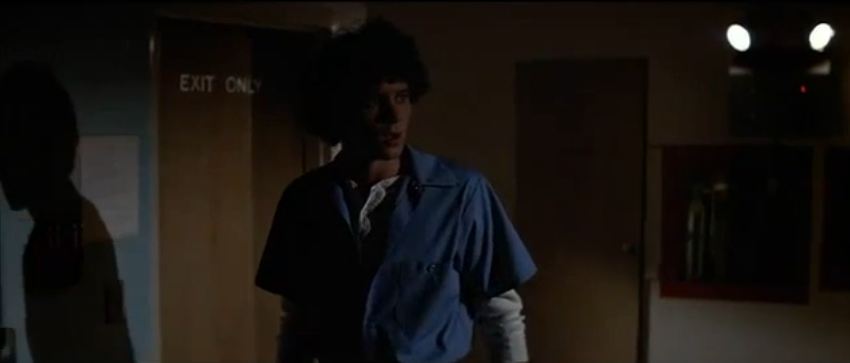
Suzanne Pleshette was probably the most overrated "underrated" actress in the history of Hollywood. Every write-up on Pleshette describes her as an actress who never fulfilled her potential in feature films. With all due respect, as much as I acknowledge that she was a talented and interesting actress, I don't think she was as great as people allege. Especially in her later years, when she did TV movies like the one where she played Leona Helmsley, Pleshette became overly mannered and harsh in her acting, almost as if she had become frustrated and disappointed at the types of films being offered to her and was unable to hide her annoyance anymore. Whatever sense of subtlety and sensitivity that may have been there in her early years was gone by the time she was in her 40s and 50s as her voice deepened to a gravelly growl that no longer purred with the sexy sophistication that it once had. Unlike her peers, her acting did not improve with experience and maturity as she began dipping into her usual bag of tricks and played "Suzanne Pleshette" far too often. I know that I am in the minority, but I never responded to her brash work on "The Bob Newhart Show" the way other people did. She simply didn't have the acting range that the similar Jessica Walter or Elizabeth Ashley (two other husky-voiced brunettes from the same era) had. That's a shame, because she did have a directness and forthright quality that made her appealing and interesting to watch in the early years of her career. Even though she's got a relatively minor role, perhaps her best work as an actress in feature films was her supporting role in Alfred Hitchcock's "The Birds" (1963).
In "The Birds," Pleshette plays Annie Hayworth, the lovelorn school teacher of Bodega Bay, California. Sophisticated Annie originally came to Bodega Bay years ago for a long weekend visit with the family of her beau Mitch Brenner (Rod Taylor), who she had been dating in San Francisco. Because of the icy reception Annie receives from Mitch's uptight mother Lydia (Jessica Tandy), Annie and Mitch's relationship fizzles after the weekend is over and they've returned to the city. However, Annie remains hopelessly in love with Mitch to such a degree that she moves to Bodega Bay and takes a job teaching at the local schoolhouse so that she can remain part of Mitch's life by establishing friendships with his mother and with his sister Cathy (Veronica Cartwright), who becomes one of her charges at school. All of this is told by Annie in hindsight and occurs before the movie even takes place. Annie's complacent existence in Bodega Bay starts unraveling with the arrival of socialite Melanie Daniels (Tippi Hedren), who met Mitch at a pet store in San Francisco and impulsively ordered some love birds, which Mitch had been inquiring about as a birthday gift for his sister, in order to bring them to Bodega Bay. Through a series of events, Melanie ends up staying in Bodega Bay over the weekend and takes a room at Annie's house. Over the course of several days, Bodega Bay is besieged by a series of violent bird attacks where Annie is killed while attempting to save Cathy's life.
What I liked about Suzanne Pleshette's work in "The Birds" is how controlled and civil Annie is during the course of the story. Annie is a character who would normally be portrayed as a spiteful old maid, but Pleshette makes her attractive, sophisticated, appealing. Pleshette brings an inherent decency to the character that make her scenes much more interesting and enlightening than expected. The highlight of the movie are the scenes between Annie and Tippi Hedren's Melanie. Rarely in movies or television do you find two women interested in the same man behave as compassionately and sympathetically as Annie and Melanie treat one another. The first Annie/Melanie scene, where Melanie arrives at Annie's home while she is tending to her garden, feature both characters subtly making pointed remarks meant to elicit information as to how the other woman feels about Mitch. When Melanie indicates that she met Mitch in San Francisco, Annie says tellingly "I guess that's where everyone meets Mitch." Annie realizes Melanie's intentions when she learns that she has brought love birds with her from San Francisco. Pleshette's close-up at that moment, with her slightly raised eyebrows, reflects a woman who has recognized a potential adversary for winning Mitch's heart. But she remains polite to Melanie nevertheless. When Melanie returns to Annie's house later to rent a room from her, Annie's knowing reactions and facial expressions at hearing about Melanie's decision to spend the night at Bodega Bay underscore her character's sadness and discomfort at realizing the extent of Melanie's successful efforts to attract Mitch's attention. Annie seems resigned to the fact that Melanie appears to be succeeding with Mitch in areas where Annie had failed.
In most films, one would normally expect Annie to turn into the jealous "other woman," but Hitchcock and Pleshette refreshingly turn this cliche upside down by portraying her as a warm and mature individual who continues to treat Melanie with decency and respect. Even though it's clear from Pleshette's reactions and gestures that Annie is heartbroken at realizing Mitch will never be in love with her, she never takes out her frustration on Melanie because she has accepted her fate as second-best in Mitch's life. Pleshette never forgets to instill Annie with traits of kindness and understanding and continually surprises us throughout "The Birds." Annie remains a thoughtful host to Melanie during her stay at her house and offers supportive advice to Melanie on how best to handle Mitch and his mother. My favorite scene in the movie is the one where Annie offers Melanie brandy and insight after the latter returns from a frustrating dinner at the Brenner's house. With her subtle gestures and discerning glances, Annie explains the circumstances of how she fell in love with Mitch and ended up in Bodega Bay. In so doing, Melanie begins to understand the strange relationship Mitch has with his mother. Melanie also realizes that Annie's limbo existence in Bodega Bay could potentially be her own future if she is not careful with how she deals with the Brenners.
Annie is an interesting character in Hitchcock's filmography, the rare Hitchcock woman who is forthright and honest and not prone to duplicity nor subterfuge. I like how Annie's story about Lydia's possessive grip on Mitch's life is told without any bitterness or resentment towards Mitch nor Lydia. Because she's unselfishly in-touch with her emotions, she's an incredibly wise and sympathetic character who we hope the best for. That's why it's so sad when Annie admits to Melanie that the reason she moved to Bodega Bay is because "I wanted to be near Mitch. Oh, it was over and done with and I knew it, but I still wanted to be near him. You see, I still like him a hell of a lot. And I don't want to lose that friendship...ever." You realize the paralyzing degree to which Annie has put her life on hold for Mitch. I also like the moment when Annie answers the phone during her conversation with Melanie and hands the phone over to Melanie so that she can speak with Mitch. Pleshette does some subtle gestures during this scene that speaks volumes. When she answers the phone and hears Mitch's voice, Pleshette demurely glances downward and spontaneously breaks into a low-key smile that demonstrates how happy she is to hear his voice. Moments later, as Annie sits nearby and listens to Melanie's conversation with Mitch, she quietly lowers her eyes and turns her head slightly when she realizes that Mitch is inviting Melanie to attend Cathy's birthday party tomorrow. We realize that, even though Annie is a realist, she still harbors some hope that her relationship with Mitch may resume. However, the emotions and behavior generated by Melanie's presence has made Annie realize that that will never happen. These small moments speak volumes regarding Annie feelings of disappointment concerning Mitch. In the end however, Annie wins our respect and admiration because she saves Cathy's life and, in the process, sacrifices her own when she pushes Cathy back into the house when the birds attack. We realize that Annie's love for Mitch was not shallow and that she sincerely cared about him and his family and was willing to put her life on the line to prove it. It's too bad that Mitch always took Annie for granted and never appreciated her as much as he should have.
Suzanne Pleshette never again worked in as important a feature film in Hollywood as "The Birds." Throughout her otherwise decent career, Pleshette mostly worked in television and in mediocre feature films that did little to elevate her status as an actress. Her frequent appearances in episodic guest appearances on TV shows established her as an appealing, reliable presence on the small screen, but it may have also caused the Industry to take Pleshette for granted. The prevailing wisdom in Hollywood could have been, "Why should the public pay to see her when they can watch her for free on television?" Pleshette was always popular with the general public but, because she spread herself too thin by being overly prolific, she rarely had opportunities to work with a major director like she did in "The Birds." Pleshette makes the most of the opportunity and allows you to realize the direction her career could have gone had she been offered film roles as good as the one she had here. Even though "The Birds" is meant to be Hitchcock's star-making showcase for Tippi Hedren, he doesn't short change Pleshette and allows her an opportunity to create a fully-dimensional character within her limited screen time. Hitchcock appears to have been fully engaged while working with Pleshette because he seems much more interested in exploring Annie's inner psyche. The result is that Suzanne Pleshette ends up playing a fully-dimensional individual in "The Birds" that ranks as another fascinatingly complex female character in the entire Alfred Hitchcock filmography.
Labels:
Alfred Hitchcock,
Annie Hayworth,
Bodega Bay,
Cathy Brenner,
Jessica Tandy,
Lydia Brenner,
Melanie Daniels,
Mitch Brenner,
Rod Taylor,
Suzanne Pleshette,
The Birds,
Tippi Hedren,
Veronica Cartwright
Saturday, February 2, 2013
Eve Should've Jumped into the Car and Gone to "Skyfall"
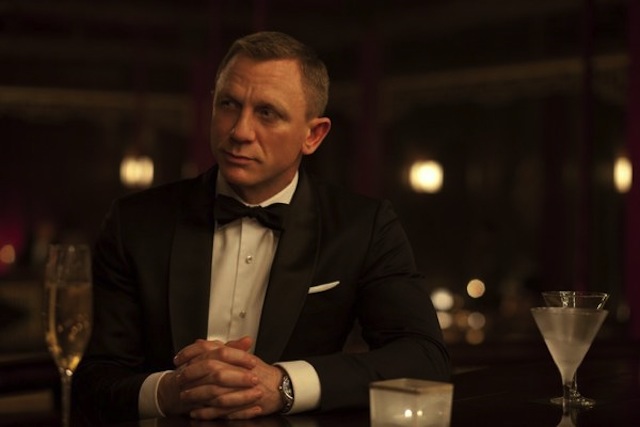
Watching the new James Bond movie, "Skyfall" (2012) is a very bittersweet experience for me. As I've mentioned before on this blog, my late father was a big fan of the James Bond series and it was a tradition in our family to go see every new Bond movie on the first night of release. My father was unable to see "Skyfall" because he passed away in the hospital the same weekend that it opened in the United States. I remember on the evening of Friday, November 9, 2012, when I was with him in his hospital room, CNN was reporting on the release of "Skyfall" in the United States that day. The irony occurred to me that my father and I would have been in line to see "Skyfall" at the local movie theater at that very moment if he was not battling lung cancer. It made me realize how important it is to enjoy and savor the little things in life with your loved ones when things are going well and everybody is enjoying good health. I now value those moments I spent with my father going to see the James Bond movies, as those were sincerely happy times that I spent with him.
I know my father would have enjoyed "Skyfall." I was very impressed with how producers Barbara Broccoli and Michael G. Wilson raised the bar with this film and helped to ensure that all parties involved with "Skyfall" brought their A-Game. Daniel Craig continues to impress me with his portrayal of Bond. Not only does he have the requisite elements of confidence, sophistication, brutality, and wit, but he also brings refreshing moments of humanity and vulnerability to the role that never seems as forced as when Pierce Brosnan superficially attempted to bring depth to Bond during his stint with the series in the 1990s. Judi Dench was also marvelous as M, bringing surprising levels of ruthlessness and fallibility to an already established character in a manner that never seemed contrived. Javier Bardem was a bit too outré for my tastes in the role of Raoul Silva, the arch-villain of the piece, but he at least creates a unique and worthy adversary for Bond. The screenplay was witty and exciting and created interesting conflicts and moments of genuine feeling and emotion that were rare for a Bond movie. And Adele's haunting and catchy title song sets just the right tone for the movie. I am sure my father would have appreciated all of these elements in addition to the requisite action and suspense that is expected of Bond.
However, there was one aspect of the movie where Broccoli and Wilson and director Sam Mendes may have dropped the ball and that involves the thankless role of the Bond Girls this time around. (I suspected something was awry months ago when the first posters for "Skyfall" appeared and ostensible leading lady Naomie Harris received fourth billing in the credits. Typically, the leading Bond Girl receives second or, at worst, third billing in the credits, but never before has she ever received billing as low as fourth place as she does here. It made me wonder how big a role the Bond Girls would have in "Skyfall.") The Bond movies have always been unique in the action genre because the women in them are not expendable elements as they are in other action films. The Bond Girl may occasionally be decorative, or reflect gender stereotyping, but they typically always played meaty, vital roles in each respective Bond movie. I've always enjoyed and appreciated what the Bond Girl brings to the entire James Bond series. I am always interested in seeing how each new leading lady in the series is substantively integrated into the storyline. That isn't the case this time around. Naomie Harris as MI-6 agent Eve Moneypenny, and Berenice Marlohe as Silva's trapped and quietly desperate courtesan Severine are almost completely expendable characters in "Skyfall." The only purpose to have Eve in the movie is to accidentally shoot Bond in the pre-credits sequence, causing him to fall from the train into the river (and causing MI-6 to lose the harddrive with the identity of embedded agents) thus setting up the personal crisis that both Bond and M are forced to contend with in having to reestablish their credibility in MI-6. Severine seems to only exist in so far as to bring Bond to the abandoned island that is Silva's lair so that Bond can apprehend him and take him back to London. Even though they each have some good scenes, they are mere plot devices who serve no other purpose in the movie than what I just indicated, and what little role they do have could have easily been filled by any of the male characters in the movie.
The shame of it all is that Eve and Severine make strong initial impressions in the movie. When Eve is introduced in the pre-titles chase sequence in Istanbul, she appears to be an assured, competent field agent who we expect will be a vital ally to Bond for the remainder of the movie. We don't expect Eve to be sidelined for much of "Skyfall" and appear sporadically throughout. Even when Eve has tailed Bond to Macau and helps cover him in the Casino, she contributes very little to that sequence in the story aside from shaving his beard in his hotel room and helping him dispatch one of Severine's bodyguards. And Eve's participation in repelling Silva's attack at the public inquiry, where M had been interrogated by Members of Parliament, is limited to little more than firing a few shots to cover Bond and helping to clear the MPs from the room. Unlike Bond Girls before her, Eve does very little to move the plot of "Skyfall" forward. (Even imperfectly portrayed Bond Girls like Tanya Roberts's Stacey Sutton in 1985's "A View to a Kill" played meaty roles in their respective films. Stacey had a clearly established adversarial relationship with arch-villain Zorin, and her knowledge of geology helps Bond uncover Zorin's master plan to flood Silicon Valley. It's just too bad the character wasn't better directed or acted.) Eve doesn't even participate in very many key scenes back at MI-6 headquarters involving M, Mallory (Ralph Fiennes), or Q (Ben Whishaw), which would have at least given her more screen time and helped to establish her role in the organization. Eve doesn't even appear in the finale at Bond's ancestral home, Skyfall. She is largely absent in the final act of the movie, which makes her announcement in the epilogue that she has decided not to return to field duty, and will be the assistant to the new M (Mallory) all the more perplexing. Aside from accidentally shooting Bond at the beginning of the film, nothing further happens with Eve to make us understand why she is willing to go from being an field agent to a mere administrative assistant. The gifted Naomie Harris, who gave an excellent performance in Danny Boyle's "28 Days Later" (2002), is pitifully wasted in "Skyfall." Her role as Eve in this Bond movie is not nearly as good as her role as the determined Selena in that earlier movie. When I heard Harris was cast in "Skyfall," I had great hopes that she would end up being one of the best Bond Girls in the entire series. That was how much of an impression she made on me in "28 Days Later." Because Eve has virtually nothing to do in "Skyfall," I scratch my head in bewilderment at the countless interviews Harris has given for "Skyfall" where she boasted about how substantial her role was in the movie, especially compared to earlier Bond Girls. (Sorry, Ms. Harris, but you're no better than any of your predecessors.)
Similarly, Severine starts out as a potentially fascinating character who dies moments after being introduced in the story. A better-acted, much more tragic and heartfelt variation on Andrea Anders (Maud Adams) in "The Man with the Golden Gun" (1974) and Lupe Lamora (Talisa Soto) in "Licence to Kill" (1989), we learn that Severine had been forced into prostitution from an early age in the Macau sex trade and that she is desperate to escape from Silva's imprisoning grasp on her life. She agrees to bring Bond to Silva in the hope that this stranger can kill her captor so she can finally set herself free. Unfortunately, Severine is killed by Silva moments before Bond gets the upper hand and reveals that he has had a team of British military helicopters following him to Silva's island. It seems strange that Bond would allow Severine to die when it is apparent that he could have overpowered Silva and his henchmen, and signaled the helicopters to appear, moments earlier so that Severine could have been saved. Severine is an underdeveloped character who had great potential in the few scenes we have with her. Bond's scene with Severine at the casino bar, where he sees through her veneer of confidence, is one of the finest acted scenes in the history of the series. Berenice Marlohe is marvelous in that moment. Marlohe effectively plays the scene at simultaneously different levels of emotion--her smiling assuredness on the surface masks immense fear and vulnerability underneath--that suggest she is a promising actress of considerable depth. At times, she reminds me of the great European actresses of the 1950s and 1960s, especially Sophia Loren and Francoise Dorleac. Unlike Andrea Anders or Lupe Lamora, we actually sense how frightened Severine is of the man who has enslaved her, which makes her potential survival or escape from him much more emotionally vital than it was with her earlier Bond Girl counterparts. Later, on the island, when a bound Severine is led away from Bond, she sincerely tells him "I'm sorry." That line resonates because it suggests the extent to which Severine is genuinely apologetic about getting Bond involved in her problems and potentially getting killed over it. She has no idea who Bond is, nor that he can take care of himself, so her apology resonates deeply as a selfless expression of contrition. In a short amount of time, Severine makes a strong impression that you want to see more from her, which makes it all the more bizarre that the filmmakers don't take advantage of allowing her to have more scenes in the movie.
A friend of mine opined that the diminished roles of the Bond Girls in "Skyfall" was because the story was really about the relationship between Bond and M and I agree that that is where the focus of the storyline is this time around. It was a good decision on the part of the screenwriters to delve into that complex relationship more deeply. But that doesn't mean Eve and Severine couldn't play vital roles in the plot as well. I don't buy the theory offered by some critics that M is the Bond Girl this time around. M is a powerful character who is in a category all to herself. The Bond Girl is a separate, important element to every entry in this series and there is no reason why both M, and the Bond Girls, couldn't each play a major role in "Skyfall." To short change Eve and Severine just because M has a larger role sends the wrong message that there's room for only one woman per movie to have a substantial, major role when there are so many movies (Bond or otherwise) featuring more than one male character playing a major role in the proceedings. Some commentators have complained about "Skyfall" for what they perceive to be its "Regressive Sexual Politics" because of the politically incorrect manner in which Eve and Severine (and even M) are portrayed as either helpless victims (Severine) or incompetent (Eve). Even though these are relevant issues to consider, I am actually not so much bothered by that as I am by the fact that I simply wish there was more screen time for their characters.
I sincerely believe that there is a way to better integrate Eve and Severine into the storyline of "Skyfall" without undermining all the qualities that make this a superior and unique entry in the Bond series. If you'll allow my indulgence, here is my modest proposal regarding how I think the movie should have proceeded in the second half of the film to allow both characters more screentime. Let's pick up at the scene on the abandoned island where Severine is bound and tied to the rock and Silva is about to shoot her in the head. Bond should've gotten the upper hand earlier, taken down Silva's men and apprehended Silva before revealing the helicopters who have been tracking and following him since he left Macau. Due to his quick actions, he saves Severine from getting killed. During this sequence, they should have cut briefly to a shot of Eve in one of the helicopters hovering overhead, to establish that she is part of the surveillance team tailing Bond to the island and helping to bring Silva into custody. Back in London, at MI-6, after M has confronted Silva in his cell and before her public hearing with the MPs, Bond should have a brief scene with Severine. He walks into a conference room where Eve is debriefing Severine on her knowledge of Silva's organization. Eve, sensing the chemistry between Bond and Severine, announces she must get ready to accompany Mallory to the public hearing and leaves them alone. After Eve has departed, Severine thanks Bond for having freed her from her life of enslavement to Silva. She tells Bond a little bit about her life, how she was forced into prostitution at a young age and later sold to Silva, and how she had been hoping for this day for years. I think the screenwriters should have given her a line where she reveals to Bond that today is her birthday and he's given her the best gift she could ever hope to have--a future. (A line that echoes what Diana Rigg's Tracy says to Bond after their wedding at the end of 1969's "On Her Majesty's Secret Service.") Later, when Silva escapes from custody, he seeks out Severine (who is being transferred from MI-6 to a safe house) and either kills her on the spot or, alternatively, kidnaps her to use her as a pawn to bring Bond out in the open during the finale at Skyfall ranch, Bond's ancestral home. If we go with the option of having her kidnapped, during the finale at Skyfall, Severine (grateful to Bond because he tried to help her) would get killed attempting to save his life. This way, I think her death would have much more resonance with the audience because we would have spent more time with Severine to be able to care about her, and also because she would have died in an effort to finally fight back against Silva.
With regards to Eve, the filmmakers should have allowed her to play a much more vital role during Silva's attack at the public hearing where M is testifying. While she is helping to clear the MPs from the room, and bring them to safety, Eve should have noticed that M needs additional protection and followed her and her aide Bill Tanner (Rory Kinnear) to where Bond is waiting and jumped into the car with them, leaving Tanner behind. Eve would accompany M and Bond to the warehouse where Bond's Aston Martin is in storage and join them as they switch vehicles and head to Skyfall ranch. At Skyfall, Eve would play an instrumental role in helping Bond, M and Kincade (Albert Finney) prepare for Silva's arrival. When Silva's first team of men arrive by foot to attack Skyfall, Eve's job would be to cover M while Bond and Kincade are busy dispatching the henchmen. However, despite her best efforts, Eve is unable to prevent M from being shot. As Kincade helps M escape through the underground tunnel, Eve helps Bond fight off Silva's ground and aerial assault. Like I mentioned earlier, Silva would have brought Severine with him by helicopter to try and bring Bond out in the open. When Severine tries to save Bond by getting ahold of a firearm and shooting Silva in the shoulder, she is shot and killed by his henchmen. As Bond makes his way to the church to save M, Eve helps by eliminating several of Silva's henchmen who are lying in wait to attack him. She arrives upon the scene when M dies in Bond's arms at the church. Feeling remorseful because M died from the wounds sustained at the assault on Skyfall when she failed to effectively cover her, Eve decides not to return to field duty and becomes Mallory's personal assistant. It would suggest that the reason why Eve has decided to become Mallory's assistant isn't that she couldn't handle being a field agent, but that she wants to be on Mallory's detail so that she can protect and ensure the safety of the new M. I sincerely believe that a course of events like the one I am suggesting would provide the sort of explanation as to why Eve would settle for working in the office (and provide even more of an impact when it is revealed that Eve is actually Miss Moneypenny). As it is portrayed in the actual movie, Eve's decision simply does not make any sense.
Anyway, these are just some rough ideas as to how Eve and Severine could have been better utilized in "Skyfall." If they had played a larger role similar to what I described, I would have been even more satisfied with the movie and agreed that it is perhaps the best James Bond movie ever made. I sincerely believe there was a way to better integrate them into the story in a manner that is not contrived and without sacrificing any quality. The Bond Girls are an important element to the James Bond series, and nothing should ever tamper with it. As it stands, I agree with the consensus that "Skyfall" remains one of the finest achievements in the entire James Bond series, a film that successfully integrates genuine depth and resonance and one that should last through the ages. Daniel Craig continues to reinvent the role and set the bar high for future portrayals of James Bond. Craig genuinely deserved an Oscar nomination for his portrayal of James Bond in "Skyfall." He brought unexpected nuances to the role without ever sacrificing the established elements in the character. Even though I admit it sounds like I'm quibbling too much about the role of the Bond Girls in "Skyfall," I enjoyed the movie immensely and look forward to returning to it for repeat viewings for years to come. I just wish I would have been able to share the experience of watching "Skyfall" with my father, who would have appreciated it as much as I did.
Labels:
Barbara Broccoli,
Berenice Marlohe,
Bond Girls,
Daniel Craig,
Eve Moneypenny,
James Bond,
Javier Barden,
Judi Dench,
M,
Michael G. Wilson,
Naomie Harris,
Raoul Silva,
Sam Mendes,
Severine,
Skyfall
Friday, February 1, 2013
Rediscovering an "Identity Unknown"
William Wyler's "The Best Years of Our Lives" (1946) was not the first movie dealing with America's readjustment to life after World War II. Predating it by almost a year was the ironically titled, due to its obscurity, "Identity Unknown" (1945). This was a low-budget, 71 minute drama produced by Poverty Row studio Republic Pictures, directed by the forgotten Walter Colmes, and starred veteran actor Richard Arlen. The movie opens on a hospital ship where a doctor asks one of the patients (Arlen) how he is doing and then casually says "By the way, I don't think I know your name." Arlen starts to answer the question ("Neither do I sir...don't you know who I am?"), then hesitates, and realizes that he has no idea who he is either. The doctor asked Arlen the question to see if he might spontaneously remember his name and identity if he asked it casually. The doctor informs Arlen that, when he was found, he had no dog tags on him because they were blown off. Arlen was discovered alongside the bodies of three other men who took cover at an abandoned farmhouse in France where they had been holding off the Germans for days. After a German dive bomber blew the house to bits, the Allies attacked and pushed the Germans back so they could reach the house. When the Allies reached the ruins of the house, they found the bodies of three men burned beyond recognition, and Arlen still alive but injured and suffering amnesia. Because the dog tags of the four men were blown off due to the explosion, the Army medical personnel were unable to determine who he is because all four men were of approximate height and weight.
The Army doctor, Major Williams (Ian Keith) shows Arlen a list of the men whose dog tags were discovered: Paul MacGregor, a married man who ran a trucking company in Bridgeton, Connecticut; Joseph Loring, an architect from Chester, West Virginia; Carl Granowski, an aspiring doctor from Chicago, Illinois; and Peter Anderson from Knoxville, Iowa. None of the names appear familiar to Arlen. When Major Williams asks Arlen's character what temporary name would he like to go by until they can establish his identity, Arlen picks "Johnny March" when he overhears a nearby patient playing "When Johnny Comes Marching Home" on his harmonica. After the ship arrives stateside, and Johnny is on an Army train being transported cross-country to a military hospital, he decides to disembark when the train, by chance, makes a stop in Bridgeton, Connecticut. He is going to look up the homes of each of the four men on the list to find out which one of them is his actual identity.
Johnny stops at the home of the first man on the list, Paul MacGregor. When Paul's widow Sally (Cheryl Walker) answers the door and has no reaction, he immediately rules out being MacGregor. He stays and talks with Sally, pretending to be a friend of Paul's, and accepts Sally's invitation to stay a few days with her. Sally shares the home with two other women who also work at the local aircraft plant. When Johnny takes Sally out to dinner, she begins to enjoy herself until she runs into her late husband's employers. She feels ashamed for being out so soon after his death, and asks to go home. Back at home, Johnny urges Sally not to retreat into herself to where she is unable to enjoy life anymore. He urges her to try her best to move on with her life. When Johnny lets slip a piece of information that betrays the fact that he didn't really know Paul, Sally becomes angry at him and tells him to leave immediately. Sally grows despondent and attempts to commit suicide by turning on the engine of her car inside a shut garage. Johnny saves her life and takes her out for a drive where he explains his situation. Sally begins to understand Johnny and the two fall in love.
But Johnny cannot stay for long, as he heads next to Chester, West Virginia where he looks up the home of architect Joseph Loring. When Johnny rings the doorbell, he is greeted by a little boy named Toddy (Bobby Driscoll) who immediately throws his arms around Johnny saying "Daddy? Oh Daddy I'm so glad you've come back! You are my Daddy aren't you? They told me you wouldn't come, but I knew different!" Johnny befriends Toddy as he takes a tour of the house. Johnny starts to believe that he is Joseph Loring until a nosy neighbor shows up and demands to know who he is and what he is doing in the house. Johnny realizes that he has made a mistake and that his search must continue. Toddy, feeling betrayed by Johnny, asks him "Why did you tell me you were my Daddy?" Johnny tries to put things in perspective to Toddy and explains that "Your Daddy sort of sent me to you. He was one of the finest and bravest men in the whole world. And I want you to always remember that. He was a good soldier and good soldiers don't cry. Now you've got to be a good soldier. You've got a job." Toddy begs Johnny to stay, but Johnny insists he has to leave, explaining that he has a job to do as well.
Johnny heads to Chicago, Illinois next where he looks up the family of Carl Grawnowski, the aspiring doctor. He learns that Carl's brother Joe makes a living working for gangsters as a cashier in a gambling house. When Johnny arrives at the gambling house, and Joe has no reaction upon seeing Johnny, he realizes he is not Carl and scratches that name off the list. Another gangster named Rocks Donnelly (Roger Pryor) shows up demanding payment from Joe for money he had given him days earlier to bet on a horse. When a hitman shows up gunning for Rocks, Joe jumps in front of Rocks and takes the bullet and saves his life. Joe is rushed to the hospital, asking for Johnny to come along with him. At the hospital, a grateful Rocks asks Joe why he saved his life. If the hitman had killed Rocks, Joe wouldn't owe him the money anymore. Joe says "Why did I do it? I guess it's just that I'm a sucker." Johnny says "You think a guy that thinks enough of something to stop lead is a sucker?" Rocks tells Joe that he no longer owes him the money and offers him a job in his organization. Johnny helps Joe to realize that the best way he can honor his brother Carl is by fulfilling Carl's aspirations of becoming a doctor. Rocks, grateful to Joe, promises to pay for Joe's tuition to become a doctor. Rocks takes Johnny to a party he is hosting at his lavish home that night. Johnny meets Rocks's sophisticated girlfriend, Wanda (Lola Lane) who takes a liking to this soldier. However, Wanda senses that Johnny's attention seems elsewhere and she encourages him to use Rocks's phone to call the person he is thinking about. Johnny calls Sally back in Connecticut and admits that he misses her. He gives her the update as to the progress he is making and tells her the only person left on the list is Peter Anderson from Iowa. Johnny asks Sally to meet up with him in Iowa so they can be together. Sally tells Johnny that she can't visit him because, even though she loves him, he doesn't even know if he's married. Johnny promises to call Sally once he gets to Iowa to inform her what he discovers there.
Johnny next heads to Knoxville, Iowa to find out if he is Peter Anderson, farmer. When the family dog happily greets Johnny, and the lady of the house, Mrs. Anderson (Sarah Padden), faints at the sight of Johnny, he thinks he has finally found his identity until Mr. Anderson (Forrest Taylor) comes out and does not react to seeing him. The Andersons invite Johnny to stay for supper and Johnny learns that Mr. Anderson has put the farm up for auction because he has lost all faith and hope. Despite Mrs. Anderson's protests, Mr. Anderson feels that there is no purpose in keeping the property now that he no longer has a son to leave it to, and also because everything about the farm reminds him of his son. Johnny is invited to stay overnight and further learns that Mr. Anderson realizes he has made a mistake of putting the farm up for auction, but feels he is unable to reverse his agreement with the bank to auction the farm. On the day of the auction, Johnny speaks to the attendees and dissuades them from bidding on the items up for sale. Johnny tells the bidders, "I don't think this auction should be held. I know that Mr. Anderson decided to sell this farm. But when he made that decision he wasn't himself. I think you all know the reason why. You see this just wasn't a farm to him. It was something far more precious, something that he and his son had built together. Now that son is gone. But as long as this farm endures, something of that boy will remain to give hope and consolation to two hearts, his father's and his mother's. Mr. Anderson doesn't see it that way now, but he will. For there isn't anything more important in the whole world than the love of a mother and a father for a boy that's gone. Unless it's the happiness they may still find in keeping faith with that boy's ideals. Especially if keeping faith with those ideals means helping to feed the millions of hungry kids that are waiting for the things that this farm can produce." As a result of Johnny's speech, none of the attendees have the stomach to buy any of the products and start to leave, as the bank's auctioneer tries vainly to interest them in the items.
As the Anderson's thank Johnny for his gesture, Johnny receives word that Sally has taken the train to the nearest town and has followed Johnny all the way from Connecticut to see him. Johnny borrows the Anderson's truck and drives over the speed limit all the way to the train station while being pursued by a motorcycle cop. When he arrives, he hugs Sally, but is soon arrested by nearby MPs who recognize Johnny as someone who has gone AWOL from the train before being officially discharged. Johnny is taken into custody as Sally returns the truck to the Andersons and the Army completes its investigation to discover who he is. Back at the post, Colonel Marlin (Nelson Leigh) scolds Johnny for taking matters into his own hands and not allowing the Army an opportunity to figure out who he is. After taking Johnny's fingerprints, and researching Army personnel records, Colonel Marlin calls Johnny into his office (with Sally present) and asks him "Do you know the date of the Austrian succession?...and how about the Counsel of Nicea?...and do you happen to know just why you remember those dates?"
Johnny finally remembers he is a professor of History named Charles Aldrich, 33 years old, who grew up an orphan, and is unmarried. Colonel Marlin informs Sally that CPT Aldrich/Johnny was a pilot in the Army Air Corps who was flying his aircraft over the farmhouse that McGregor, Loring, Granowski, and Anderson were barricaded in to drop food and supplies. The German dive bomber whose aircraft killed those men also knocked Aldrich/Johnny's plane from the sky and somehow he ended up injured amidst the rubble of the farmhouse. As Aldrich/Johnny and Sally leave Colonel Marlin's office to begin their new life together, the senior officer remarks aloud, "He's a father, a brother, a son, a husband. He's a doctor, a farmer, an architect, a truck driver. He is all men. The principals they believed in and fought for are still living in him. From now on, it's going to be his job to stand for those things. Because when Johnny March came home, they came home too."
"Identity Unknown" remains a quietly powerful drama whose themes of duty, sacrifice, and honor still resonate deeply 68 years later. It is a movie that acknowledges the immense suffering and sacrifice that military personnel, and their families, face in times of war. At the same time, the movie never takes on the defeatist attitude, or hindsight second-guessing, that "The Best Years of Our Lives" occasionally suffers from in questioning whether fighting World War II was worthwhile to the United States. "Identity Unknown" never forgets the individual sacrifice made by all military personnel during World War II, but underscores how fighting the war was still worthwhile in the end because the long term consequences of not fighting were much worse. The movie never takes on an insensitive, unrealistic attitude about the war because we never forget the level of grief on the faces of the characters Johnny meets throughout his journey.
During the course of "Identity Unknown," we see a young widow (Sally) attempt suicide rather than go on living without her husband; a lonely and traumatized child (Toddy) in denial that his father has died; a sibling (Joe) who feels bitter feelings of resentment and abandonment against his brother for joining the Army and getting killed; and parents (Mr. and Mrs. Anderson) who openly grieve over their child to a degree where they almost lose their sense of purpose. Rarely in 1940s cinema do you see such raw, exposed emotions that are meant to represent the grief and agony of family members of fallen military personnel during wartime. Director Walter Colmes, who had a very brief career producing and directing comedies, thrillers, and mysteries at Poverty Row studios, created a heartfelt and timeless movie that resonates deeply today. Even though Colmes's staging and composition is nothing to write home about, the characters, performances, and situations in "Identity Unknown" are always truthful and compelling. On the basis of this one movie, he should have had a much more prolific career.
Richard Arlen gives a beautiful rendered performance as the enigmatic "Johnny March." Because the character is a sounding board for the sadness and loneliness of all the people he encounters in the course of the story, Arlen doesn't get a chance to give a tour-de-force performance. But he still gives the character sensitivity and depth so that Johnny never comes across as an archetype. When we learn at the end of the film that Johnny is an orphan and a bachelor, we being to understand why he was able to fit in so easily with the families he encounters. In going from home to home, Johnny has an opportunity to experience the sort of home life he previously has never been able to enjoy. In essence, in the course of the movie, Johnny is subconsciously looking for the family he has yearned for all his life. At times, the movie is sort of a precursor to the TV shows "The Fugitive" and "Run for Your Life." Both shows featured characters either running from the law, or suffering from an ailment, who move from town to town, trying to fit in, and helping the lost and lonely people they encounter.
The characters Johnny encounters in "Identity Unknown" are all kind, decent people who richly deserve the help they get from him. Each of the families he meets welcome him into their lives unselfishly. (Even gangsters like Rocks turn out to have a sense of nobility about themselves. Frustrated that the Army refused him because of his bad liver, Rocks and his men lay off the alcohol so that they can all donate their blood to the Red Cross for the war effort. Unlike "The Best Years of Our Lives," there's a refreshing lack of cynicism in "Identity Unknown" about the people living back at the homefront during World War II.) In return, Johnny helps every family he meets to come to the realization that the best way they can honor their fallen loved one is to carry on with their lives to the best of their abilities, as if they are fulfilling their uncompleted aspirations. Concurrently, Johnny himself will also continue to honor these four men he never actually knew by living his life in a manner that allows him to represent what they each personally stood for. Because it is able to accomplish so much, with comparatively little resources, "Identity Unknown" remains a forgotten masterpiece, still awaiting rediscovery with a wider audience.
Sunday, January 27, 2013
"Halloween II": The Ideal Cut
The first time I ever had any true understanding of what post-production and editing meant on a motion picture was when I saw the TV version of "Halloween II" (1981). Universal syndicated an alternate version of this movie to independent TV stations starting around 1984. I saw it on the local KCOP Channel 13 in Los Angeles on Halloween of that year (it still plays frequently on AMC and can also be found on YouTube). It was startling to see how different both versions of this film were. Detailed descriptions of the differences between both versions can be found here and here. In general, both versions follow the same storyline: Moments after surviving her attack by Michael Myers in the first "Halloween" (1978), Laurie Strode (Jamie Lee Curtis) is rushed to Haddonfield Memorial Hospital where she is under the care of the medical and nursing staff. Meanwhile, Dr. Loomis (Donald Pleasance) continues searching for Michael's whereabouts as the small town grows hysterical upon learning of the murders he has committed earlier in the evening. Unbeknownst to all of them, Michael has followed Laurie to the hospital and begins systematically picking off the personnel and staff at the hospital until only Laurie is left. The movie ends with a fiery confrontation between Michael, Loomis, and Laurie.
It's been documented through the years that producer John Carpenter was dissatisfied with the version of "Halloween II" that director Rick Rosenthal turned in. In an effort to keep up with the vigorous slasher movie competition then in-vogue, which were much more explicitly violent than his original "Halloween" ever was, Carpenter supervised additions and reshoots where he added one murder, pumped up the violence in other scenes, and purportedly cut down on scenes establishing character development. The TV version is purportedly closer to what Rosenthal had intended for this film. One general difference between both versions of this film is that the theatrical cut of "Halloween II" moves fast, has some exciting and scary moments, but leaves you feeling cold. Even though it's a well-made movie, especially compared to other slasher movies in the early 1980s made in the wake of the original "Halloween," it doesn't have the personality and heart of the original movie. The first "Halloween" distinguished itself by creating a trio of teenage girls that the audience enjoys spending time with. In the theatrical cut of "Halloween II," you never get to know the Haddonfield Memorial Hospital staff who are tending to Laurie. As a result, the theatrical cut never quite generates the same level of suspense as the first film because you are never allowed an opportunity to care about these new protagonists.
All of that changes in the alternate TV version. In this cut of the movie, you get to spend considerably more time with the hospital personnel who, in the other version, came across as mere ciphers. This is not to say that they have become fully dimensional characters, but we now get a better sense of who they are so that their deaths and/or survival matters more to us. In this cut of the movie, the additional scenes with head nurse Mrs. Alves (Gloria Gifford) allows her to come across less of a stern task master, and more as a hard-working professional who expects all the nurses under her supervision approach their work with the same level of maturity and high-standards that she brings to her work so that their patients can rest comfortably. This is underscored by the little vignette, added to the end of the scene early in the movie when Laurie is brought to the ER, where Mrs. Alves draws the curtains as Laurie is being undressed and prepped for surgery, and orders the ambulance attendants out of the room. We see how Mrs. Alves remains sensitive to Laurie's privacy and modesty. We also spend more time with nurse Janet (Ana Alicia) so that we get a better sense of her mild hysteria and nervous disposition. Because Janet in the TV version appears to be the only nurse who has any genuine sense of concern or doom about what may happen to them all, based on what Michael Myers has done earlier in the day, she becomes a more vulnerable and sympathetic character than she was in the theatrical version due to her heightened awareness. Cliff Emmich's likeable security guard Mr. Garrett also gets a few extra scenes where he responds to the news reports of the teenagers murdered in the first "Halloween" by speculating that it must have involved youths under the influence of controlled substances. This helps to better establish him as an old-fashioned, no-nonsense, traditional kind of guy.
Tawny Moyer's nurse Jill comes across as the most put-together, most professional of the younger nursing staff in the TV version, as the additional scenes help establish that she is the only one that Mrs. Alves does not scold in the course of the evening because she makes no mistakes. Pamela Susan Shoop's appealing nurse Karen also benefits from the additional scenes. In the TV version, she comes across as less of an irresponsible flake and becomes a more feisty, level-headed, and quirky individual. Ford Rainey's Dr. Mixter, who virtually disappears in the theatrical version until Janet finds him dead in his office, has more scenes that help to establish his concern over whether he tended to Laurie's wounds properly. The added scene where he is trying to reassure himself that he did all that he could in treating Laurie's wounds, and that her scar won't be that noticeable, allows the character a sense of humanity and vulnerability that wasn't there at all in the theatrical cut. And Lance Guest as Jimmy, the sympathetic young ambulance attendant who is established as a potential love interest for Laurie, benefits in the TV version by virtue of the fact that the original, scripted ending of the film is reinserted in order to allow him to survive. In the theatrical version, Jimmy appears to have died from head wounds sustained from slipping on Mrs. Alves's blood on the hospital operating room floor. (More about this later.) That version of the movie ends with the seeming sole survivor Laurie, desolate and alone, in the back of the ambulance as it takes her away. In the TV version, Jimmy reappears in the back of the ambulance with Laurie, his head wrapped in bandage, but otherwise all right. The sight of Jimmy alive brings Laurie to tears, as the TV version ends touchingly on a more upbeat, hopeful note. (This gives the movie's use of "Mr. Sandman" over the end credits an entirely different nuance. Rather than eerily underscoring how, as it does in the theatrical version, Laurie will remain forever haunted by her encounter with Michael Myers, this TV version ending makes the song ironically upbeat, and makes Michael an inadvertent Cupid for Laurie. As sick as it sounds, Michael's violent actions in the previous 24 hours have put virginal, repressed Laurie on the path to finding a prospective love interest. After everything she's been through during that day, the poor girl genuinely deserves a break.) The only person who does not appear to benefit from the additional scenes in the TV version is senior ambulance attendant Bud (Leo Rossi), who comes across as crass and sardonic as he does in the theatrical cut.
The additional TV scenes also help to resolve some glaring plot holes that remain unexplained in the theatrical version. In the TV version, it is established that Laurie's parents, Mr. and Mrs. Strode, were at the Country Club Halloween party with Dr. Mixter, and that they left the party before Janet, who forgot to contact them there before going on her break, was able to reach them. (Janet is shown in the TV version being scolded by an irritated Mrs. Alves over this.) In the theatrical version, the nurses try to reach the Strodes to no avail. It's never explained that one reason why they appear to be missing is because Janet forgets to call them at an opportune time. In the second-half of the theatrical version, the hospital becomes dark and shadowy without explanation, something that I recall a few critics in print reviews complained about. In the TV version, it is established that Michael Myers cut the power to the hospital and that the dark and shadowy lighting that results is due to the emergency generator kicking in. And, as mentioned earlier, the TV version helps shed light on the ultimate fate of Jimmy, who appeared to lose consciousness in his car after sustaining his head injuries from his fall. In the theatrical version, he passes out in his car in Laurie's presence. We never get the impression that his head injuries were enough to kill him, so it is confusing at the end of the movie when the theatrical version never goes back to address what ultimately happened to him.
However, even though the TV version helps to resolve the ultimate fate of Jimmy, it also creates its own share of flaws reflected in the fact that his scenes at the end of the film were restructured to create an entirely different impression as to how he was injured. I much prefer the sequence of events in the theatrical version where Jimmy finds Mrs. Alves has bled to death in the hospital operating room, slips on her blood and hits his head on the hard floor, staggers to his car (where Laurie is hiding), tries to start it up to get them to safety, and loses consciousness. The TV version has none of this. Instead, it re-edits and reassembles the scenes and individual shots where Jimmy is seen wandering around the hospital, and slips from Mrs. Alves's blood on the ground, to create the impression that Jimmy is still wandering around looking for Laurie during the final confrontation between Dr. Loomis, Laurie, and Michael Myers, and that he sustained his head injuries from falling backwards because of the explosion Dr. Loomis sets off to kill Michael. It simply seems lame in the TV version that Jimmy doesn't seem to notice the gunfire and shouts of excitement coming from Dr. Loomis and Laurie during their battle with Michael. There was no need to re-edit the sequence of events just to set up Jimmy's reappearance in the ambulance at the end. The set-up for Jimmy's reappearance was done well in the theatrical version and should have remained intact. (I would love to find out what motivated the person at Universal in charge of preparing the TV version of "Halloween II" to make this change.)
I also don't like the fact that the fate of Mrs. Alves, Janet, and Dr. Mixter remain unresolved in the TV version, which gives the impression that they have disappeared from the hospital without explanation. Because of the revisions made to Jimmy's scenes in the last act, the scene where he finds Mrs. Alves strapped to the gurney, the blood drained from her body, is mostly excised from the TV version. (You can see a brief, blink-and-you'll-miss-her shot of Mrs. Alves's lifeless body on the gurney in the quick shot used in the TV version to give the impression that Jimmy was knocked to the ground by the sheer force of the explosion at the end of the film.) Concurrently, the scene where Janet finds Dr. Mixter's lifeless body in his office, and is then killed by Michael, is deleted entirely from the TV version. The net result is that it gives the impression that these characters may have, inexplicably, gone AWOL in the course of the evening. This completely contradicts what's already been established about them earlier in the film as being conscientious medical professionals. The TV version also reassembles the sequence of events in the opening act of the movie. Rather than starting the movie, as in the theatrical version, with a pre-titles sequence highlighting the finale of the first "Halloween," and then launching into the memorable opening credits, the TV version flips this by starting with the opening credits and then segue-ways into the closing scenes from the first film. In so doing, we lose Dr. Loomis's hilariously blunt retort to the neighbor complaining that he had been trick-or-treated to death that night--"You don't know what death is!"--that helps kick off the sequel in high gear.
Another problem with the TV version is that it is indeed too tame for its own good. With its re-dubbed dialogue (covering up any sort of strong language) and its toned-down violence, the TV version plays like a Movie of the Week that is too timid to really cut loose. In addition, the sequence of the introductory scenes in the first half hour of the TV version are assembled in a manner considerably different than the theatrical cut so that its pacing and flow feel awkward in comparison. If this was how Rosenthal's cut of the movie played, then one begins to understand why Carpenter made alterations to the movie in post production. In that sense, I don't mind Carpenter's addition of Alice (Anne Bruner), the teenage girl left alone at home who has an unfortunate encounter with Michael Myers moments after the opening credit sequence in the theatrical version. The scene helps to set the tone of horror and mayhem for the rest of the movie as we now see that Michael is expanding his rampage from the limited circle of characters in the first film to a wider group of individuals. In the TV version, we briefly see Alice at home as Michael watches her from outside, but the sequence goes nowhere and proves pointless as we immediately cut back to the hospital and are left with the impression that nothing dire happened to Alice. The exclusion of Alice's death causes the first act of the TV version to be a bit too loose and meandering for at least a half hour. Whoever was editing "Halloween II" for television should have kept the scene in, but toned down the violence, in order to help set the tone of impending doom for the rest of the movie.
Because the TV version has its shares of considerable flaws, there is no way anyone can consider it an ideal "director's cut" that properly reflects Rick Rosenthal's (or even John Carpenter's) vision. It is unlikely that Rosenthal intended to have the fates of Mrs. Alves, Janet, Dr. Mixter and Jimmy altered to such a drastic degree. It is too bad that the recent Collector's Edition Blu-Ray and DVD of "Halloween II" from Scream Factory did not attempt to create an "Ideal Cut" of the movie that incorporates the best qualities of both the original 1981 theatrical cut and the later 1984 TV version into one film. (Though I give Scream Factory big kudos for including the TV version among its considerable extras.) It would be nice to see a version of "Halloween II" that features all of the character development scenes underscoring the camaraderie among the Haddonfield Memorial Hospital Staff, without the weird alterations to the storyline concerning Jimmy's injuries, and with the requisite R-Rated elements of strong language and violence still intact. (However, I am fine with the notion of deleting the nudity from Pamela Susan Shoop's whirlpool bath death scene. Even though Shoop is a lovely woman, I understand from interviews she has given that she was uncomfortable with the nudity and that that is the only element she regrets about making the movie. The TV version edits the scene in a smooth way where the nudity is implied, but Shoop's modesty is protected. I have no problems keeping that out, but leaving the other R-rated elements in.) Given the continued interest and popularity in the "Halloween" series, especially this film, it is surprising that no one has considered doing the sort of "Ideal Cut" of the movie as I have suggested. If the theatrical cut in 1981 featured both Rosenthal's character development, as well as Carpenter's effectively chilling contributions, I have a feeling that it would have been much better received by critics and openly acknowledged as a worthy follow-up to its classic predecessor.
Labels:
Ana Alicia,
Cliff Emmich,
Donald Pleasance,
Ford Rainey,
Gloria Gifford,
Halloween II,
Jamie Lee Curtis,
John Carpenter,
Lance Guest,
Leo Rossi,
Pamela Susan Shoop,
Rick Rosenthal,
Tawny Moyer
Subscribe to:
Posts (Atom)