Showing posts with label Farrah Fawcett. Show all posts

Sunday, May 26, 2013

Charlie's Best and Most Underrated Angel


I admit that I've always been a big fan of "Charlie's Angels" (1976-81), which I already discussed in the early days of my blog.  As I've grown older, my affection for the show continues, as I have also started to recognize aspects and qualities in the show that I once took for granted.  I now realize that Farrah Fawcett, as much as we all loved her, was probably the most overrated of the Angels.  Her work as Jill Munroe was iconic and endearing, but was indeed as light-weight and fluffy as the show's detractors have alleged.  For years, Jaclyn Smith as Kelly Garrett was considered everyone's "favorite" Angel because she was regarded as the classiest and most elegant and I wouldn't dispute that assessment because I do have high regard for her work on the series.  But in recent years, there's one actress on the series whose work continues to surprise and amaze me with the depth and nuance she brought to her role, and that's Cheryl Ladd as Kris Munroe, the first replacement Angel on the series, brought in to take the place of Fawcett when she departed from the series after the first season.


I think of Ladd as the most underrated of all of "Charlie's Angels."  She's usually given short shrift because she wasn't part of the original cast, is in the shadow of Farrah for having replaced her, and wasn't considered the "smart" one the way Kate Jackson is regarded.  But over the years I've also started to regard her as the best of the Angels because of the way she brought recognizable human traits to the Kris Munroe character that allowed her to rise above the fluffy assumptions and expectations the public has about the series.  This is largely due to the fact that Cheryl Ladd was probably the best actress working on that series.  I've also found, in talking with people who also grew up watching the series in the 1970s and 1980s, that a surprising number of men and women liked Ladd better than Fawcett on "Charlie's Angels" because she just seemed to blend into the ensemble better, rather than try and take up much of the spotlight the way Fawcett inadvertently did when she was on the series.


Growing up in the 1970s and 1980s, I don't think Cheryl Ladd was ever taken for granted by genuine fans of the show who watched it in its original run.  I think we all appreciated how well she integrated into the series after Fawcett's departure.  I also believe there was some fan resentment against Fawcett for abandoning the series that had made her a star so soon after its debut, and that this worked in Ladd's favor.  However, as the decades have progressed, I feel that Ladd's contribution to the series has been minimized and diminished by know-nothing writers in the media who continually hype Fawcett's one-season tenure on "Charlie's Angels" as if she had been on it throughout most of its run.  It appears to have been forgotten that Ladd took over at the beginning of the second season and continued with the series for the next four years until it ended in 1981.  For people who actually remember watching "Charlie's Angels," Ladd made a bigger impression than Fawcett by virtue of having been on it longer.


But I also think Ladd's work on the series holds up better because she brought an air of gravitas, maturity and empathy to her role that surpassed that of her other co-stars.  (Kate Jackson became campier as her time on the series progressed, and Jaclyn Smith, while still appealing, could be a one-note actress at times.)  It's been said that producer Aaron Spelling convinced Ladd to accept the role by promising her that Kris Munroe would be written as the wide-eyed kid sister, who could be humorous, make mistakes, and be recognized by the audience as a human being and not just a glamorous archetype.  Indeed, in her opening scene in her debut episode, Kris comes across as eager and slightly naive, with an endearingly high-pitched voice reflective of her youth.  That may have been the original concept of the character throughout Kris Munroe's debut season but, as her time on the series progressed, her voice deepened and she began demonstrating leadership qualities as she continued to mature so that, by the end of the series, the character had become confident and assured as a private detective and had a level of compassion and concern for others that demonstrated she was wise beyond her years.  I've said before on this blog that the writers often seemed to give Kris Munroe the most serious scenes on the show that elevated it from the light escapism it was intended to be that allowed Ladd to demonstrate qualities of humanity and decency that belied the media's fluffy expectations of the series.


Ladd also had a quality of speaking in a particularly pointed and direct manner that allowed her to get to the heart of a scene succinctly and effectively.  I remember in one 1979 episode, "Angels Go Truckin'" where Ladd admonished Maggie (Joanne Linville) the villainess at the end of the episode, who was behind a hijacking operation stealing the cargo her own company was hired to haul, "It's just too bad that you thought stealin' your own cargo would bring you that gold, Maggie.  You know, you really blew it.  You could've proved once and for all that women can do anything that men can do."  Ladd delivers the line with a damning demeanor that really drives home the degree to which Kris was disappointed in learning of Maggie's treachery.  Furthermore, as an actress, Ladd was particularly good at just listening to the other actors in a scene, taking in and absorbing what they were saying so that her character's response was always natural and organic.  I never got the feeling that Ladd was trying to steal the spotlight from anyone, but was merely working hard to blend into the ensemble.  I think this had to do with the fact that she entered the show at a difficult time in the second season after Farrah Fawcett had left and wanted to do the best she could to be accepted into the cast.  In some ways, I think Ladd's eagerness to be accepted was one reason why her performance in the role was always solid--like her character, Ladd never wanted to be accused by her colleagues or the public for having fallen down on the job.  I think she was a good listener as an actress on the show because she wanted her fellow co-stars to know that she knew that this was an ensemble piece and she wasn't there to steal the spotlight from anyone but, in actuality, was there to enhance them.


Because Ladd wasn't part of the original cast, there's always been a bit of an "outsider" quality to her where the series is concerned that makes her more endearing than the members of the original cast.  While glancing at interviews and articles about the series, one gets the impression that Kate Jackson never particularly warmed up to her, that it took Jaclyn Smith awhile before she and Ladd eventually became good friends, and that Fawcett was friendly enough, but not particularly close with Ladd, when she returned to guest-star on the series later on.  Ladd has stated that she always felt like a bit of an outsider whenever Fawcett returned to guest-star on the series when Kate Jackson was still on it, and that the original three actresses retreated back into their first-season clique, leaving her out of their sphere.  As such, it's hard not to warm up to her feelings of being excluded and taken for granted at times.  Anyone who has experienced that in a scholastic or professional environment can visualize and appreciate what Ladd was describing.  I also like how Ladd has always acknowledged in interviews the challenges that Shelley Hack and Tanya Roberts faced when they later joined the cast and had to try and fit in with the producers' and the audiences' expectations of them.  Ladd obviously identified with what Hack and Roberts each experienced while trying to establish their own identities within the framework of an already-existing hit series.  In interviews about the series, Ladd almost always mentions Hack and Roberts and how much she enjoyed working with them, whereas Jaclyn Smith tends to mention them in a casual manner in her interviews, without going into too much detail about them, which suggests the extent to which Smith doesn't regard them as full-fledged colleagues on the show the way Ladd does.


For instance, I always remember how the final Shelley Hack episode closed with Jaclyn Smith and Cheryl Ladd with their arms around each other, with Hack left out of that final shot standing from the sidelines looking at them.  It was a visual indicator at the end of the season demonstrating the extent to which Hack, who was not asked to return for another season, was no longer part of the team, and reflects the degree to which the producers had washed their hands of her by that point.  A year later, when the series was ending, the final shot of the series in the last episode was a hospital room scene with Ladd, Tanya Roberts and David Doyle standing bedside next to a wounded Jaclyn Smith.  As the camera slowly zoomed out of the scene, I always liked how Ladd, who was standing in the center, clutching Jaclyn Smith's hand with her left hand, reached over and wrapped her right arm around Tanya Roberts, acknowledging Roberts' presence and pulling her closer into the shot.  It's as if Cheryl Ladd, remembering how Shelley Hack was given short shrift in the final shot of the previous season, was being conscientious about acknowledging the contributions of the newest member of the cast, Tanya Roberts, as the show was ending and wanted to ensure that there was no way she could be left out of the final shot of the entire series.  I always considered it a generous gesture from one fellow actor to another.  (The fact that Ladd has acknowledged in interviews that she always felt bad for how the producers never really appreciated Shelley Hack and discharged her from the series in a tactless manner, and how she also felt bad for Tanya Roberts that the show was cancelled so soon after she arrived, helps contribute to my impression of her.)


But it's Ladd's actual work on-screen on "Charlie's Angels" that continues to impress me and the episode that exemplifies the qualities of maturity and decency that Ladd brought to Kris Munroe was the 1980 segment entitled "Harrigan's Angel."  Veteran actor Howard Duff guest-starred as Joseph Harrigan, an alcoholic, down-on-his luck private detective who has been hired, along with the Angels, by an electronics firm to investigate a series of robberies at their plant.  Unbeknownst to Harrigan, the Angels, or Bosley (David Doyle) is the fact that the head of the firm is behind these robberies and that he hired someone as seemingly incompetent as Harrigan to lead the investigation to give the false impression that he is doing the proper due diligence, while at the same time ensuring that his treachery will never be discovered.  At first recognizing that Harrigan's involvement might impede the investigation, Kris volunteers to keep an eye on him to allow Kelly and Tiffany to do most of the legwork.  When Kelly asks Kris if she thinks she can handle the bumbling, befuddled and blasted Harrigan, Kris compassionately responds, "Oh yeah.  I used to know someone very much like him.  Got real down on his luck, started drinking.  But, you know, when he got dried out he sure was a helluva guy."  When Kelly asks if it was anyone they know, Kris humbly answers, "My father.  I think I can handle Mr. Harrigan."  Ladd plays the scene beautifully, demonstrating empathy and compassion for Harrigan's plight, but without any sense of bitterness or self-pity with regards to being the child of an alcoholic, that reflects a level of humility and maturity that you don't normally associate with characters on this series.


Throughout much of the episode, Kris subtly, but effectively, keeps Harrigan from taking another drink so that he can remain sober to help work on the case and also to allow him to begin regaining a sense of his bearings.  She hides his booze, pretends to accidentally smash his bottle of liquor on the sidewalk, takes his glass away from him just before he starts drinking and distracts him by asking him to bring her his case notes so that she can review them, all to keep him from taking another drink.  Kris' tactics to keep Harrigan away from the booze are done so smoothly that you start to get the impression that she must have had a lot of experience at home as a child trying to help keep her father sober.  In so doing, the writers and Ladd help bring depth and develop the backstory to the Kris character in a way that never feels contrived or out-of-place for the series.  It's integrated effectively into the storyline so that the audience isn't expected to wallow in it the way we would in a modern-day series, where backstory and character motivation are now done in a heavy-handed manner.


At first, we get the impression that Kris feels sorry for Harrigan, but over the course of their time together, we start to see how Kris recognizes Harrigan was once a skillful investigator, and has since fallen on bad times.  When they are being pursued on the road by a truck attempting to run them down, Harrigan advises Kris on how to elude them, based on a tactic he used to elude German patrols in occupied France during World War II, which allows her to see a side of him that she hadn't expected.  As such, instead of merely keeping him from drinking and impeding their investigation, she now works hard to bring some dignity back into Harrigan's life, even letting him take credit for a hunch and theory in the investigation that she developed on her own.  In my favorite scene in the episode, Kris discovers some framed pieces in a box at Harrigan's apartment that helps further illuminate his once impressive career.  She discovers a framed photo of a youthful Harrigan with General Dwight D. Eisenhower that was personally inscribed to Harrigan by Ike, as well as a framed Certificate of Appreciation from General Omar Bradley, that helps put Harrigan in an even more impressive light.


When Kris asks about Eisenhower, Harrigan humbly explains to Kris, "Well, I did some special work for him in France during the occupation...Undercover, OSS-type stuff, you know."  As Kris expresses aloud how impressed she is with the Certificate that Harrigan received from General Bradley, Harrigan comments, "Can't figure it, can you?...You've been coddling me all day.  Keeping me out of the sauce.  Out of the way, so your friends can do their thing.  Now, suddenly, it looks like the dummy wasn't always a dummy."  When Kris apologizes for initially condescending to Harrigan, he reassures her "Don't be.  You made all the right moves.  I'm the one who's out of step.  Those were good days.  Somehow between them and now, I seem to have gotten off the track."  As Harrigan lifts the glass and makes a self-pitying toast "To better times," Kris offers to make him a home-cooked meal if he promises to set the glass down and just talk with her for awhile.  A touched Harrigan responds "Nobody's cooked dinner for me for a long time...OK, start cooking" as he puts the glass down and stops drinking, as Kris requested.


Kris tries to keep the mood light by informing Harrigan, after looking through his kitchen, "I just went through all your cupboards and your refrigerator.  Based on what you have in this apartment, I could wax your floors, poison a few rats, polish sixty, oh, seventy pairs of shoes, and maybe make you a navy bean and celery omelette."  In so doing, Kris learns the nature of Harrigan's alcoholism when her gentle chiding of Harrigan's lack of domestic acoutrements inspires him to reveal that he was once married and that "We had some good times.  She and I.  Even decided to have a kid.  Almost happened, but neither one of them made it."  When Kris apologizes and says she didn't mean to pry, Harrigan reassures her "You didn't.  Maybe then was when I went off the track."  Later, Kris and Harrigan have some genuinely charming and amusing moments where he tries to compliment her cooking, and changes the subject when she asks him to elaborate.  When he tries to reassure her he liked her omelette, she admits, "Harrigan, this is awful!"


At the end of the episode, after the case has been solved and the bad guys are put away, as Kris and Harrigan bid farewell to one another, he promises her "I'm gonna get back on the track.  I went a day without a drink, and I can go another one.  One day at a time.  I think I got a chance, thanks to you."  Kris humbly responds, "I didn't do anything.  You did it all by yourself.  I just sorta hung in there, that's all."  Harrigan gratefully acknowledges, "You hung in there pretty good."  Kris acknowledges that, because of her bad cooking with the omelette, "I owe you dinner."  Harrigan suggests that "dinner will be on me.  We'll go someplace with a little class.  I'll even wear a suit.  OK?"  She kisses him on the cheek, and he reaches out and gently touches her face as they part company.


Howard Duff and Cheryl Ladd have great chemistry together throughout this entire episode.  What starts out as a mildly humorous storyline ends up being genuinely touching as a mutual respect and affection develops between the Kris and Harrigan characters.  Kris sees Harrigan as a surrogate father figure that she feels genuinely protective of, whereas Harrigan regards Kris as a surrogate for both his wife, who he lost when she was in childbirth, and the child that he was meant to have raised with his late wife.  You sense at the end of the episode that Harrigan may have fallen a little bit in love with Kris.  The storyline could have been maudlin, except for the flashes of humor that Duff and Ladd bring to their scenes together.  Throughout these scenes, Ladd demonstrates her qualities of listening, absorbing, and taking in what her fellow actor Duff is expressing while playing Harrigan.  Ladd plays off of him in a natural, subtle, humane way that allows Duff to express who Harrigan is as an individual, while also illuminating the Kris Munroe character in the process.  We see Kris express admirable qualities of patience and humility, as well as sincere respect and reverence for Harrigan's prior accomplishments before he took to drinking.  What I also like is how Ladd demonstrates Kris' level of appreciation and awe for historical figures like Eisenhower and Bradley that you don't normally associate with individuals in their late 20s on a fluffy television detective series.  I think this reflects how prior generations were raised with an understanding and appreciation for history, something that isn't as likely to happen with a character from the same age bracket on a current TV show, who probably have no idea what happened historically in the last decade much less during World War II.


As demonstrated in the "Harrigan's Angel" episode, Cheryl Ladd brought qualities of humanity, humility, intelligence, courage, empathy, and patience to Kris Munroe which reflects all of the reasons she was so popular on the show.  Aside from her good looks and sense of fashion, Ladd instilled the role with recognizable human characteristics that made the audience like and care about Kris and which is why the show continues to remain a part of our pop culture landscape over 30 years after it ended.  Of all the actresses on "Charlie's Angels," I consider Ladd to be the most talented.  She built a solid career for herself in the 30-plus years since the show ended with her appearances in television movies, and the occasional theatrical feature, where she continually brought humanity, sensitivity and depth to everything she did.  Even though "Charlie's Angels" is a show considered by many to be cheesy and campy, if the audience didn't at least have a cast of individuals that they enjoyed spending time with week-after-week, it would have been a long-forgotten series by now.  The so-called "jiggle" factor and the novelty of seeing women as action heroines in a detective series has long since worn off as current TV shows are much more sexually explicit and vulgar, and feature plenty of women playing detectives or other action-oriented characters.  I believe the reason why people still remember the show with fondness is because we liked these characters and wanted to either grow up to be like them, or know people like them in our lives.  Cheryl Ladd appeared to understand this, which is why she never condescended to the material, nor ever attempted to just coast by on her looks and charm, and always delivered the goods as an actress while playing Kris Munroe on "Charlie's Angels." 

Tuesday, March 26, 2013

How Farrah Fawcett Revived Her Career with "Murder in Texas"


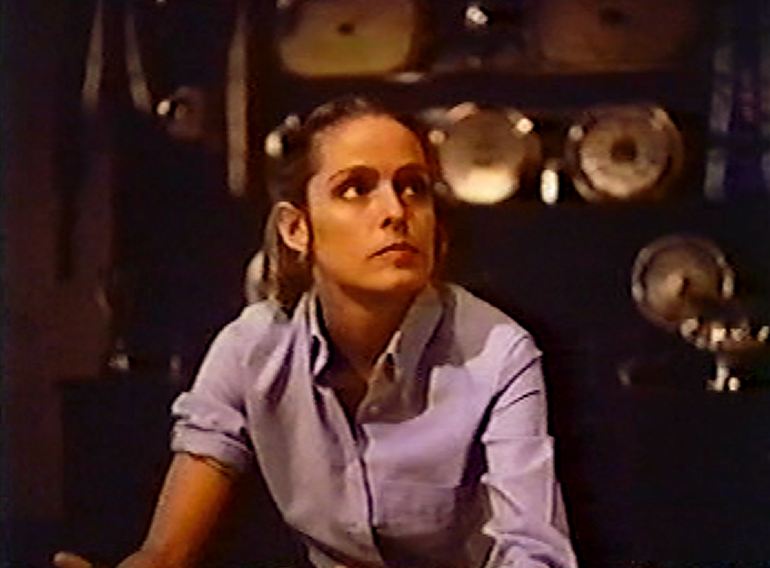
Farrah Fawcett's pristine public image as America's Golden Girl of the 1970s has been slightly tarnished in the last few years due to her erratic public behavior in the 1990s, tabloid stories of her troubled family life with her son and her long-time lover Ryan O'Neal, and regressive appearances in Playboy magazine that have helped to undermine the successful strides she made in the 1980s and early 1990s to prove her worth as an actress.  When she passed away from cancer in 2009, obituaries touted her as a pin-up celebrity famous for her legendary bathing suit poster than for her numerous accomplishments as an actress.  This is a shame because, even before she redefined her acting reputation in the 1980s, Farrah Fawcett was always a competent, professional actress on-screen from the moment she started her career as a Screen Gems television contract player in the early 1970s, continuing during her one-season tenure on "Charlie's Angels," and on through to her work in flop feature films such as "Somebody Killed Her Husband" (1978), "Sunburn" (1979), and "Saturn 3" (1980).  She was not a celebrity famous just for being famous.  It was with her remarkably nuanced performance in the TV movie "The Burning Bed" (1984) that Farrah Fawcett appeared to have silenced her naysayers and demonstrated what she was truly capable of as an actress.


However, Fawcett began making strides to improve her public image even before "The Burning Bed."  Fawcett's first challenging dramatic role, and one that helped pave the way for her to be cast in "The Burning Bed," was as the real-life Houston socialite and accomplished equestrian horsewoman Joan Robinson Hill in the two-part NBC TV movie "Murder in Texas" (1981).  A dramatization of the events surrounding the untimely death of Mrs. Hill in 1969, which some have suspected was caused by her plastic surgeon husband Dr. John Hill, "Murder in Texas" was a surprising change-of-pace for Fawcett.  I recall the advertisements in print and on television for this TV movie touted it by saying "See Farrah Fawcett as you've never seen her before!"  Usually, such slogans reflect dramatic hyperbole, but it was earned in Fawcett's case.  People have disputed the factual inaccuracies of the narrative in the movie, which is understandable for any movie that purports to tell the story of real-life people.  As such, any analysis of the characters and storylines in "Murder in Texas" herein pertain only to the movie and not to the facts and circumstances surrounding the case.


Joan Robinson Hill (Fawcett) and her handsome plastic surgeon husband Dr. John Hill (Sam Elliott) are a glamorous, enviable couple from Houston's prestigous River Oaks community.  Joan is an acclaimed horsewoman and the daughter of larger-than-life oilman Ash Robinson (Andy Griffith) who loves his only child deeply while, at the same time, exerts a domineering influence over their marriage and upon his son-in-law.  John and Joan are already deeply unhappy when he embarks on a torrid affair with attractive divorcee Ann Kurth (Katharine Ross).  Ash, furious at John's attempts to dissolve his marriage with his daughter so that he can be with Ann, promises to destroy the comfort and wealth his son-in-law has become accustomed to, and threatens to drag Ann publicly through the mud, if John ever leaves his daughter.  John appears to be making efforts to reconcile with his wife when Joan suddenly becomes violently ill, with John blithely indifferent to her suffering.  When he finally takes her to the hospital, he takes her to a small medical facility, passing several larger ones along the way.  She dies not long after being admitted.  In the aftermath of her passing, a grieving Ash presses for a criminal investigation into his daughter's death.  John marries Ann, who soon learns he has a dark side to his personality she had not previously suspected.  John confesses to Ann that he poisoned Joan and tries to kill her.  Ann separates from John and testifies against him when he finally goes to trial.  However, when she testifies on the stand that he tried to murder her, a mistrial is declared.  Ann and John divorce and he soon remarries again.  When he returns from his honeymoon, John is attacked by a masked gunman in his house and killed.  Ash is accused of arranging the hit against John, but charges are never brought against him.  Years later, Ann is at home and receives an anonymous call from someone playing classic music over the phone, just like John used to...


As I said before, this synopsis for "Murder in Texas" pertains to the movie and should not be considered a summary of the actual facts surrounding this case.  John Hill was never convicted for his wife's death, and his son has maintained through the years that he never believed his father murdered his mother.  As such, the movie should be conservatively viewed as an entertaining piece of fiction and not a documentary.  Nevertheless, "Murder in Texas" remains a well-acted, well-made TV movie with vibrant, interesting characters and situations throughout.  The movie makes 1960s Houston look like a fascinating, lively culture and community, and the production design has an understated elegance that captures the period milieu in a believable manner.  It's not surprising that the creator of "Dallas" has admitted that he was inspired to create that series after reading one of the books written about this case.  Sam Elliott is charmingly handsome and chilling as John, Andy Griffith is both imposing and touching as the tyrannical yet loving Ash, and Katharine Ross is likeable and sympathetic as Ann.  However, it's Farrah Fawcett who dominates this film with her warm and vulnerable presence.  In the second-half of the film, after the character of Joan has died, you still think of Fawcett throughout and her absence in the latter portions casts a dark shadow over the storyline.  Coming after "Charlie's Angels" and the various feature films she made in the late 1970s, Joan is a very different character for Fawcett.  Up to that time, she usually played sunny, confident, and happy characters, as exemplified by her iconic performance as private detective Jill Munroe on "Charlie's Angels."  Prior to "Murder in Texas," Fawcett had a "can-do" quality as an actress that reflected her larger-than-life image in the 1970s.


In "Murder in Texas," Fawcett has a more understated, subdued glamor and quality that was a revelation to viewers and critics and made her appear much more human and down-to-earth than ever before.  She lowered the pitch of her speaking voice, which used to make her sound breathy and light-weight, and brought maturity, gravitas and intelligence to her performance.  Fawcett's Joan is a good, kind person who has spent her entire life defined as either Ash's daughter, or John's wife, despite her equestrian accomplishments, and lacks self-confidence and a healthy sense of self-worth because she's in love with a man who doesn't love her back.  Her persistent chain-smoking throughout the movie reflects her nervous anxiety about her marriage.  This was shocking to see in a movie back in 1981, as Fawcett was still considered one of the most beloved and desired women in the world.  To see her in a movie where she is neglected and despised by her husband was simply unthinkable at the time.  And, yet, Fawcett projects vibrancy and charisma as Joan so that the character never comes across as a self-pitying wet-blanket.  Fawcett's Joan has a feisty temperament and refreshing flashes of anger when she's finally fed up with John's indifference and infidelity that make it clear to the viewer that she can be a formidable, impressive force to be reckoned with.  In one scene, when John and Joan are hosting friends and, for once, Joan is enjoying herself, she becomes irritated when his beeper goes off, which usually allows him to leave her for hours at a time.  Fawcett's exasperated Joan snaps, "I knew it!...I hear that damn thing in my sleep!  Come on!  Whenever I'm happy, close to having a good time, I hear 'Beep! Beep! Beep!' I can't stand it!"  Sam Elliot's John may resent Joan and take her for granted, but the viewer never does.  We see all the qualities in her that Elliot's John does not and that makes her ultimate death all the more tragic.


Throughout "Murder in Texas," there are very touching moments that show Joan's humanity and vulnerability and her hopes that her marriage will work out.  Despite her equestrian accomplishments she admits to Ash, "What the Hell am I doing?!  Why am I going off to a horse show when things are the way they are with John and me?!...You know, I'm not happy anymore unless I'm in a ring on a good horse...When I'm not in the ring, when I'm not riding...I get so lonely....Pa, am I ever, ever gonna grow up?"  Fawcett and Griffith are very endearing together and have an easy, natural chemistry as father and daughter in this scene that makes it a pleasure to watch.  In one of Fawcett's best moments in the film, Joan is playing cards with her girlfriends in John's lavish music room while her husband is listening to classical music in the background.  To the discomfort of her friends, she openly complains about the problems in their marriage, as she deals the cards, and says aloud "I'm tired of always, always being the dummy."  When John changes the record and asks her to dance, Joan lowers her guard and melts like butter in his arms.  In this romantic moment, Fawcett effectively conveys the extent to which Joan deeply loves her husband.  Later in the film, when Joan starts to become sick, she happily tells a friend about how kind John was to her the night before and how it has raised her hopes that her marriage will work out, "I don't know, it's so strange.  I feel sick, but I feel so much better about things between me and John...Yeah, he was so sweet last night.  I think everything's gonna be all right."  Fawcett delivers the line in a sincere, heartfelt manner that tugs at the viewer because we know that things are ultimately not going to be all right for Joan.


When Joan becomes sick, Fawcett admirably downplays the glamour and allows herself to become as unkempt and disheveled as possible in order to portray the agony and pain Joan experienced as she became ill and passed away.  Fawcett has several good scenes with actress Royce Wallace, who plays Joan's concerned maid Wilma.  When Wilma helps Joan into the bathroom, the wealthy woman confides in her housekeeper, "I don't know what's the matter with me.  I've never been this way before.  Like a baby, so helpless."  Later, when Joan asks Wilma "Am I gonna die?" the feisty and caring maid clutches Joan's hands and the two pray together.  When John finally takes Joan to the hospital, she blows a kiss out the back window of the car to Wilma, in gratitude for her caring and concern during Joan's time of need.  Fawcett conveys Joan's inherent decency and appreciation for Wilma's presence in her life, which helps to underscore how Joan, despite her wealth and privilege, has no sense of entitlement and has a sincere appreciation for all the people in her life.  When I watch the scenes of a violently ill Fawcett in "Murder in Texas," I flashback to Fawcett's horrifying 2009 documentary on NBC depicting her real-life battle with cancer.  These scenes appear to foreshadow Fawcett's real-life suffering almost three decades later and underscore the extent to which she was committed to portraying Joan Robinson Hill as seriously and sympathetically as possible.


What I recall the most from my first viewing of "Murder in Texas" in 1981 was the fact that Fawcett pulled her famous mane of blonde hair back into a pony tail, as the real-life Joan Robinson Hill was known for wearing her hair in that simple style.  Because Fawcett's feathered hairstyle from the 1970s was such an iconic part of her screen image, it was simply startling to see her in a role where her hair was not as prominent an accoutrement to her appearance.  At the time, it took me a long time to get used to watching her in the movie looking so differently but, in 2013, her ponytail has aged quite elegantly and allows one to appreciate Fawcett's striking features, particularly her prominent nose and high forehead.  We realize the extent to which her hair distracted one from fully appreciating Fawcett's Southern earthiness, and I believe Fawcett was never lovelier on-screen than with this atypical hairstyle.  Even though it is not as well-remembered as "The Burning Bed," one cannot underestimate the importance of "Murder in Texas" on Farrah Fawcett's career.  It helped to demonstrate to critics, audiences, and Hollywood that Fawcett was no flash-in-the-pan, but a talented and under-utilized actress who was looking for the right roles that would accentuate her strengths in projecting earthy intelligence, as well as disarming warmth and humanity.  While I can't say for certain that Fawcett accurately portrayed what Joan Robinson Hill was like in real life, I would make the case that she certainly gives one a positive impression of what Mrs. Hill might have been like with her sincere and sympathetic performance. 

Tuesday, December 18, 2012

A Grateful Acknowledgement to "TCM Remembers"

 
Turner Classic Movies has released its annual "TCM Remembers" tribute to film professionals who died during the calendar year of 2012.  You can see it here.  As I have mentioned before on this blog, my own father died last month.  The reason I mention it again is because, more than ever, I realize the importance of acknowledging the presence and contributions of people who are no longer with us.  I have always admired the "TCM Remembers" tributes much more than the annual Oscar "In Memoriam" segments during the Academy Awards ceremony because "TCM" Remembers" tends to be very inclusive in terms of who gets acknowledged.  I remember being heartened at how, in 2008, TCM included such names as Vampira ("Plan 9 from Outer Space"), Hazel Court ("Premature Burial," "The Masque of the Red Death" and "The Raven"), Julie Ege ("On Her Majesty's Secret Service," "Creatures the World Forgot" and "Legend of the 7 Golden Vampires"), and Roberta Collins ("The Big Doll House," "Caged Heat," and "Death Race 2000")--all cult movie stars dear to the hearts of us film aficionados, but who you don't really expect the Academy to acknowledge.  I recall that the esteemed Lois Nettleton--whose film credits include "Period of Adjustment" (1962), "Come Fly With Me" (1963), "Mail Order Bride" (1964), "The Good Guys and the Bad Guys" (1969), "Dirty Dingus Magee" (1970), "The Man in the Glass Booth" (1975), Wes Craven's "Deadly Blessing" (1981), and "The Best Little Whorehouse in Texas" (1982)--was excluded from the Academy Awards "In Memoriam" tribute for 2008, but was included in the "TCM Remembers" tribute reel for that same year.  TCM seems to have a more consistent, logical standard with which they choose who gets included in their annual tributes.  Even if they can't include everyone who may have worked in the movies who died in a calendar year, they at least try to cast as wide a net as possible.  The Academy seems much more random and arbitrary in terms of their selections.


I was already troubled by the Academy's "In Memoriam" the year they excluded Dorothy McGuire and Peggy Lee, but included the tragic singer Aaliyah, who had only recently died in a plane crash.  In 2010, I was reminded of their strange standard of review when Michael Jackson's death was acknowledged, but Farrah Fawcett's was not.  The reason they gave was that Fawcett was better known for her television work and that they would leave it up to the Emmys to acknowledge her.  If that's the case, then Michael Jackson should have been excluded as well, and left up to the Grammys to remember him, because he was better known for his music than for anything he did in the movies.  Fawcett was indeed known for her TV work, but she also appeared in such feature films as Claude Lelouch's "Love is a Funny Thing" (1969) with Jean-Paul Belmondo; Myra Breckinridge" (1970); "Logan's Run" (1976); "Somebody Killed Her Husband" (1979); "Sunburn" (1979); "Saturn 3" (1980) directed by Stanley Donen; "The Cannonball Run" (1981); "Extremities" (1986); "See You in the Morning" (1989); "Man of the House" (1995) with Chevy Chase; Robert Duvall's acclaimed "The Apostle" (1997); and Robert Altman's "Dr. T and the Women" (2000).  Fawcett more than qualified to be included in that year's Academy Awards "In Memoriam" section.


It's been said before, but I'll say it again:  the Academy wastes precious air time with dumb musical numbers and comedy routines that no one really wants to see.  I would prefer it if they got rid of those sections and added more minutes to the "In Memoriam" section so that it could be more comprehensive and inclusive than it is now.  I realize that the Academy Awards are purportedly about celebrating excellence (ahem) in the cinema, but when it comes to the "In Memoriam" section, they really need to keep a more open mind about including people who may not be as acclaimed or as popular or as famous as the people they tend to choose.  There are a lot of professionals, in front of and behind the cameras, who have built careers in both films AND television.  It's an industry where the two mediums enjoy a very symbiotic relationship.  And just because a person found more success in one medium doesn't negate their contributions in the other.  I just feel that the decision-making process that the Academy chooses is far too arbitrary to be accurately representative of the kinds of people who have made contributions to the movies.  I don't expect them to ever really change their policy on this issue, so that's why I'm glad TCM continues to do a good job with their "TCM Remembers" tributes.  Sometimes, I feel TCM gets a little overrated by us movie aficionados because it is simply a repository of movies in their catalogue that they run in rotation.  And, as much as I like Robert Osborne as well, I think we also overrate him a little because of his role in hosting the programming on that channel.  As knowledgeable as he is, he didn't actually make the movies he introduces.  I get the feeling people forget that distinction when they praise both him and that channel.  But, at the end of the day, I still love them because they actually show respect and acknowledgement to us movie aficionados, as reflected in their attention to detail when they put together tributes such as "TCM Remembers."  TCM actually honors those of us who are film aficionados, rather than the Academy, which simply honors themselves.

Wednesday, September 7, 2011

Reassessing "Charlie's Angels" 35 Years Later

Over the Labor Day weekend, the Universal HD channel aired a day-long marathon of “Charlie’s Angels” episodes.  With the new “Charlie’s Angels” series about to debut on ABC later this month (September 22nd), now is as good a time as any to take a second look at the series.  It is a show that has often been derided as being one of the worst examples of 1970s “Me Generation” jiggle TV.  And not without some justification:  episodes where the Angels go undercover in a women’s prison, as student flight attendants, as ersatz-Playboy bunny type cocktail waitresses, and in an apartment exclusively for prostitutes give credence to this notion. 
But, if you can look past it, this was one of the few successful TV shows or movies in the 1970s where the lead characters were almost exclusively female, in a decade where male “buddy” stories dominated the big and small screens.  Throughout the different cast permutations, the Angels were always depicted as mature, sophisticated, women.  They were never whining, squealing, cutesy, “girls.”  (Despite Charlie’s gently condescending reference to them as “three little girls” or “three beautiful girls” in the opening credits, depending on which season you are watching.)  The “Charlie’s Angels” movies produced by Drew Barrymore were much more troubling because the big-screen Angels were more often the victim of sexual innuendoes, trashy costuming, humiliating situations, boring boyfriends, and adolescent giddiness than their TV counterparts ever were. The Barrymore Angels were "empowered" in so far as they were willingly exploiting and degrading themselves.  Ironically, the TV Angels, produced by Aaron Spelling and Leonard Goldberg, were comparatively much more dignified. 

Unlike most movies and shows centering on women, the series always depicted the Angels as competent, cooperative colleagues.  It avoided the cliche of portraying female colleagues as being competitive with each other.  The focus for the TV Angels was almost never on their personal lives, but on their work.  In years past, conventional female characters on television were usually concerned about family, marriage, relationships.  The few characters that did not fit into this mold included Anne Francis on "Honey West," Diana Rigg on "The Avengers," and Beverly Garland in the 1950s crime drama "Decoy."  Like those shows, "Charlie's Angels" did not fall into the TV cliche of focusing on the trials and tribulations at home of the regular characters.  In addition, even though Bosley came along and helped out in every episode, they often got the job done by themselves.  (Unlike “Police Woman,” where Angie Dickinson often needed the “big brother” trio of Earl Holliman, Charles Dierkop, and Ed Bernard to get her out of a jam.) 
With the exception of the two-part “One Love, Two Angels” episode in 1980—a misguided episode during the Shelley Hack season where the show unsuccessfully attempted something different by having Kelly (Jaclyn Smith) and Kris (Cheryl Ladd) compete for the affections of Patrick Duffy in a bizarre, awkward storyline where Kelly learns that she may be the long-lost daughter of wealthy hotelier Ray Milland—they weren’t romantic rivals with each other in any conventional sense.  The Angels were clean, wholesome “girl scouts” because romance or sex were rarely on their minds.  They were a distaff version of director Howard Hawks’s vision of competent professionals who worked as a cohesive whole to accomplish their goal or mission.
What really sunk the Angels, more than the purported sexism or sexual innuendos, were cliched scripts that rarely worked well as crime dramas.  It would have been interesting if the show had had better writers who could concoct better cases for them to solve than the lame ones they were often saddled with.  What the show coasted on was the chemistry of the cast members, and that aspect of it should never be underestimated.  Like the characters they portrayed, the cast of “Charlie’s Angels” were solid professionals who did good work every week.  Kate Jackson may have been stuck with the label of “the smart one” on the series, but she managed to infuse Sabrina with a humorously quirky, off-beat quality that complimented her tall, gangly persona.  (Her near-nerd appeal was heightened by having her drive the orange Ford Pinto, while her colleagues drove the more stylish Mustangs.)  She never became dry or boring as the Angels’s de-facto leader. 

Jaclyn Smith, despite popular opinion leaning towards Farrah Fawcett, is probably the most popular Angel.  People talk about her elegance and class, but what she really brought to Kelly Garrett was a disarming sensitivity.  The writers made Kelly an orphan who was always looking out for the underdog who needed to be protected, whether it was an autistic child (in one episode in Season 1) or an abused child (in Season 4) or a former juvenile delinquent-turned-Air Force airman she had previously mentored (in Season 3).  This quality made Smith the heart and soul of the series.  The show could survive the departure of Fawcett and Jackson, but couldn't continue without Smith. 

Farrah Fawcett may have been the sexy bombshell of the team, but she always projected a “big sister” quality that evoked warmth and affection among viewers.  It was no coincidence that, in the 1970s, men fell in love with her and women imitated her.  She was never off-putting or haughty the way, say, a Cybil Shepherd could be. 
Cheryl Ladd played Fawcett’s little sister Kris on the series, and early episodes reflected her character’s naivete and inexperience.  But she became one of the most serious characters on the show.  Ladd was probably the best actress on the show and she brought clear-headed gravitas to a lot of episodes that attempted to ground the series more in reality.  Whenever the show needed a scene where one of the Angels confronted another character in a pointed and direct manner, they often gave it to Ladd.  One of her best episodes was in Season 4, "Harrigan's Angel," where Ladd is paired with Howard Duff as a drunken, over-the-hill private detective who reminds her of her alcoholic father.  Ladd and Duff are very good together in that episode and evoked some genuine feeling and pathos.  Ladd was definitely the most underrated actress on the show.  She should also be commended for taking on the unenviable task of replacing a popular predecessor--Fawcett--and doing such an exemplary job that it could be argued that she was an improvement over Fawcett. 
Shelley Hack is arguably the weak link in the series’s cast.  Her one-season tenure as Tiffany Welles is awkward over 30 years later.  Perhaps it was a mistake to replace the earthy Jackson with a character designed to be a cool New Englander.  There’s a disconnected quality to Hack that prevents her from fully integrating with the rest of the cast.  Some of the dialogue in her episodes have the other cast members state how much they value her contribution.  It always felt like the producers and writers were overcompensating for Hack’s inability to successfully blend in with the show by having the characters state how important she is to them.  But what really sinks Hack is that she never seems confident or relaxed on the show.  She often gave a forced and stilted performance and that lack of assurance must have affected the audience, who abandoned the show in droves that season.  If she is to be commended for anything, it is that Hack does project intelligence and competence and her acting improves as the 4th season progresses.  By the end of that season, her gawky awkwardness becomes almost endearing.  (Hack redeemed herself a few years later with a very skillful performance in “The King of Comedy,” where Martin Scorsese uses her intelligence and coolness to her advantage.) 
To be fair, the writers during the Hack season attempted to “shake up” the show by violating the rules and ethos of the series in objectionable ways. There were many episodes featuring just one Angel working alone, while the others are only seen at the beginning and end to wrap up the story.  The single-Angel episodes that featured Hack left her alone to carry the shows and further highlighted her deficiencies.  There was an episode that season, "Fallen Angel," where Farrah Fawcett returned in a guest appearance, seemingly having fallen in love with a jewel thief played by Timothy Dalton.  This was used as a pretense to have her character end up fighting with her friends and sister and former colleagues.  This violated the rule of having the Angels always work in a cooperative manner with one another, and focused far too much attention on their personal lives instead of their cases. 

In addition to the aforementioned “One Love, Two Angels” episode, which violated the rule that the Angels would never be romantic rivals against themselves, another episode that season, “Toni’s Boys,” violated the rule that the Angels would always rescue themselves and never rely on a man to help them.  In that appalling episode, Barbara Stanwyck ran a detective agency staffed by three young men.  They are assigned to protect the Angels from someone out to kill them.  It was meant to be a backdoor-pilot to a potential series featuring Stanwyck and the men.  As a result, the Angels are sidelined like damsels-in-distress as the three toothless guys save them from the villains.  It is one thing to try and give individual scenes and episodes more gravitas and depth.  It is another thing entirely to try and completely redefine the series.  The writers seemed to have renounced what made the Angels unique and turned them into conventional characters.  The changes made that year give a bad name to the concept of "change-of-pace."  The confused writing, probably more than Hack’s uninspired performance, were the true villains that season.
There are some who debate whether Tanya Roberts is better or worse than Shelley Hack.  I’m in the former category.  Roberts blends in well with the cast and brings an air of levity and assurance to the show that had been missing during the Hack season.  Furthermore, the writers abandoned their efforts to experiment with the series, and the storylines returned to the format that had worked well for them in the past.  This was Roberts’s big break as an actress, and you can sense her enthusiasm in all of her performances on the series.  Unlike the later Tanya Roberts (who seemed somnambulistic in “Sheena” or “The Beastmaster” or even “That ‘70s Show”), the “Charlie’s Angels” version never fell down on the job.  In some episodes, you sense Jaclyn Smith and Cheryl Ladd feel revitalized by working with someone who hadn’t been burned out yet by the show.  At this stage in her career, Roberts appeared competent and promising.  With her raspy voice and off-beat New York-native quality, she had a quirkiness reminiscent of Kate Jackson.  In her debut episode, “Angel in Hiding,” Roberts has some big dramatic scenes when her mentor and friend Vic Morrow is murdered by the villains.  She handles these with confidence and makes you wonder what happened to her in later years when she worked in films and shows and seemed to have difficulty reciting the simplest dialogue. 
Probably the most important and underrated cast member of the show was David Doyle.  He has never gotten enough praise for his skillful performance as Bosley on the series.  In the first season, Bosley was officious and uptight, and was often at odds with the Angels working methods.  In later seasons, Doyle’s innate warmth started to shine through.  He was less bumbling and clumsy and became a reliable member of the team.  He never interfered with letting the Angels do their job, and helped out in vital ways.  He also did not turn into a male authority figure who always rescued the Angels.  Doyle’s relaxed, comfortable quality blended in well with his female cast members.  He complimented, rather than competed, with them.  Some episodes in later years even allowed Bosley a love interest, and Doyle handled those episodes with confidence and aplomb.  He richly deserved his Emmy nomination in 1977 for Best Supporting Actor in a dramatic series.  Doyle provided comedy, competence, and consistency to a show that suffered far too many cast changes in its 5 year run. 
Which brings me to the question:  Which cast ensemble was the best?  While popular opinion may favor the first season with Jackson, Fawcett, and Smith, I think seasons 2 and 3 (with Jackson, Smith, and Ladd) work best.  Fawcett had a larger-than-life quality that tended to draw attention to her  no matter what she was doing.  Ladd, because she was much more down-to-earth, blended in perfectly with the ensemble and the Sabrina/Kelly/Kris teaming feels more like a cohesive whole.  I will also stick my neck out to suggest that the the final season Smith/Ladd/Roberts ensemble may have been the 2nd-best cast on the series because that final trio also seemed very comfortable with each other on-screen. 

During the Univeral-HD “Charlie’s Angels” marathon, there was one episode whose darkness and seriousness shocked me.  “Angel Baby” from 1978 had the Angels investigating an illegal black-market baby ring.  Kelly went undercover as an unwed mother, Sabrina and Bosley posed as a rich couple wanting to buy a baby, and Kris posed as a girl who is desperate for money and agrees to sleep with a guy designated by the villain to become pregnant and sell her child.  There was nothing unusual about the basic storyline of the episode, but the handling of individual scenes made this one standout.  The scene where Kris meets with the desperate guy (he owes the villains money) that she is supposed to sleep with to become pregnant is handled in a surprisingly somber manner.  (There’s even a reviewer on IMDB who has commented similarly on this episode as well.)  The audience is unsure at how she is going to handle this unusual situation.  For once, the show drops its light-hearted mood and genuine emotions and intensity shine through.  Kris takes pity on this guy as she reveals her true identity and intentions to him and pleads with him for information on solving the case before letting him go.  It’s probably the best-acted scene in the entire series.  In a later scene, Kris seems truly shaken when she shoots a man for the first time.  I don’t want to overrate this episode, or the series as a whole, but in “Angel Baby” Ladd and company brought some welcome moments of gravitas that suggests at how legitimately good, rather than campy, the series could have been had it tried harder.