

I feel sorry for young people who grew up in the 2000s with reality television and millions of repetitive cable channels characterizing their childhood TV experiences. They didn't grow up with only three television networks competing with one another for their attention, with original TV movies or miniseries from each of them providing scripted entertainment on a regular basis. While I acknowledge that a lot of those miniseries or TV movies could be clunky, a lot of times good ones were produced and one of those was the low-key science-fiction drama "Who is Julia?" (1986), which aired on CBS Sunday, October 26, 1986. Beautiful blonde Judith Ledford played gorgeous fashion model Julia North, happily married to handsome fashion photographer Don North (Jameson Parker, then on the hit CBS crime drama "Simon & Simon"). Despite her looks and success, Julia yearns to start a family with Don. Meanwhile, working class housewife and mother Mary Frances Bodine (Mare Winningham), mother of Timmy (Ben Ryan Ganger) and wife of mechanic Jack Bodine (Jonathan Banks) is Christmas shopping with her son.


On a busy street corner in Downtown LA, Julia and Mary Frances' lives are changed forever when Timmy wanders into the street in front of a cement truck. Julia leaps out of her Mercedes convertible and pushes Timmy out of the way, only to be run over by the truck, her body crushed and trisected. At that very moment, Mary Frances suffers a brain aneurysm on the spot. Both women are rushed to the local University medical center, where Mary Frances is declared brain dead, but her body still alive, while Julia's brain is still alive, but her body is irreparably damaged. Ambitious, yet conscientious surgeon, Dr. David Matthews (Jeffrey DeMunn) proposes a radical medical experiment: In order to save Julia and allow her another chance at life, he suggests transplanting her healthy and intact brain, with all of her memories and experiences, into Mary Frances' body. As Julia has already filled out an organ donor card, permission from her husband Don is not required, but Jack initially refuses to allow Mary Frances' body to be used in this experiment. Jack changes his mind and allows Mary Frances' body to be implanted with Julia's brain when a police officer at the hospital casually informs him that Julia was injured while saving his son Timmy's life.


The surgery is performed and Julia, now in Mary Frances' body, faces a long and arduous recovery phase. Don, unsure as to whether his feelings for Julia would transfer over into her new incarnation, is initially resistant to what is transpiring before him, until Dr. Matthews admonishes Don into realizing that Julia will need his unwavering support if she is to pull through this crisis. When Julia eventually regains consciousness, she has difficulty adjusting to her new body, as well as the reaction by her resistant mother Marlene (Patricia Smith). However, Julia's affectionate father Joseph (Bert Remsen) works hard to accept his daughter in her new incarnation. Initially certain that he did the right thing, Dr. Matthews faces doubts regarding his decision to transplant Julia's brain into Mary Frances' body when he sees her emotional struggles to make sense of her new existence, particularly when Julia sees herself for the first time and says that she wants to die. Over time, with Dr. Matthews' friendship and support, Julia regains her strength and eventually recovers well enough to return to the outside world. In the process, it becomes apparent to everyone, including Don, that Julia has become dependent upon Dr. Matthews and that he has, in turn, also fallen in love with her.


When Julia has left the hospital and returns home to Don, she finds that he has boxed up her clothes and her photos of her prior self in the garage and that he has already bought her a new wardrobe. On their first night home, Don makes love with Julia, which causes awkward feelings for her as she wonders how he could so easily make love with a different woman's body using the same terms of affection as he did prior to her accident. Her feelings of doubt cause her to visit Dr. Matthews, where she admits her feelings for him, and he acknowledges how much he wants to make love with her, but refuses to give in to his feelings because it would violate his ethics as a doctor. Julia's sense of displacement is further heightened when her fellow fashion model best friend Loni (Tracy Brooks Swope) reacts awkwardly to seeing her for the first time since her accident. With tensions brewing both within and without, Julia and Don have their first argument when she finds an old glamorous dress in the garage and tries it on. Don tells Julia that he considers it morbid of her to wear that dress, while Julia gets angry at Don for never actually addressing her as "Julia" since her recovery. Don responds that it's because the only time he has ever seen her act like her prior self was whenever Dr. Matthews was present. Don storms off and Julia packs up her clothes and photos and takes them out to a landfill to throw them away forever.

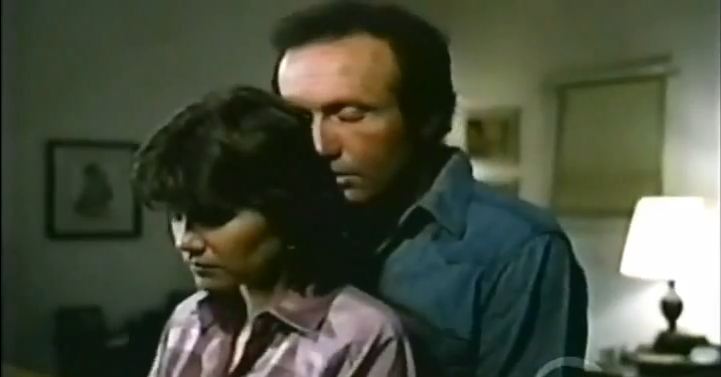
While at the landfill, Julia is confronted by Mary Frances' grieving widower Jack, who has been stalking Julia and still has not come to terms with his wife's death. Believing that Julia is still Mary Frances, he asks her to come home with him and see "their" son Timmy. Julia returns to Jack's home and sees Timmy, who responds happily at seeing Julia. Jack shares memories of his marriage with Mary Frances with Julia. Meanwhile, Don and Dr. Matthews become concerned when Julia turns up missing. When Julia announces that she is ready to go home, Jack refuses to allow her to leave and tries to force himself on her. Julia hits Jack over the head with a framed wedding photo of Jack and Mary Frances. The violent act snaps Jack back into reality. Finally acknowledging that Mary Frances is gone forever, Jack apologizes to Julia for trying to force himself on her. Julia tells Jack that, even though her body may have instinctively responded in a maternal manner to Timmy, she knows for certain that she isn't Mary Frances and that she is indeed Julia North after all. Julia returns home to Don and Dr. Matthews waiting with the police. As Dr. Matthews watches from the sidelines, Don acknowledges to Julia how much he still loves and needs her and never wants to lose her again, while Julia promises him she'll never leave again because "I'm home now."

A provocative and intelligent drama, "Who is Julia?" overcomes its potentially far-fetched premise by treating its characters and premise in a very low-key, humane manner. Director Walter Grauman handles the material in a subtle, sensitive manner that allows his actors an opportunity to fully explore the ramifications of Julia's radical surgery. Mare Winningham gives a fine performance, as always, as both the working class Mary Frances and the post operative Julia. She effectively conveys Julia's sense of confusion and displacement at not only living in another person's body, but also not having had any say in agreeing to the surgery. As Julia tells Dr. Matthews, "I've lost control over my life. The surgery without my permission, people telling me what to do, telling me where to go, how to feel. And the less control I have, the less I know who I am. I'm not even allowed to love who I want, am I? That's how little control I have." Winningham allows us to care very much about Julia's plight, which goes a long way towards convincing us about this film's fanciful premise. If there is an inherent flaw to the movie, it's that we don't get to see enough of Julia and Mary Frances' life before the accident to gain enough of a perspective of their lives to understand the full magnitude of how things have changed for Julia, and the people surrounding her, after the accident. As such, Mare Winningham is not allowed enough of an opportunity by the script to demonstrate how much has changed once Mary Frances' soul has been replaced by Julia in the same body, but she does as much as she can to underscore the differences in personalities between the two women she plays in "Who is Julia?" within the confines allowed to her. Moreover, Judith Ledford makes the most of her brief screen time at the start of the film as the pre-operative Julia. Ledford effectively conveys Julia's yearning for a family life with Don, the extent of her sincere love for her husband, and her inherent decency when she selflessly risks her life to save Timmy's. As such, in just a few scenes, Ledford demonstrates how Julia is already a person of considerable depth and substance even before Mare Winningham plays her in the story and allows us to understand how those positive traits easily transferred into Mary Frances' body after the surgery.

Jameson Parker is also good as Julia's seemingly superficial, but ultimately caring and substantive husband Don. A fashion photographer by trade, Don makes his living looking at things from the surface-level, which is why he initially has trouble adjusting to Julia's new appearance. He questions whether he is able to love her the same way as he did before. Over time, however, you sense that Don is making a sincere effort to adjust to the new Julia and how he feels sincerely jealous and threatened by Julia's developing feelings for Dr. Matthews. Even though it may not have been sensitive to Julia's feelings for Don to have stored away her old clothes and their old photos together by the time she returned home from the hospital, I think this gesture demonstrates the extent to which Don was willing to try and put his past expectations of Julia behind him in order to build a new life with her. If Don was indeed superficial, and didn't love Julia for herself and not her body (as some internet reviewers have alleged), he would never have remained vigilant in guiding her through her recovery and never would have been jealous of Dr. Matthews' evolving feelings for his wife. A more selfish husband would have welcomed Dr. Matthews stepping in to take his place in order to salve his feelings of guilt for not rising up to the challenge of adjusting to the new Julia.

Character actor Jeffrey DeMunn, who plays Dr. Matthews, is now well-known for his work in Frank Darabont productions, most recently "The Walking Dead" cult horror series on AMC. However, back in 1986, DeMunn was still a "bread and butter" actor with some television and theatre credits (including a Tony nomination in 1983 for the play "K2") to his name. He wasn't as well-known when he made this film as he is now, but he was rarely allowed a chance to be as romantic and tender as he is in "Who is Julia?" playing the conscientious and sensitive Dr. Matthews. Dr. Matthews is a dedicated man of science who sincerely believes that he is doing something high-minded and noble by transplanting Julia's brain into Mary Frances' body that can help all of mankind. He admonishes Don to remain sensitive to Julia's needs and concerns and not demonstrate any signs of revulsion or rejection towards his wife in order to help ensure her physical and psychological adjustment. However, in the beginning, he still maintains a certain psychological distance from his subject because he has not become emotionally involved in Julia yet. That changes when she regains consciousness and he witnesses Julia's difficulty in accepting her new body and her new life.


Dr. Matthews experiences an epiphany as he begins to question whether he was correct in pushing for this surgery. As Dr. Matthews humbly explains to Julia, "I thought it would be easier than it's been for you...Julia, I'm so sorry. I was so sure that you'd want another chance at life when they brought you into the hospital. And, I was so proud that I could give it to you." You see during the course of "Who is Julia?" how Dr. Matthews has matured throughout this experience and how it has humbled him from making assumptions as to the choices other people would make for themselves. Before, Dr. Matthews viewed Julia objectively as a scientific experiment, but afterwards he starts to become emotionally invested in her well-being. Dr. Matthews becomes extremely protective of Julia, even arguing with his colleagues who feel that she has recovered enough that she can be released from the hospital. Dr. Matthews worries that Julia is still too emotionally fragile and unable to face returning to her regular home and surroundings. He has to be convinced by the other doctors that they cannot continue to coddle Julia and that she will eventually have to face those challenges alone.

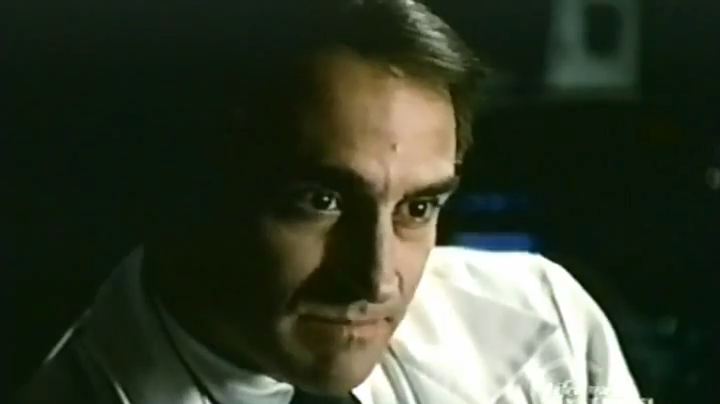
What I like a lot about Jeffrey DeMunn's performance are the traits of sensitivity, affection, and caring that he brings to Dr. Matthews in the latter-half of the film as he falls in love with Julia. You start to see how this man of science is discovering feelings within himself that he probably hadn't felt before. When Dr. Matthews tries to convince Julia that she is not as disconnected from her new body as she feels, he points out to her, "When you cry, you make tears come out of her eyes. When you want comfort, your hand comes out to me. You make the corners of her lips smile. And those eyes--See, I saw them before you were there. And they were cold and grey. And, now, with the way they look at me, they're the most beautiful eyes I've ever seen. I love those eyes." In trying to comfort Julia, Dr. Matthews has inadvertently started to reveal his feelings for her, feelings which help give her a sense of comfort that she desperately needs right now. Jeffrey DeMunn also does a great job in the scene where he is giving Julia a sensory and reflex examination and how he responds to Julia's laughter at feeling ticklish from the exam. As Don observes with a sense of surprise, "You never used to be ticklish," and Julia responds, "I am now," Dr. Matthews plays off that exchange by joking aloud, "Implanted tickle electrodes still functioning." This causes Julia to sincerely laugh for the first time since her accident and allows Don to see the developing chemistry between them.


DeMunn is particularly touching when Julia is about to leave the hospital and she asks if she can still visit him and the staff when she wants to. Dr. Matthews looks at her intently, caresses her face, and tells her "I couldn't bear not to see you again. I'm very fond of you." As she is leaving the hospital unit where she has been living for several months, Dr. Matthews sends her an encouraging head nod and wink from afar in order to help her maintain her courage as she faces the outside world. Later, when Julia returns to the hospital to see her psychiatrist Dr. Gordon (Mason Adams), she runs into Dr. Matthews by chance in the elevator. DeMunn also does another great job at demonstrating Dr. Matthews' surprise and delight at seeing Julia unexpectedly. His face registers a tender and sincere smile that speaks volumes as he hugs her. I like the way DeMunn looks intently at Mare Winningham in these scenes in a way that demonstrates how he regards her as someone special in his life, and how both of his eyes close in a heartfelt manner when Julia throws her arms around him in the elevator and brings him into an emotional hug, as if to freeze and prolong that moment for as long as possible.


I also like how the Dr. Matthews character is presented as a man of ethics and integrity who refuses to allow his feelings for Julia to allow him to behave inappropriately around her. Even though he acknowledges his feelings for her, going so far as to keep his office door open to ensure that he doesn't slip and start to make love to her, he continues to remind Julia that her feelings for him are clouded by the fact that he saved her life, helped nurse her back to health, and that she's become dependent upon him as a result. He discourages Julia from becoming dependent upon him because "being totally dependent upon another person is not living. And it's not love." In order to help her gain perspective, Dr. Matthews tells Julia that, "For months, Don was terrified that he would not be able to love you in another body. Now Gordon and I told him to give you a chance. And he did. He stood by you and he pulled you through. Now it's your turn."


When Don later confronts Dr. Matthews and her psychiatrist Dr. Gordon and tells him how difficult it is to make his marriage work when Julia is in love with him, Matthews responds, "It's not totally unexpected in a situation like this. We discussed this today and we're trying to redirect her feelings towards you...No, Don, it can be a fine line between caring and nurturing and loving and falling in love with patients, but we never cross that line." In so doing, we admire Dr. Matthews because he is willing to sacrifice his own feelings for Julia to help ensure that she and Don are able to find happiness and contentment while adjusting to their new existence. He never gives in to his feelings for Julia, which makes him an even more romantic figure in the story because of his willingness to sacrifice and deny himself what he truly wants versus what is for the greater good of all involved. Based on his performance in "Who is Julia?" Jeffrey DeMunn should be cast more often as a romantic leading man than he has been allowed to in his career.


What I particularly like in "Who is Julia?" is how the film demonstrates the way in which men are capable of being tremendous nurturers in times of crisis. Don and Dr. Matthews and Julia's father Joseph, played by the endearing character actor Bert Remsen, are shown as individuals who rise to the occasion and do what they have to in order to try and bring comfort to Julia. Joseph is also the one who helps Julia regain consciousness by remaining at her bedside, while his wife is continually absent, and sings her a childhood lullaby in order to reach out to his comatose daughter, an effort which ultimately proves to be successful. What's interesting is how the women in Julia's life prior to the accident, such as Julia's superficial mother and fair-weathered best friend Loni, are the ones who let Julia down after her recovery in their inability to accept her in her new body. Julia's mother even says "If she's not in her right mind, she'd be better off dead," which causes Don to scold his mother-in-law by telling her "Don't ever let her hear you talking like that!" (Meanwhile, the nurses tending to Julia, especially Claire Nono as Nurse Kathy, accept her for who she is and are as supportive as Don, Dr. Matthews and Julia's father in helping her during her recovery.) It's a refreshing twist to the cliche which assumes that men are only concerned about the physical appearance of women and not as engaged by the soul beneath that exterior.


What makes "Who is Julia?" such a rewarding experience is that it is a film which demonstrates the caring, decency and humanity of individuals facing a difficult crisis and impossible choices in their lives. Except for the scenes where Julia's mother and best friend Loni reject Julia, as well as the aforementioned scene where Jack inappropriately tries to force himself on her, the rest of the movie is filled with moments depicting people reaching out and attempting to comfort one another in times of stress. In addition to Don, Dr. Matthews, and Julia's father, I particularly like the depiction of how caring and nurturing the hospital nursing staff are in tending to Julia's needs. The movie as a whole strikes a refreshing contrast to the cynicism and nihilism of so many TV shows on the air now, which crawl the gamut of human emotions in order to wallow in the worst aspects of human nature. "Who is Julia?" holds up 27 years later because it never overindulges in the science-fiction aspects of the situation and always maintains an appropriate focus on the human element of the story. As medical science continues to advance, the central premise of "Who is Julia?" has more credibility in 2013 than ever before, which allows one to appreciate the film's sober treatment of what was once a far-fetched storyline. Because of its sincerity and lack of irony, "Who is Julia?" never degenerates into camp and remains compelling viewing.


