Monday, February 11, 2013

Tina Louise Overcomes a Gang of "Hell Riders"


Since today is Tina Louise's birthday, it seems appropriate to blog about one of her movies.  I thought of blogging about the TV movie "Friendships, Secrets and Lies" (1979), which is purportedly one of her favorite roles, but I'm just not in the mood.  Perhaps the movie that demonstrates what an effective actress she can be, even under trying circumstances, was her appearance in the low (very low) budget biker flick "Hell Riders" (1984).  In this incongruous throwback to a genre that hadn't been seen much since the late 1960s/early 1970s, Louise played Claire Delaney, a traveling hooker from Las Vegas with a heart of gold who is driving across the desert when she encounters car trouble.  She pulls off the main highway to try and reach the nearest town, a small hamlet in the desert called Ramsburg, where she stops to help what appears to be a woman in trouble.  To Claire's surprise, she has fallen into the trap set by the vicious motorcycle gang known as the Hell Riders.  Led by the malevolent Snake (Ross Alexander), the Hell Riders harass Claire until she is able to make a break for it and speeds away towards Ramsburg.  In town, Claire encounters the unfriendly Sheriff Bates (Jerry Ratay) who remains skeptical about her reports of a vicious biker gang terrorizing the local environs.  Claire stops by the office of Doctor Dave (Adam West) who dresses her wounds and the two enjoy a mutual attraction.  Meanwhile, the Hell Riders arrive in town and harass the denizens of the town enjoying a meal at the local diner.  While Claire goes to check on her car, which she left at the local service station, Doctor Dave single-handedly dispatches the Hell Riders, and orders them out of town.  Since her car won't be ready until the morning, Claire spends the night at Sheriff Bates' home and befriends Bates' teenage daughter Suzy (Chris Haramis) and Bates' straight-laced wife Alma (Sandra Sterling).  Meanwhile, the Hell Riders, after being kicked out of town by Doctor Dave, murder a hapless sight-seeing married couple named Allen and Vera (Dennis Mancini and Lynn Wiedemayer) and start to plot their revenge upon the citizens of Ramsburg.  The next morning, the Hell Riders return to lay siege upon Ramsburg, terrorizing the residents and locking most of them up in the local jail.  Meanwhile, Claire attempts to elude the biker gang by leading them on a high-speed car chase out of town.  The movie ends with Claire and Doctor Dave joining the townspeople in a battle against the Hell Riders for ultimate control of Ramsburg.


Never released theatrically in the United States and making its premiere on VHS video, "Hell Riders" remains a relatively obscure movie awaiting cult rediscovery.  The premise of having Tina Louise and Adam West, two 1960s television icons, in a movie where they battle a motorcycle gang is just too good to be true.  Even though "Hell Riders" is often a crudely-made, unevenly paced movie, it's still extremely entertaining.  Despite its low-budget, the script for "Hell Riders" is at times surprisingly ambitious for a film of this nature.  Director James Bryan, who co-wrote the screenplay with producer/co-star Renee Harmon (who also plays Knife, a member of the "Hell Riders") populates the script with a large supporting cast of characters comprising the denizens of Ramsburg.  Not only does the script include a potential romantic attraction between Claire and Doctor Dave, it's also got a love triangle subplot involving local garage mechanic Joe (Frank Millen), the fiance of Sheriff Bates' daughter Suzy and one of the waitresses at the local diner Betsy (Tania Anatole).  And that's only a portion of the cast of characters living in Ramsburg.  There are so many characters that, at times, "Hell Riders" feels like a sleazy, grindhouse version of a Robert Altman movie.  Most of the supporting cast, with the notable exception of Sandra Sterling, Frank Millen, and Chris Haramis, are dreadful beyond belief.  Jerry Ratay, in particular, gives the worst performance in the cast as the pompous Sheriff Bates.  However, the movie is still notable as a testament to the enduring professionalism of Louise and West.  West is his usual relaxed, easy-going self, while Louise seems completely committed to her role.

 
Even though "Hell Riders" was likely not Tina Louise's notion of an ideal vehicle, it still offered her a relatively decent part to play.  As written and portrayed in the movie, Claire overcomes her character's seedy background as a prostitute by exhibiting traits of warmth and decency.  Throughout the movie, Claire treats the characters she encounters in Ramsburg (except for the Hell Riders and the lascivious Sheriff Bates) with dignity and respect.  She befriends Suzy Bates and attempts to offer her helpful mentoring and advice on being careful about the choices she makes for herself as she decides whether to stay in Ramsburg and marry Joe, or leave for college.  Claire's underlying strength of character also appears to have won over Sheriff Bates' straight-laced wife Alma, who we would have expected to have been much more uptight around this woman of "loose" morals.  In perhaps the best acted scene in the movie, as Claire is packing to leave and go pick up her car, Alma offers to drive Claire into town and warmly welcomes Claire back to visit anytime she happens to be passing through Ramsburg again.  After being treated shabbily by the Hell Riders, and by Alma's own husband, Claire seems sincerely touched by Alma's genuine expression of hospitality.  Louise and Sandra Sterling manage to evoke an unexpectedly authentic moment of friendship that overcomes the movie's inherent deficiencies.  In addition to these moments, "Hell Riders" offered Louise a rare opportunity to play an assertive action heroine.  During the action-packed finale, Claire escapes from the Hell Riders by stealing a car and leading members of the gang on a high-speed chase into the desert.  She then attempts to elude them by scaling a rocky hillside as they give chase below.  She then returns to town and joins the denizens of Ramsburg as they fight off the remaining members of the Hell Riders in an action-packed shootout where she saves Doctor Dave from getting run over by the last of the motorcycle gang attempting his final act of revenge before he's killed by a hail of bullets.


I am not trying to suggest that "Hell Riders" is a good movie by any stretch of the imagination.  I wouldn't blame people if they thought it really stunk.  I'm just suggesting that it has some redeeming qualities that indicate it's not as worthless or expendable as people might think.  I've shared the movie with countless people in Washington, DC who have all indicated that they enjoyed it thoroughly and hope it will be released someday on DVD.  I loaned it several times to one of the security guards working at my law school's library, ironically nicknamed "Miss Tina," who showed it to her entire family and turned them into fans of the movie as well.  (I recall Miss Tina sharing an anecdote with me where she described how she told her visiting relatives one evening "Have I got a movie for you!"  Her relatives all asked, "What do you have to show us?  'Dreamgirls'?  To which Miss Tina replied, "No, I've got something better to show you than that garbage.  'Hell Riders.'"  Later, when Miss Tina was visiting her relatives at a family reunion several of them said, "You know, I want to see that movie again.")  So there is an audience out there that is waiting to discover the unusual joys to be found in "Hell Riders."  What hurts the movie is the fact that director James Bryan was only able to afford Tina Louise and Adam West to work on the movie for one day.  (They each purportedly received $10,000 for one day of work, for a movie whose total budget was $80,000 and whose entire shooting schedule totaled 10 days.)  I got to know Mr. Bryan personally a few years ago, and he shared some anecdotes about the making of "Hell Riders" with me.  Evidently, Louise and West both worked on the movie on the same day and Mr. Bryan shot their roles mostly in close-up.  He later intercut their footage with scenes featuring doubles for both Louise and West interacting with the rest of the cast.  Claire and Doctor Dave are each wearing distracting hats throughout the movie in an attempt to try and hide the fact that doubles were used in most of the scenes with the supporting actors.  Mr. Bryan said he enjoyed working with both West and Louise, noting their professionalism, and that Louise worked as hard as possible to create a real character within the 12 hour shooting schedule allocated for that day.  He recalls that, even though it was a low-budget exploitation film, she still approached it with energy and enthusiasm.  With regards to the aforementioned scene where Claire is touched by Alma's hospitality, Mr. Bryan indicated that the scene, as scripted, was more straightforward and perfunctory, much less warm and personable.  (See below for excerpt of the scene from the original shooting script.)  Louise and Sterling approached him between takes and indicated that they had an idea on how to bring some nuance to the scene.  Mr. Bryan gave his blessings and the final scene reflects their contributions. 
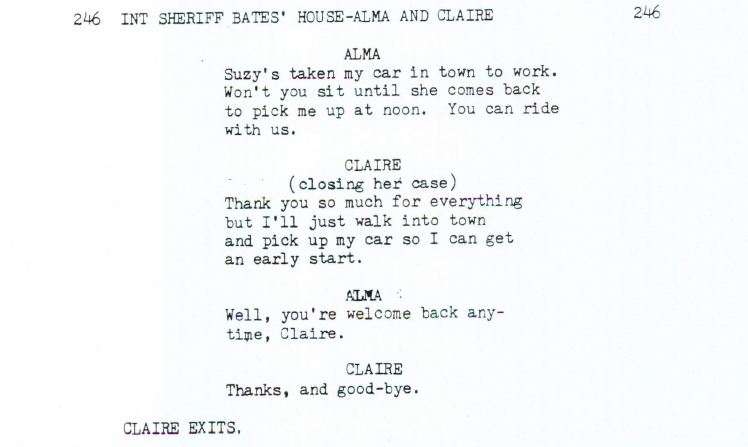
Except from "Hell Riders" shooting script featuring scene between Alma and Claire before actresses Sandra Sterling and Tina Louise revised it.

In the film, the scene is very similar to what's in the script, but a few added lines brings some nuance to the moment that was not there before.  In the final version, Alma approaches Claire as she is packing to leave, and offers to drive her into town after Suzy has returned with the car.  Instead of being impersonal (like in the script), Claire warmly responds, while folding and packing her clothes, "Oh, Alma, that's so sweet of you but I think I'll just pack up my clothes here and walk into town and pick up the car and get an early start."  Alma invites Claire to return anytime, just as scripted, but it causes Claire to stop fiddling with her clothes for a moment, just long enough to demonstrate how deeply surprised and touched she is by Alma's warm gesture, and says with genuine, heartfelt humility, "Thanks, Alma.  You've really been nice.  Thanks so much."  In the scene, you get the impression that Claire has rarely been treated with kindness by a person of Alma's middle-class nature that it means a great deal to her.  The humility Louise brings to the scene is complimented by Sandra Sterling's Beulah Bondi-like maternal warmth as Alma.  Because this is one of the rare moments in the movie where Louise is actually interacting in the same shot with the supporting cast, instead of the ubiquitous double used for much of the movie, you get a sense of how much better "Hell Riders" would have been if it had a proper budget that would have allowed Louise and West to work on the movie longer and appear with the other actors.  I don't deny that Louise has a few awkward line readings (which could be attributed to the very brief and rushed shooting schedule) but in general "Hell Riders" reflects how Tina Louise never gave a lazy performance and made the most of every opportunity presented to her.

Sunday, February 10, 2013

A Shining Flower in a Cesspool on "Hollywood Boulevard"


Movies about women trying to make it in Hollywood are usually dark affairs, filled with tragedy (pick any version of "A Star is Born"), addiction ("Valley of the Dolls"), ruin ("Sunset Boulevard"), or all of the above ("Beyond the Valley of the Dolls").  One of my favorite movies in this subgenre is Joe Dante and Allan Arkush's delightful "Hollywood Boulevard" (1976).  Produced and released by Roger Corman's New World Pictures, the backstory that led to the creation of this movie is well-known to most film buffs.  New World trailer editors Dante and Arkush bet Roger Corman that they could make a movie that was even lower-budgeted than any other New World movie made up to that time.  Corman took the bet, Dante and Arkush used tons of stock footage of previous New World movies to help enhance their modestly budgeted ($54,000 on a 10 day shooting schedule) film, and the result was "Hollywood Boulevard, a movie set in a New World-like B-movie studio.  It allowed co-directors Dante and Arkush an opportunity to parody the cliches of the "starlet in Hollywood" subgenre by presenting us with a heroine who, like those before her, has to overcome incredible obstacles to make it in show business.  However, Dante and Arkush rise above these cliches by allowing our heroine to come through the story relatively unscathed without any long-lasting damage or side effects by giving their lead character integrity and surrounding her with loyal friends.


In "Hollywood Boulevard," real-life 1970s drive-in B-movie starlet Candice Rialson plays the aptly-named Candy Hope, another Hollywood hopeful from the mid-west who comes out to tinseltown searching for fame and success.  After some discouraging auditions, where she has to face rejection and amorous producers/casting agents who attempt, without success, to take advantage of Candy on the casting couch (as well as inadvertently getting involved in a failed bank robbery as a getaway driver due to her naïveté) she finds a caring ally in veteran grade-B agent Walter Paisley (Dick Miller) who sends Candy to work at schlock movie studio Miracle Pictures where she soon graduates from stunt woman to co-starring in their epics "Machete Maidens of Mora Tau" and "Atomic War Brides."  At Miracle Pictures, Candy falls in love with handsome screenwriter Patrick Hobby (Jeffrey Kramer).  When Candy isn't busy dealing with having to act in exploitative nude rape scenes, primitive shooting conditions in the Philippines, and performing dangerous stunts on her own, she has to contend with a mad slasher who is bent on eliminating all the rising hopeful starlets at Miracle Pictures.  Could the killer be established B-movie queen Mary McQueen (Mary Woronov)?


What makes "Hollywood Boulevard" such a delightful experience is the winning lead performance by the underrated Candice Rialson as Candy.  Naïve, but not dumb, early in the film Candy outsmarts the ruthless bank robber Duke Mantee (John Kramer) who tricked her into driving the getaway car for his bank robbery by hitting the brakes and causing Duke to smash his head into the windshield, knocking him unconscious long enough for her to get away.  During the opening credits, Candy walks into an audition and finds herself being hit on by the producers/casting director.  She flees the scene with her blouse torn open, but with her dignity otherwise intact.  Unlike her friends Bobbi (Rita George) and Jill (Tara Strohmeier), Candy has no interest in furthering her career by sleeping with Miracle Pictures producer PG (Richard Doran).  Even though Candy is dating Patrick, screenwriter at Miracle Pictures, the movie makes it clear that Candy's interest in Patrick is sincere and genuine and has nothing to do with promoting herself in the organization.  Candy proves, during the course of "Hollywood Boulevard" that she is a hard-working professional willing to earn her way up the ladder of success in a legitimate manner; remains loyal and appreciative of the friendship and support offered by her agent Walter and by Patrick; and has no petty competitiveness with Bobbi, Jill, or even the condescending B-movie queen Mary.  That's why Candy is able to overcome the challenges she faces working at Miracle Pictures--she never loses sense of who she is during the course of the story and doesn't allow the seedy behavior of some of the characters surrounding her to adversely influence or dampen her spirits.  It's easy to root for Candy to succeed because Rialson invests the character with strong traits of decency that the audience can easy identify with.


Rialson's best moment in "Hollywood Boulevard" is the sequence where Walter and Patrick take Candy to the "premiere" of her first movie "Machete Maidens of Mora Tau" at a drive-in theatre.  Faced with the meager reality of her first film role, Candy gets drunk watching herself on-screen firing machine guns and being exploited by the crass filmmakers at Miracle Pictures.  At one point, the disgusted Candy exclaims, "An actress.  Ha!  Ugh, I can't take much more of this stuff.  It's a bunch of baloney!  That's not the real me!"  Candy's reaction worsens when she sees her own nude rape scene on-screen.  She is so appalled she stumbles out of Walter's car into the projection room and orders the projectionist to stop running the movie.  The projectionist, and a passing drive-in patron, tries to take advantage of a drunk Candy, but she is rescued by Walter and the two of them dispatch her attackers.  Even though the scene has a politically incorrect, inappropriately comic undercurrent, the sequence serves as Dante and Arkush's embarrassed, perhaps even shameful, acknowledgement of the exploitative treatment of actresses who appeared in movies made by New World Pictures in the 1970s.  Candy's disgusted reaction gives all starlets who toiled in "B" movies their due by recognizing that appearing in exploitation films might not have been the ideal vehicle to make their mark as an actress.  That's why we're glad for Candy at the end of the movie (after Mary McQueen has been unmasked as the killer stalking Miracle Pictures starlets, inspiring Patrick to write a screenplay based on Candy's experiences in Hollywood) that she finds genuine stardom appearing in the presumably higher-quality movie "The Hollywood Sign Girl."  After all she's been through, Candy's success was hard-won.


The late Candice Rialson was ideally cast in "Hollywood Boulevard" because she had previously starred in "Candy Stripe Nurses" (1974) and "Summer School Teachers (1975) for New World.  Because she likely understood first-hand what a starlet like Candy in "Hollywood Boulevard" experiences in their search for recognition in show business, Rialson brings a lot of heart, warmth, humor, and sympathy to the role.  We never feel any sense of contempt or indifference towards Candy the way we do when Ginger Lynn Allen walked through the role in the inferior remake/sequel "Hollywood Boulevard II" (1989).  Rialson is very effective during the opening credits when Candy is seen walking up and down Hollywood Boulevard, going from audition to audition, reacting to the people and scenery, while the moody and touching theme song "Hello Hollywood" ("The highway to the stars is a rough and rocky road.  By the side lay careers of those who couldn't pull their load") plays on the soundtrack.  We see Candy's excitement and amazement at arriving in the City of Dreams, and we immediately wish her well and don't want to see her suffer like countless starlets before her.  Rialson is matched every step of the way by the great Dick Miller and underrated Jeffrey Kramer as her friends Walter and Patrick.  They are a wonderful trio together.  Mary Woronov is also superb playing the malevolent movie starlet Mary McQueen.  She creates a worthy antagonist in the movie who also happens to be very likeable on her own terms.  Even though co-directors Dante and Arkush probably had modest goals in mind when they made their bet with Roger Corman that allowed them to make this movie, they far surpassed everyone's expectations by turning in a movie that had legitimately good, in addition to undeniably campy and schlocky, elements throughout.

Tuesday, February 5, 2013

The Brutally Realistic and Honest Aspect of "Little House on the Prairie"

 
I read in the news today that researchers have diagnosed the cause of the blindness experienced by Mary Ingalls, the real-life sister of writer Laura Ingalls Wilder who was portrayed by Melissa Sue Anderson on the series "Little House on the Prairie" (1974-83).  I remember as a child feeling shocked and unsettled at how the series dramatized Mary's loss of vision and her struggles to adjust to her new condition.  The raw, painful emotions evoked by that storyline were not what I expected to see from a "family" oriented TV show.  When I think of the scene where Mary wakes up one morning, and is unable to see, I think of the silent close-up of her devastated mother Caroline (Karen Grassle), who was busy nursing her youngest infant child downstairs and is helpless to do anything to bring comfort to her oldest child in her time of despair.  Caroline's close-up drove home, when I was still at a young age, how deeply our parents continue to care for us no matter how grown up we've become.  During the 1970s and 1980s, I used to watch both "The Waltons" and "Little House on the Prairie" regularly.  Even though the success of "The Waltons" established its production company, Lorimar, as a major player in Hollywood and later led to the creation of "Dallas," "Knots Landing," "Flamingo Road," and "Falcon Crest" (which, as I have blogged before, were also in their own ways seminal and influential shows of my youth), I always preferred "Little House on the Prairie" over "The Waltons."  I realize in retrospect that one reason for my preference for "Little House" was because, underneath the warmth and fuzziness, was a very, very dark and somber view of the world surrounding the Ingalls family.


The central Ingalls family in "Little House" may have been good and decent people, but they lived in a world that was often cruel and frightening.  What is often forgotten is the fact that Mrs. Oleson (Katherine MacGregor), and her children Nellie (Allison Angrim) and Willie (Jonathan Gilbert), were some of the most vicious, nastiest characters to ever appear on television.  The fact that they were sometimes redeemed made them even more formidable because you knew that these were not one-dimensional villains--these were villains that could occasionally appear in the form of identifiable human beings.  I was grateful as a child that the show played up the uproarious rivalry between Laura and Nellie, because I knew that the show had a sense of humor about itself and wasn't going to get too serious and heavy-handed like "The Waltons" was.  The show was also much less hypocritical about itself than "The Waltons."  The matriarch on that show, Olivia Walton, may have ostensibly been categorized as a traditional, nurturing mother.  But, when you look closely at some episodes, she reveals herself to be closed-minded, domineering, and uptight--the kind of woman who will only love her family and children on HER TERMS, and with conditions.  (Olivia Walton seemed to foreshadow "Waltons" creator Earl Hamner's protagonist Angela Channing, played by Jane Wyman, on his later series, "Falcon Crest.")  But "The Waltons" continued to behave as if Olivia Walton was kind and understanding.  Olivia Walton projected all the warmth, compassion, and vulnerability you would expect from a character played by an actress named "Michael Learned."
 
What distinguished "Little House" was its surprisingly brutal and hard look at the world and humanity.  I remember as a child being shocked at three particular episodes: 1)  The aforementioned episode where older sister Mary loses her sight and withdraws into herself, 2) The one where the school for the blind burned down and both the Alice Garvey (Hersha Parady) character (a regular character for about 4 years up that point) and Mary's newborn baby perish within the flames, and 3) the episode where adopted brother Albert (Matthew Laborteaux) falls in love with a girl who is raped and becomes pregnant by a vicious assailant stalking Walnut Grove.  Throughout the run of the series, there were deaths, prejudice, alcoholism, substance addiction, and even surprising cruelty coming from our main protagonists.  One such episode included the segment where Laura (Melissa Gilbert) blames Doc Baker (Kevin Hagen) for the death of her newborn son.  Looking for someone to strike out at, she ostracizes Doc Baker to where she almost forces him to leave Walnut Grove.  Clearly, this was a show where there was much more than meets the eye.

 
I think the reason why "Little House on the Prairie" was, ultimately, a legitimately family-oriented show is that there always remained a moral center to the series.  Despite the fact that it never shied away from acknowledging the dark side of humanity, it always balanced things out by underscoring how there were still good, decent, caring and conscientious people in the world who would work hard to fight back against the cruelty that exists out there.  The show also never treated its characters as expendable individuals.  It created a rich gallery of recurring characters living in Walnut Grove who would reappear from time to time to help establish a strong sense of continuity and community.  (Similar to the way "Dallas" created a gallery of recurring supporting characters that helped establish that show's sense of community.)  I think it was a good show for young people to watch because it showed how both good and bad existed in the world and made a strong case for young people to strive for the best in themselves and to never take people around them for granted.  What I also give "Little House" credit for was that it never forced an inappropriate happy ending on the audience.  There was one episode where the kind school teacher Miss Beadle (Charlotte Stewart) makes the wrong judgment call and sends her students home early on Christmas Eve right before a raging blizzard hits the area.  The children are all caught in the eye of the storm, as the men of the town risk their lives to find their children.  One husband dies, while everyone else survives.  At the end of the episode, as Charles Ingalls (Michael Landon) stands before everyone in the school/church reading from the Bible in an effort to put what they've experienced into context, the camera lingers on the one family who has lost their husband and father.  Amidst the happiness of the other characters who have survived, the show quietly and somberly acknowledges the loss experienced by the one family whose lives are irrevocably changed by the blizzard.


This brutal reality continued to characterize the show even at the very end of its run.  In the 1984 TV movie "Little House: The Last Farewell," that wrapped up the series, the residents of Walnut Grove learn, to their chagrin, that their town is actually built on land owned by a nasty land baron, who intends to take over and turn the citizens into his indentured servants.  And how do the denizens of Walnut Grove react to this nasty turn of events?  By turning the other cheek?  By praying?  No, they react to it by blowing up the town in an anarchic finale that has to be seen to be believed.  The townspeople take control of their destinies and decide that they will not allow the land baron to enjoy the fruits of their hard-earned labor through the years.  And, yet, the show still retains a strong sense of decency about itself even as it reveals that it was not nearly as innocent or white-washed as one would presume it to be. As the townspeople file out of town, singing "Onward Christian Soldiers," you realize that Michael Landon was both a traditionalist and an anarchist at heart because he had the courage to dramatize all different shades of humanity on his series. 

Sunday, February 3, 2013

The Hitchcock Brunette

 
Suzanne Pleshette was probably the most overrated "underrated" actress in the history of Hollywood.  Every write-up on Pleshette describes her as an actress who never fulfilled her potential in feature films.  With all due respect, as much as I acknowledge that she was a talented and interesting actress, I don't think she was as great as people allege.  Especially in her later years, when she did TV movies like the one where she played Leona Helmsley, Pleshette became overly mannered and harsh in her acting, almost as if she had become frustrated and disappointed at the types of films being offered to her and was unable to hide her annoyance anymore.  Whatever sense of subtlety and sensitivity that may have been there in her early years was gone by the time she was in her 40s and 50s as her voice deepened to a gravelly growl that no longer purred with the sexy sophistication that it once had.  Unlike her peers, her acting did not improve with experience and maturity as she began dipping into her usual bag of tricks and played "Suzanne Pleshette" far too often.  I know that I am in the minority, but I never responded to her brash work on "The Bob Newhart Show" the way other people did.  She simply didn't have the acting range that the similar Jessica Walter or Elizabeth Ashley (two other husky-voiced brunettes from the same era) had.  That's a shame, because she did have a directness and forthright quality that made her appealing and interesting to watch in the early years of her career.  Even though she's got a relatively minor role, perhaps her best work as an actress in feature films was her supporting role in Alfred Hitchcock's "The Birds" (1963).


In "The Birds," Pleshette plays Annie Hayworth, the lovelorn school teacher of Bodega Bay, California.  Sophisticated Annie originally came to Bodega Bay years ago for a long weekend visit with the family of her beau Mitch Brenner (Rod Taylor), who she had been dating in San Francisco.  Because of the icy reception Annie receives from Mitch's uptight mother Lydia (Jessica Tandy), Annie and Mitch's relationship fizzles after the weekend is over and they've returned to the city.  However, Annie remains hopelessly in love with Mitch to such a degree that she moves to Bodega Bay and takes a job teaching at the local schoolhouse so that she can remain part of Mitch's life by establishing friendships with his mother and with his sister Cathy (Veronica Cartwright), who becomes one of her charges at school.  All of this is told by Annie in hindsight and occurs before the movie even takes place.  Annie's complacent existence in Bodega Bay starts unraveling with the arrival of socialite Melanie Daniels (Tippi Hedren), who met Mitch at a pet store in San Francisco and impulsively ordered some love birds, which Mitch had been inquiring about as a birthday gift for his sister, in order to bring them to Bodega Bay.  Through a series of events, Melanie ends up staying in Bodega Bay over the weekend and takes a room at Annie's house.  Over the course of several days, Bodega Bay is besieged by a series of violent bird attacks where Annie is killed while attempting to save Cathy's life.


What I liked about Suzanne Pleshette's work in "The Birds" is how controlled and civil Annie is during the course of the story.  Annie is a character who would normally be portrayed as a spiteful old maid, but Pleshette makes her attractive, sophisticated, appealing.  Pleshette brings an inherent decency to the character that make her scenes much more interesting and enlightening than expected.  The highlight of the movie are the scenes between Annie and Tippi Hedren's Melanie.  Rarely in movies or television do you find two women interested in the same man behave as compassionately and sympathetically as Annie and Melanie treat one another.  The first Annie/Melanie scene, where Melanie arrives at Annie's home while she is tending to her garden, feature both characters subtly making pointed remarks meant to elicit information as to how the other woman feels about Mitch.  When Melanie indicates that she met Mitch in San Francisco, Annie says tellingly "I guess that's where everyone meets Mitch."  Annie realizes Melanie's intentions when she learns that she has brought love birds with her from San Francisco.  Pleshette's close-up at that moment, with her slightly raised eyebrows, reflects a woman who has recognized a potential adversary for winning Mitch's heart.  But she remains polite to Melanie nevertheless.  When Melanie returns to Annie's house later to rent a room from her, Annie's knowing reactions and facial expressions at hearing about Melanie's decision to spend the night at Bodega Bay underscore her character's sadness and discomfort at realizing the extent of Melanie's successful efforts to attract Mitch's attention.  Annie seems resigned to the fact that Melanie appears to be succeeding with Mitch in areas where Annie had failed. 


In most films, one would normally expect Annie to turn into the jealous "other woman," but Hitchcock and Pleshette refreshingly turn this cliche upside down by portraying her as a warm and mature individual who continues to treat Melanie with decency and respect.  Even though it's clear from Pleshette's reactions and gestures that Annie is heartbroken at realizing Mitch will never be in love with her, she never takes out her frustration on Melanie because she has accepted her fate as second-best in Mitch's life.  Pleshette never forgets to instill Annie with traits of kindness and understanding and continually surprises us throughout "The Birds."  Annie remains a thoughtful host to Melanie during her stay at her house and offers supportive advice to Melanie on how best to handle Mitch and his mother.  My favorite scene in the movie is the one where Annie offers Melanie brandy and insight after the latter returns from a frustrating dinner at the Brenner's house.  With her subtle gestures and discerning glances, Annie explains the circumstances of how she fell in love with Mitch and ended up in Bodega Bay.  In so doing, Melanie begins to understand the strange relationship Mitch has with his mother.  Melanie also realizes that Annie's limbo existence in Bodega Bay could potentially be her own future if she is not careful with how she deals with the Brenners. 


Annie is an interesting character in Hitchcock's filmography, the rare Hitchcock woman who is forthright and honest and not prone to duplicity nor subterfuge.  I like how Annie's story about Lydia's possessive grip on Mitch's life is told without any bitterness or resentment towards Mitch nor Lydia.  Because she's unselfishly in-touch with her emotions, she's an incredibly wise and sympathetic character who we hope the best for.  That's why it's so sad when Annie admits to Melanie that the reason she moved to Bodega Bay is because "I wanted to be near Mitch.   Oh, it was over and done with and I knew it, but I still wanted to be near him.  You see, I still like him a hell of a lot.  And I don't want to lose that friendship...ever."  You realize the paralyzing degree to which Annie has put her life on hold for Mitch.  I also like the moment when Annie answers the phone during her conversation with Melanie and hands the phone over to Melanie so that she can speak with Mitch.  Pleshette does some subtle gestures during this scene that speaks volumes.  When she answers the phone and hears Mitch's voice, Pleshette demurely glances downward and spontaneously breaks into a low-key smile that demonstrates how happy she is to hear his voice.  Moments later, as Annie sits nearby and listens to Melanie's conversation with Mitch, she quietly lowers her eyes and turns her head slightly when she realizes that Mitch is inviting Melanie to attend Cathy's birthday party tomorrow.  We realize that, even though Annie is a realist, she still harbors some hope that her relationship with Mitch may resume.  However, the emotions and behavior generated by Melanie's presence has made Annie realize that that will never happen.  These small moments speak volumes regarding Annie feelings of disappointment concerning Mitch.  In the end however, Annie wins our respect and admiration because she saves Cathy's life and, in the process, sacrifices her own when she pushes Cathy back into the house when the birds attack.  We realize that Annie's love for Mitch was not shallow and that she sincerely cared about him and his family and was willing to put her life on the line to prove it.  It's too bad that Mitch always took Annie for granted and never appreciated her as much as he should have. 


Suzanne Pleshette never again worked in as important a feature film in Hollywood as "The Birds."  Throughout her otherwise decent career, Pleshette mostly worked in television and in mediocre feature films that did little to elevate her status as an actress.  Her frequent appearances in episodic guest appearances on TV shows established her as an appealing, reliable presence on the small screen, but it may have also caused the Industry to take Pleshette for granted.  The prevailing wisdom in Hollywood could have been, "Why should the public pay to see her when they can watch her for free on television?"  Pleshette was always popular with the general public but, because she spread herself too thin by being overly prolific, she rarely had opportunities to work with a major director like she did in "The Birds."  Pleshette makes the most of the opportunity and allows you to realize the direction her career could have gone had she been offered film roles as good as the one she had here.  Even though "The Birds" is meant to be Hitchcock's star-making showcase for Tippi Hedren, he doesn't short change Pleshette and allows her an opportunity to create a fully-dimensional character within her limited screen time.  Hitchcock appears to have been fully engaged while working with Pleshette because he seems much more interested in exploring Annie's inner psyche.  The result is that Suzanne Pleshette ends up playing a fully-dimensional individual in "The Birds" that ranks as another fascinatingly complex female character in the entire Alfred Hitchcock filmography. 

Saturday, February 2, 2013

Eve Should've Jumped into the Car and Gone to "Skyfall"


Watching the new James Bond movie, "Skyfall" (2012) is a very bittersweet experience for me.  As I've mentioned before on this blog, my late father was a big fan of the James Bond series and it was a tradition in our family to go see every new Bond movie on the first night of release.  My father was unable to see "Skyfall" because he passed away in the hospital the same weekend that it opened in the United States.  I remember on the evening of Friday, November 9, 2012, when I was with him in his hospital room, CNN was reporting on the release of "Skyfall" in the United States that day.  The irony occurred to me that my father and I would have been in line to see "Skyfall" at the local movie theater at that very moment if he was not battling lung cancer.  It made me realize how important it is to enjoy and savor the little things in life with your loved ones when things are going well and everybody is enjoying good health.  I now value those moments I spent with my father going to see the James Bond movies, as those were sincerely happy times that I spent with him.


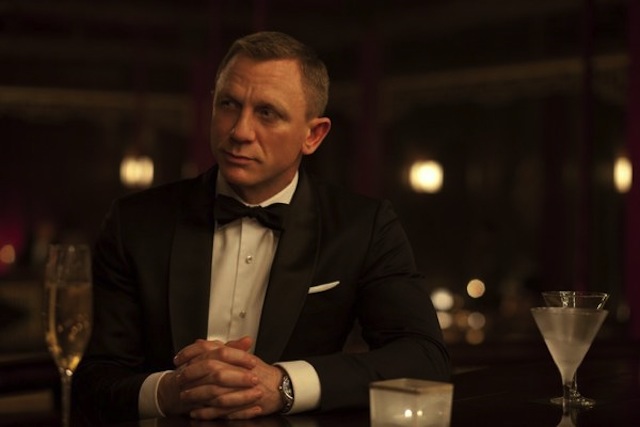
I know my father would have enjoyed "Skyfall."  I was very impressed with how producers Barbara Broccoli and Michael G. Wilson raised the bar with this film and helped to ensure that all parties involved with "Skyfall" brought their A-Game.  Daniel Craig continues to impress me with his portrayal of Bond.  Not only does he have the requisite elements of confidence, sophistication, brutality, and wit, but he also brings refreshing moments of humanity and vulnerability to the role that never seems as forced as when Pierce Brosnan superficially attempted to bring depth to Bond during his stint with the series in the 1990s.  Judi Dench was also marvelous as M, bringing surprising levels of ruthlessness and fallibility to an already established character in a manner that never seemed contrived.  Javier Bardem was a bit too outré for my tastes in the role of Raoul Silva, the arch-villain of the piece, but he at least creates a unique and worthy adversary for Bond.  The screenplay was witty and exciting and created interesting conflicts and moments of genuine feeling and emotion that were rare for a Bond movie.  And Adele's haunting and catchy title song sets just the right tone for the movie.  I am sure my father would have appreciated all of these elements in addition to the requisite action and suspense that is expected of Bond.


However, there was one aspect of the movie where Broccoli and Wilson and director Sam Mendes may have dropped the ball and that involves the thankless role of the Bond Girls this time around.  (I suspected something was awry months ago when the first posters for "Skyfall" appeared and ostensible leading lady Naomie Harris received fourth billing in the credits.  Typically, the leading Bond Girl receives second or, at worst, third billing in the credits, but never before has she ever received billing as low as fourth place as she does here.  It made me wonder how big a role the Bond Girls would have in "Skyfall.")  The Bond movies have always been unique in the action genre because the women in them are not expendable elements as they are in other action films.  The Bond Girl may occasionally be decorative, or reflect gender stereotyping, but they typically always played meaty, vital roles in each respective Bond movie.  I've always enjoyed and appreciated what the Bond Girl brings to the entire James Bond series.  I am always interested in seeing how each new leading lady in the series is substantively integrated into the storyline.  That isn't the case this time around.  Naomie Harris as MI-6 agent Eve Moneypenny, and Berenice Marlohe as Silva's trapped and quietly desperate courtesan Severine are almost completely expendable characters in "Skyfall."  The only purpose to have Eve in the movie is to accidentally shoot Bond in the pre-credits sequence, causing him to fall from the train into the river (and causing MI-6 to lose the harddrive with the identity of embedded agents) thus setting up the personal crisis that both Bond and M are forced to contend with in having to reestablish their credibility in MI-6.  Severine seems to only exist in so far as to bring Bond to the abandoned island that is Silva's lair so that Bond can apprehend him and take him back to London.  Even though they each have some good scenes, they are mere plot devices who serve no other purpose in the movie than what I just indicated, and what little role they do have could have easily been filled by any of the male characters in the movie.


The shame of it all is that Eve and Severine make strong initial impressions in the movie.  When Eve is introduced in the pre-titles chase sequence in Istanbul, she appears to be an assured, competent field agent who we expect will be a vital ally to Bond for the remainder of the movie.  We don't expect Eve to be sidelined for much of "Skyfall" and appear sporadically throughout.  Even when Eve has tailed Bond to Macau and helps cover him in the Casino, she contributes very little to that sequence in the story aside from shaving his beard in his hotel room and helping him dispatch one of Severine's bodyguards.  And Eve's participation in repelling Silva's attack at the public inquiry, where M had been interrogated by Members of Parliament, is limited to little more than firing a few shots to cover Bond and helping to clear the MPs from the room.  Unlike Bond Girls before her, Eve does very little to move the plot of "Skyfall" forward.  (Even imperfectly portrayed Bond Girls like Tanya Roberts's Stacey Sutton in 1985's "A View to a Kill" played meaty roles in their respective films.  Stacey had a clearly established adversarial relationship with arch-villain Zorin, and her knowledge of geology helps Bond uncover Zorin's master plan to flood Silicon Valley.  It's just too bad the character wasn't better directed or acted.)  Eve doesn't even participate in very many key scenes back at MI-6 headquarters involving M, Mallory (Ralph Fiennes), or Q (Ben Whishaw), which would have at least given her more screen time and helped to establish her role in the organization.  Eve doesn't even appear in the finale at Bond's ancestral home, Skyfall.  She is largely absent in the final act of the movie, which makes her announcement in the epilogue that she has decided not to return to field duty, and will be the assistant to the new M (Mallory) all the more perplexing.  Aside from accidentally shooting Bond at the beginning of the film, nothing further happens with Eve to make us understand why she is willing to go from being an field agent to a mere administrative assistant.  The gifted Naomie Harris, who gave an excellent performance in Danny Boyle's "28 Days Later" (2002), is pitifully wasted in "Skyfall."  Her role as Eve in this Bond movie is not nearly as good as her role as the determined Selena in that earlier movie.  When I heard Harris was cast in "Skyfall," I had great hopes that she would end up being one of the best Bond Girls in the entire series.  That was how much of an impression she made on me in "28 Days Later."  Because Eve has virtually nothing to do in "Skyfall," I scratch my head in bewilderment at the countless interviews Harris has given for "Skyfall" where she boasted about how substantial her role was in the movie, especially compared to earlier Bond Girls.  (Sorry, Ms. Harris, but you're no better than any of your predecessors.) 


Similarly, Severine starts out as a potentially fascinating character who dies moments after being introduced in the story.  A better-acted, much more tragic and heartfelt variation on Andrea Anders (Maud Adams) in "The Man with the Golden Gun" (1974) and Lupe Lamora (Talisa Soto) in "Licence to Kill" (1989), we learn that Severine had been forced into prostitution from an early age in the Macau sex trade and that she is desperate to escape from Silva's imprisoning grasp on her life.  She agrees to bring Bond to Silva in the hope that this stranger can kill her captor so she can finally set herself free.  Unfortunately, Severine is killed by Silva moments before Bond gets the upper hand and reveals that he has had a team of British military helicopters following him to Silva's island.  It seems strange that Bond would allow Severine to die when it is apparent that he could have overpowered Silva and his henchmen, and signaled the helicopters to appear, moments earlier so that Severine could have been saved.  Severine is an underdeveloped character who had great potential in the few scenes we have with her.  Bond's scene with Severine at the casino bar, where he sees through her veneer of confidence, is one of the finest acted scenes in the history of the series.  Berenice Marlohe is marvelous in that moment.  Marlohe effectively plays the scene at simultaneously different levels of emotion--her smiling assuredness on the surface masks immense fear and vulnerability underneath--that suggest she is a promising actress of considerable depth.  At times, she reminds me of the great European actresses of the 1950s and 1960s, especially Sophia Loren and Francoise Dorleac.  Unlike Andrea Anders or Lupe Lamora, we actually sense how frightened Severine is of the man who has enslaved her, which makes her potential survival or escape from him much more emotionally vital than it was with her earlier Bond Girl counterparts.  Later, on the island, when a bound Severine is led away from Bond, she sincerely tells him "I'm sorry."  That line resonates because it suggests the extent to which Severine is genuinely apologetic about getting Bond involved in her problems and potentially getting killed over it.  She has no idea who Bond is, nor that he can take care of himself, so her apology resonates deeply as a selfless expression of contrition.  In a short amount of time, Severine makes a strong impression that you want to see more from her, which makes it all the more bizarre that the filmmakers don't take advantage of allowing her to have more scenes in the movie.


A friend of mine opined that the diminished roles of the Bond Girls in "Skyfall" was because the story was really about the relationship between Bond and M and I agree that that is where the focus of the storyline is this time around.  It was a good decision on the part of the screenwriters to delve into that complex relationship more deeply.  But that doesn't mean Eve and Severine couldn't play vital roles in the plot as well.  I don't buy the theory offered by some critics that M is the Bond Girl this time around.  M is a powerful character who is in a category all to herself.  The Bond Girl is a separate, important element to every entry in this series and there is no reason why both M, and the Bond Girls, couldn't each play a major role in "Skyfall."  To short change Eve and Severine just because M has a larger role sends the wrong message that there's room for only one woman per movie to have a substantial, major role when there are so many movies (Bond or otherwise) featuring more than one male character playing a major role in the proceedings.  Some commentators have complained about "Skyfall" for what they perceive to be its "Regressive Sexual Politics" because of the politically incorrect manner in which Eve and Severine (and even M) are portrayed as either helpless victims (Severine) or incompetent (Eve).  Even though these are relevant issues to consider, I am actually not so much bothered by that as I am by the fact that I simply wish there was more screen time for their characters.


I sincerely believe that there is a way to better integrate Eve and Severine into the storyline of "Skyfall" without undermining all the qualities that make this a superior and unique entry in the Bond series.  If you'll allow my indulgence, here is my modest proposal regarding how I think the movie should have proceeded in the second half of the film to allow both characters more screentime.  Let's pick up at the scene on the abandoned island where Severine is bound and tied to the rock and Silva is about to shoot her in the head.  Bond should've gotten the upper hand earlier, taken down Silva's men and apprehended Silva before revealing the helicopters who have been tracking and following him since he left Macau.  Due to his quick actions, he saves Severine from getting killed.  During this sequence, they should have cut briefly to a shot of Eve in one of the helicopters hovering overhead, to establish that she is part of the surveillance team tailing Bond to the island and helping to bring Silva into custody.  Back in London, at MI-6, after M has confronted Silva in his cell and before her public hearing with the MPs, Bond should have a brief scene with Severine.  He walks into a conference room where Eve is debriefing Severine on her knowledge of Silva's organization.  Eve, sensing the chemistry between Bond and Severine, announces she must get ready to accompany Mallory to the public hearing and leaves them alone.  After Eve has departed, Severine thanks Bond for having freed her from her life of enslavement to Silva.  She tells Bond a little bit about her life, how she was forced into prostitution at a young age and later sold to Silva, and how she had been hoping for this day for years.  I think the screenwriters should have given her a line where she reveals to Bond that today is her birthday and he's given her the best gift she could ever hope to have--a future.  (A line that echoes what Diana Rigg's Tracy says to Bond after their wedding at the end of 1969's "On Her Majesty's Secret Service.")  Later, when Silva escapes from custody, he seeks out Severine (who is being transferred from MI-6 to a safe house) and either kills her on the spot or, alternatively, kidnaps her to use her as a pawn to bring Bond out in the open during the finale at Skyfall ranch, Bond's ancestral home.  If we go with the option of having her kidnapped, during the finale at Skyfall, Severine (grateful to Bond because he tried to help her) would get killed attempting to save his life.  This way, I think her death would have much more resonance with the audience because we would have spent more time with Severine to be able to care about her, and also because she would have died in an effort to finally fight back against Silva.


With regards to Eve, the filmmakers should have allowed her to play a much more vital role during Silva's attack at the public hearing where M is testifying.  While she is helping to clear the MPs from the room, and bring them to safety, Eve should have noticed that M needs additional protection and followed her and her aide Bill Tanner (Rory Kinnear) to where Bond is waiting and jumped into the car with them, leaving Tanner behind.  Eve would accompany M and Bond to the warehouse where Bond's Aston Martin is in storage and join them as they switch vehicles and head to Skyfall ranch.  At Skyfall, Eve would play an instrumental role in helping Bond, M and Kincade (Albert Finney) prepare for Silva's arrival.  When Silva's first team of men arrive by foot to attack Skyfall, Eve's job would be to cover M while Bond and Kincade are busy dispatching the henchmen.  However, despite her best efforts, Eve is unable to prevent M from being shot.  As Kincade helps M escape through the underground tunnel, Eve helps Bond fight off Silva's ground and aerial assault.  Like I mentioned earlier, Silva would have brought Severine with him by helicopter to try and bring Bond out in the open.  When Severine tries to save Bond by getting ahold of a firearm and shooting Silva in the shoulder, she is shot and killed by his henchmen.  As Bond makes his way to the church to save M, Eve helps by eliminating several of Silva's henchmen who are lying in wait to attack him.  She arrives upon the scene when M dies in Bond's arms at the church.  Feeling remorseful because M died from the wounds sustained at the assault on Skyfall when she failed to effectively cover her, Eve decides not to return to field duty and becomes Mallory's personal assistant.  It would suggest that the reason why Eve has decided to become Mallory's assistant isn't that she couldn't handle being a field agent, but that she wants to be on Mallory's detail so that she can protect and ensure the safety of the new M.  I sincerely believe that a course of events like the one I am suggesting would provide the sort of explanation as to why Eve would settle for working in the office (and provide even more of an impact when it is revealed that Eve is actually Miss Moneypenny).  As it is portrayed in the actual movie, Eve's decision simply does not make any sense. 


Anyway, these are just some rough ideas as to how Eve and Severine could have been better utilized in "Skyfall."  If they had played a larger role similar to what I described, I would have been even more satisfied with the movie and agreed that it is perhaps the best James Bond movie ever made.  I sincerely believe there was a way to better integrate them into the story in a manner that is not contrived and without sacrificing any quality.  The Bond Girls are an important element to the James Bond series, and nothing should ever tamper with it.  As it stands, I agree with the consensus that "Skyfall" remains one of the finest achievements in the entire James Bond series, a film that successfully integrates genuine depth and resonance and one that should last through the ages.  Daniel Craig continues to reinvent the role and set the bar high for future portrayals of James Bond.  Craig genuinely deserved an Oscar nomination for his portrayal of James Bond in "Skyfall."  He brought unexpected nuances to the role without ever sacrificing the established elements in the character.  Even though I admit it sounds like I'm quibbling too much about the role of the Bond Girls in "Skyfall," I enjoyed the movie immensely and look forward to returning to it for repeat viewings for years to come.  I just wish I would have been able to share the experience of watching "Skyfall" with my father, who would have appreciated it as much as I did. 

Friday, February 1, 2013

Rediscovering an "Identity Unknown"


William Wyler's "The Best Years of Our Lives" (1946) was not the first movie dealing with America's readjustment to life after World War II.  Predating it by almost a year was the ironically titled, due to its obscurity, "Identity Unknown" (1945).  This was a low-budget, 71 minute drama produced by Poverty Row studio Republic Pictures, directed by the forgotten Walter Colmes, and starred veteran actor Richard Arlen.  The movie opens on a hospital ship where a doctor asks one of the patients (Arlen) how he is doing and then casually says "By the way, I don't think I know your name."  Arlen starts to answer the question ("Neither do I sir...don't you know who I am?"), then hesitates, and realizes that he has no idea who he is either.  The doctor asked Arlen the question to see if he might spontaneously remember his name and identity if he asked it casually.  The doctor informs Arlen that, when he was found, he had no dog tags on him because they were blown off.  Arlen was discovered alongside the bodies of three other men who took cover at an abandoned farmhouse in France where they had been holding off the Germans for days.  After a German dive bomber blew the house to bits, the Allies attacked and pushed the Germans back so they could reach the house.  When the Allies reached the ruins of the house, they found the bodies of three men burned beyond recognition, and Arlen still alive but injured and suffering amnesia.  Because the dog tags of the four men were blown off due to the explosion, the Army medical personnel were unable to determine who he is because all four men were of approximate height and weight.


The Army doctor, Major Williams (Ian Keith) shows Arlen a list of the men whose dog tags were discovered:  Paul MacGregor, a married man who ran a trucking company in Bridgeton, Connecticut; Joseph Loring, an architect from Chester, West Virginia; Carl Granowski, an aspiring doctor from Chicago, Illinois; and Peter Anderson from Knoxville, Iowa.  None of the names appear familiar to Arlen.  When Major Williams asks Arlen's character what temporary name would he like to go by until they can establish his identity, Arlen picks "Johnny March" when he overhears a nearby patient playing "When Johnny Comes Marching Home" on his harmonica.  After the ship arrives stateside, and Johnny is on an Army train being transported cross-country to a military hospital, he decides to disembark when the train, by chance, makes a stop in Bridgeton, Connecticut.  He is going to look up the homes of each of the four men on the list to find out which one of them is his actual identity.


Johnny stops at the home of the first man on the list, Paul MacGregor.  When Paul's widow Sally (Cheryl Walker) answers the door and has no reaction, he immediately rules out being MacGregor.  He stays and talks with Sally, pretending to be a friend of Paul's, and accepts Sally's invitation to stay a few days with her.  Sally shares the home with two other women who also work at the local aircraft plant.  When Johnny takes Sally out to dinner, she begins to enjoy herself until she runs into her late husband's employers.  She feels ashamed for being out so soon after his death, and asks to go home.  Back at home, Johnny urges Sally not to retreat into herself to where she is unable to enjoy life anymore.  He urges her to try her best to move on with her life.  When Johnny lets slip a piece of information that betrays the fact that he didn't really know Paul, Sally becomes angry at him and tells him to leave immediately.  Sally grows despondent and attempts to commit suicide by turning on the engine of her car inside a shut garage.  Johnny saves her life and takes her out for a drive where he explains his situation.  Sally begins to understand Johnny and the two fall in love.


But Johnny cannot stay for long, as he heads next to Chester, West Virginia where he looks up the home of architect Joseph Loring.  When Johnny rings the doorbell, he is greeted by a little boy named Toddy (Bobby Driscoll) who immediately throws his arms around Johnny saying "Daddy?  Oh Daddy I'm so glad you've come back!  You are my Daddy aren't you?  They told me you wouldn't come, but I knew different!"  Johnny befriends Toddy as he takes a tour of the house.  Johnny starts to believe that he is Joseph Loring until a nosy neighbor shows up and demands to know who he is and what he is doing in the house.  Johnny realizes that he has made a mistake and that his search must continue.  Toddy, feeling betrayed by Johnny, asks him "Why did you tell me you were my Daddy?"  Johnny tries to put things in perspective to Toddy and explains that "Your Daddy sort of sent me to you.  He was one of the finest and bravest men in the whole world.  And I want you to always remember that.  He was a good soldier and good soldiers don't cry.  Now you've got to be a good soldier.  You've got a job."  Toddy begs Johnny to stay, but Johnny insists he has to leave, explaining that he has a job to do as well.


Johnny heads to Chicago, Illinois next where he looks up the family of Carl Grawnowski, the aspiring doctor.  He learns that Carl's brother Joe makes a living working for gangsters as a cashier in a gambling house. When Johnny arrives at the gambling house, and Joe has no reaction upon seeing Johnny, he realizes he is not Carl and scratches that name off the list.  Another gangster named Rocks Donnelly (Roger Pryor) shows up demanding payment from Joe for money he had given him days earlier to bet on a horse.  When a hitman shows up gunning for Rocks, Joe jumps in front of Rocks and takes the bullet and saves his life.  Joe is rushed to the hospital, asking for Johnny to come along with him.  At the hospital, a grateful Rocks asks Joe why he saved his life.  If the hitman had killed Rocks, Joe wouldn't owe him the money anymore.  Joe says "Why did I do it?  I guess it's just that I'm a sucker."  Johnny says "You think a guy that thinks enough of something to stop lead is a sucker?"  Rocks tells Joe that he no longer owes him the money and offers him a job in his organization.  Johnny helps Joe to realize that the best way he can honor his brother Carl is by fulfilling Carl's aspirations of becoming a doctor.  Rocks, grateful to Joe, promises to pay for Joe's tuition to become a doctor.  Rocks takes Johnny to a party he is hosting at his lavish home that night.  Johnny meets Rocks's sophisticated girlfriend, Wanda (Lola Lane) who takes a liking to this soldier.  However, Wanda senses that Johnny's attention seems elsewhere and she encourages him to use Rocks's phone to call the person he is thinking about.  Johnny calls Sally back in Connecticut and admits that he misses her.  He gives her the update as to the progress he is making and tells her the only person left on the list is Peter Anderson from Iowa.  Johnny asks Sally to meet up with him in Iowa so they can be together.  Sally tells Johnny that she can't visit him because, even though she loves him, he doesn't even know if he's married.  Johnny promises to call Sally once he gets to Iowa to inform her what he discovers there.   


Johnny next heads to Knoxville, Iowa to find out if he is Peter Anderson, farmer.  When the family dog happily greets Johnny, and the lady of the house, Mrs. Anderson (Sarah Padden), faints at the sight of Johnny, he thinks he has finally found his identity until Mr. Anderson (Forrest Taylor) comes out and does not react to seeing him.  The Andersons invite Johnny to stay for supper and Johnny learns that Mr. Anderson has put the farm up for auction because he has lost all faith and hope.  Despite Mrs. Anderson's protests, Mr. Anderson feels that there is no purpose in keeping the property now that he no longer has a son to leave it to, and also because everything about the farm reminds him of his son.  Johnny is invited to stay overnight and further learns that Mr. Anderson realizes he has made a mistake of putting the farm up for auction, but feels he is unable to reverse his agreement with the bank to auction the farm.  On the day of the auction, Johnny speaks to the attendees and dissuades them from bidding on the items up for sale.  Johnny tells the bidders, "I don't think this auction should be held.  I know that Mr. Anderson decided to sell this farm.  But when he made that decision he wasn't himself.  I think you all know the reason why.  You see this just wasn't a farm to him.  It was something far more precious, something that he and his son had built together.  Now that son is gone.  But as long as this farm endures, something of that boy will remain to give hope and consolation to two hearts, his father's and his mother's.  Mr. Anderson doesn't see it that way now, but he will.  For there isn't anything more important in the whole world than the love of a mother and a father for a boy that's gone.  Unless it's the happiness they may still find in keeping faith with that boy's ideals.  Especially if keeping faith with those ideals means helping to feed the millions of hungry kids that are waiting for the things that this farm can produce."  As a result of Johnny's speech, none of the attendees have the stomach to buy any of the products and start to leave, as the bank's auctioneer tries vainly to interest them in the items. 


As the Anderson's thank Johnny for his gesture, Johnny receives word that Sally has taken the train to the nearest town and has followed Johnny all the way from Connecticut to see him.  Johnny borrows the Anderson's truck and drives over the speed limit all the way to the train station while being pursued by a motorcycle cop.  When he arrives, he hugs Sally, but is soon arrested by nearby MPs who recognize Johnny as someone who has gone AWOL from the train before being officially discharged.  Johnny is taken into custody as Sally returns the truck to the Andersons and the Army completes its investigation to discover who he is.  Back at the post, Colonel Marlin (Nelson Leigh) scolds Johnny for taking matters into his own hands and not allowing the Army an opportunity to figure out who he is.  After taking Johnny's fingerprints, and researching Army personnel records, Colonel Marlin calls Johnny into his office (with Sally present) and asks him "Do you know the date of the Austrian succession?...and how about the Counsel of Nicea?...and do you happen to know just why you remember those dates?"


Johnny finally remembers he is a professor of History named Charles Aldrich, 33 years old, who grew up an orphan, and is unmarried.  Colonel Marlin informs Sally that CPT Aldrich/Johnny was a pilot in the Army Air Corps who was flying his aircraft over the farmhouse that McGregor, Loring, Granowski, and Anderson were barricaded in to drop food and supplies.  The German dive bomber whose aircraft killed those men also knocked Aldrich/Johnny's plane from the sky and somehow he ended up injured amidst the rubble of the farmhouse.  As Aldrich/Johnny and Sally leave Colonel Marlin's office to begin their new life together, the senior officer remarks aloud, "He's a father, a brother, a son, a husband.  He's a doctor, a farmer, an architect, a truck driver.  He is all men.  The principals they believed in and fought for are still living in him.  From now on, it's going to be his job to stand for those things.  Because when Johnny March came home, they came home too."


"Identity Unknown" remains a quietly powerful drama whose themes of duty, sacrifice, and honor still resonate deeply 68 years later.  It is a movie that acknowledges the immense suffering and sacrifice that military personnel, and their families, face in times of war.  At the same time, the movie never takes on the defeatist attitude, or hindsight second-guessing, that "The Best Years of Our Lives" occasionally suffers from in questioning whether fighting World War II was worthwhile to the United States.  "Identity Unknown" never forgets the individual sacrifice made by all military personnel during World War II, but underscores how fighting the war was still worthwhile in the end because the long term consequences of not fighting were much worse.  The movie never takes on an insensitive, unrealistic attitude about the war because we never forget the level of grief on the faces of the characters Johnny meets throughout his journey.

 
During the course of "Identity Unknown," we see a young widow (Sally) attempt suicide rather than go on living without her husband; a lonely and traumatized child (Toddy) in denial that his father has died; a sibling (Joe) who feels bitter feelings of resentment and abandonment against his brother for joining the Army and getting killed; and parents (Mr. and Mrs. Anderson) who openly grieve over their child to a degree where they almost lose their sense of purpose.  Rarely in 1940s cinema do you see such raw, exposed emotions that are meant to represent the grief and agony of family members of fallen military personnel during wartime.  Director Walter Colmes, who had a very brief career producing and directing comedies, thrillers, and mysteries at Poverty Row studios, created a heartfelt and timeless movie that resonates deeply today.  Even though Colmes's staging and composition is nothing to write home about, the characters, performances, and situations in "Identity Unknown" are always truthful and compelling.  On the basis of this one movie, he should have had a much more prolific career. 


Richard Arlen gives a beautiful rendered performance as the enigmatic "Johnny March."  Because the character is a sounding board for the sadness and loneliness of all the people he encounters in the course of the story, Arlen doesn't get a chance to give a tour-de-force performance.  But he still gives the character sensitivity and depth so that Johnny never comes across as an archetype.  When we learn at the end of the film that Johnny is an orphan and a bachelor, we being to understand why he was able to fit in so easily with the families he encounters.  In going from home to home, Johnny has an opportunity to experience the sort of home life he previously has never been able to enjoy.  In essence, in the course of the movie, Johnny is subconsciously looking for the family he has yearned for all his life.  At times, the movie is sort of a precursor to the TV shows "The Fugitive" and "Run for Your Life."  Both shows featured characters either running from the law, or suffering from an ailment, who move from town to town, trying to fit in, and helping the lost and lonely people they encounter.

 
The characters Johnny encounters in "Identity Unknown" are all kind, decent people who richly deserve the help they get from him.  Each of the families he meets welcome him into their lives unselfishly.  (Even gangsters like Rocks turn out to have a sense of nobility about themselves.  Frustrated that the Army refused him because of his bad liver, Rocks and his men lay off the alcohol so that they can all donate their blood to the Red Cross for the war effort.  Unlike "The Best Years of Our Lives," there's a refreshing lack of cynicism in "Identity Unknown" about the people living back at the homefront during World War II.)  In return, Johnny helps every family he meets to come to the realization that the best way they can honor their fallen loved one is to carry on with their lives to the best of their abilities, as if they are fulfilling their uncompleted aspirations.  Concurrently, Johnny himself will also continue to honor these four men he never actually knew by living his life in a manner that allows him to represent what they each personally stood for.  Because it is able to accomplish so much, with comparatively little resources, "Identity Unknown" remains a forgotten masterpiece, still awaiting rediscovery with a wider audience.